



|
Getting your Trinity Audio player ready...
|
By: Andrew Carlson
In a story that defies conventional categories of war reporting—part testimony, part parable of endurance, part meditation on the strange ways the human spirit survives—an unexpected thread has emerged from the darkness of Hamas captivity in Gaza. According to a report on Monday at VIN News, billionaire real estate magnate, bestselling author, and motivational speaker Grant Cardone revealed that one of the only books given to an Israeli hostage during nearly two years of brutal imprisonment was Cardone’s own business manifesto, The 10X Rule.
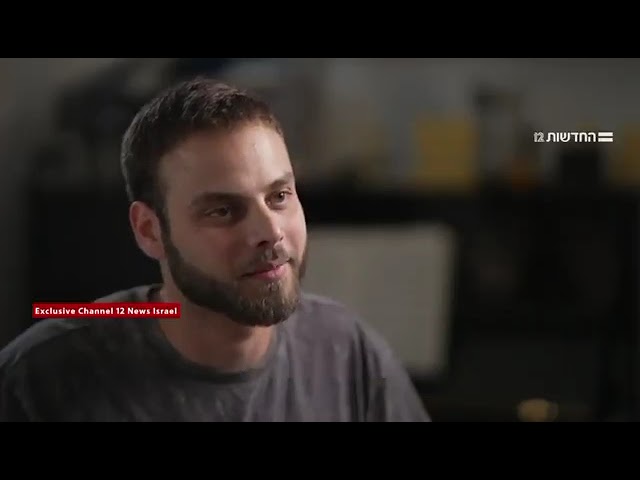
The revelation, at once surreal and profoundly moving, has resonated across social media, Jewish communal circles, and the broader public discourse on the human cost of the October 7, 2023 Hamas massacre. As VIN News reported, Cardone shared the story after meeting Alon Ohel, an Israeli-Serbian pianist abducted by Hamas terrorists from the Nova music festival during the initial onslaught that left more than 1,200 Israelis dead and hundreds taken hostage.
Ohel’s survival story—marked by deprivation, injury, isolation, and psychological torment—stands as a harrowing reminder of the cruelty inflicted upon hostages in Gaza. Yet embedded within that ordeal is a strikingly improbable detail: amid chains, hunger, and enforced silence, Ohel read a book about ambition, discipline, and exponential thinking.
According to Cardone’s account, Hamas captors allowed Ohel access to only a single book after he pleaded for reading material to pass the endless, oppressive days. That book was The 10X Rule, Cardone’s bestselling treatise on pushing beyond perceived limits and maintaining relentless focus under adversity.
“Hamas gave this Israeli hostage one book to read—The 10X Rule,” Cardone wrote on Instagram. “They didn’t know what they had.”
Alon Ohel was held in Gaza for 738 days—nearly two years—before his release on October 13, 2025, as part of a hostage agreement. During that time, according to Cardone’s recounting, Ohel endured conditions that international human rights organizations have repeatedly characterized as war crimes: prolonged shackling, inadequate food and water, untreated injuries, and complete separation from family, friends, and the outside world.
Ohel reportedly suffered severe eye injuries that went untreated for months, resulting in lasting damage. He was starved, beaten, and deprived of basic medical care. Information—news of the world, of Israel, of whether anyone even knew he was alive—was almost entirely withheld.
In that void, the act of reading took on a significance far beyond intellectual stimulation. The presence of any book at all represented a lifeline, a structured voice in a world designed to strip captives of agency and identity.
What makes the episode extraordinary is not merely that Ohel read The 10X Rule, but that he did so while living under the constant threat of death, humiliation, and despair. Cardone himself reflected that hearing how his book was read in such conditions “puts resilience, perspective, and gratitude into a whole new light.”
Hamas, an organization ideologically committed to Israel’s destruction and deeply hostile to Western capitalism, unwittingly provided a hostage with a text rooted in individual empowerment, personal responsibility, and the refusal to surrender to circumstance.
The 10X Rule is, at its core, a manual for mental defiance. It urges readers to reject victimhood, to expand their sense of possibility, and to exert agency even when conditions are hostile. That such a philosophy could find a reader inside a Hamas prison is not merely ironic—it underscores the limits of coercion when confronted with inner resolve.
As the VIN News report observed, Ohel’s reading of the book did not magically alter his physical reality. It did not unlock his chains or heal his wounds. But it may have provided something just as vital: a mental structure, a sense of forward motion, a reminder that his life extended beyond the cell in which he was confined.
In hostage psychology, experts have long emphasized the importance of routine, mental engagement, and hope. The ability to imagine a future—to think in terms of “after”—is often the difference between survival and collapse. For Ohel, the book reportedly became a mental anchor, a way of asserting continuity in a setting designed to obliterate it.
After Ohel’s release, Cardone said the two met and later lit Hanukkah candles together, a moment that VIN News described as both symbolic and deeply personal. Hanukkah, the Jewish festival commemorating resilience against oppression and the triumph of light over darkness, offered a fitting framework for the encounter.
Cardone called Ohel’s survival a “living miracle,” language that reflects not only gratitude but astonishment at the convergence of events that allowed the pianist to endure. For Cardone, a figure better known for stadium-sized seminars and real estate empires, the moment represented an unanticipated intersection between business philosophy and human survival.
Cardone, though not Jewish, spoke of the candle-lighting with reverence, emphasizing the gravity of the moment and the honor he felt in sharing it. The image of a freed hostage and a billionaire author lighting candles together captured public attention precisely because it resisted cynicism. It was not a branding exercise, observers noted, but a rare instance in which words written for one context found meaning in another entirely.
The story arrives amid ongoing reckoning over the treatment of Israeli hostages held by Hamas, many of whom returned with accounts of starvation, abuse, and psychological torture. VIN News has repeatedly documented testimonies from freed captives describing systematic cruelty, including deliberate medical neglect and isolation.
Ohel’s experience aligns with those accounts while adding a uniquely human dimension: the quiet, solitary act of reading under duress. In contrast to the theatrical brutality of terrorism, the image of a hostage turning pages in captivity offers a stark counterpoint—a reminder that resistance is not always loud, and survival is not always visible.
It also underscores a broader truth highlighted by VIN News throughout its coverage of the hostage crisis: Hamas failed to extinguish the identities of those it captured. Musicians remained musicians. Parents remained parents. And in Ohel’s case, a young man seeking meaning remained capable of absorbing ideas about ambition, resilience, and agency—even when freedom seemed impossibly distant.
Grant Cardone is no stranger to influence. The Miami-based investor has built an empire spanning real estate, finance education, and motivational speaking, amassing millions of followers worldwide. Yet even by his standards, the idea that one of his books was read in a Hamas detention facility stands apart.
For Cardone, the encounter has prompted reflection on the responsibility of authors and public figures. Words, once released, travel in unpredictable ways. They may inspire entrepreneurs—or, improbably, sustain a hostage.
In sharing Ohel’s story, Cardone did more than recount a personal meeting. He inadvertently highlighted a truth often lost in discussions of geopolitics and war: that human beings cling to meaning wherever they can find it.
The episode does not redeem the circumstances that made it possible. Nothing about the story mitigates the barbarity of Hamas or the suffering of its victims. But it does illuminate a small, defiant spark of humanity that endured where it was least expected.
In the end, the significance of The 10X Rule in this context is not about business or success. It is about the refusal to disappear. In a place designed to erase him, Alon Ohel read, thought, endured—and survived.
