



|
Getting your Trinity Audio player ready...
|
By Vered Weiss, World Israel News
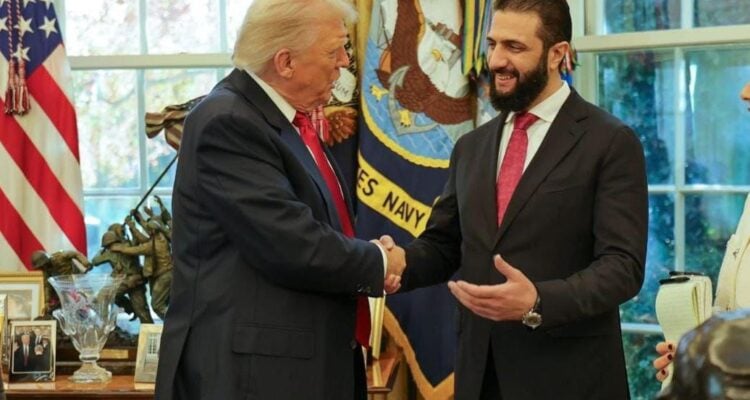
Syrian President Ahmed al-Sharaa’s appearance on Fox News this week, following his White House meeting with President Donald Trump, ignited a storm of online criticism over his refusal to address his past links to al-Qaida.
The Syrian leader, who once headed the jihadist faction Hayat Tahrir al-Sham and was designated a terrorist by the United States less than a year ago, deflected questions about his former affiliation during a high-profile interview broadcast Monday.
Pressed by the anchor on his sudden transformation from fugitive to guest of honor in Washington, al-Sharaa limited his response to recent diplomatic developments.
He confirmed that sanctions against him had been lifted “by a decision of the United Nations Security Council,” adding that he and President Trump discussed “investment opportunities in the future of Syria.”
When asked directly whether his history with al-Qaida was raised in their talks, al-Sharaa replied, “This is a matter of the past. We did not discuss it actively. We talked about the present and the future.”
He described Syria as “a geopolitical ally” and sidestepped further questions about his ties to the group responsible for the September 11 attacks.
Challenged about the nearly 3,000 Americans killed in those attacks, the Syrian president said he was “only 19 years old” at the time and had “no decision-making power.”
He insisted that al-Qaida “wasn’t present in my area then” and that the issue had no relevance to his leadership today.
The exchange quickly went viral, sparking outrage among viewers who accused al-Sharaa of whitewashing his past.
“A terrorist in a suit,” one user wrote on X, while another commented that “the only thing that changed is his haircut.”
Critics said his polished appearance and diplomatic tone could not erase his militant origins or the bloodshed associated with his movement.
Al-Sharaa has led Syria’s transitional government since December, when the Assad regime fell and power shifted to factions previously tied to Hayat Tahrir al-Sham.
His Washington visit marks the first official engagement between Damascus and the United States since that transition.