



|
Getting your Trinity Audio player ready...
|
By: Fern Sidman
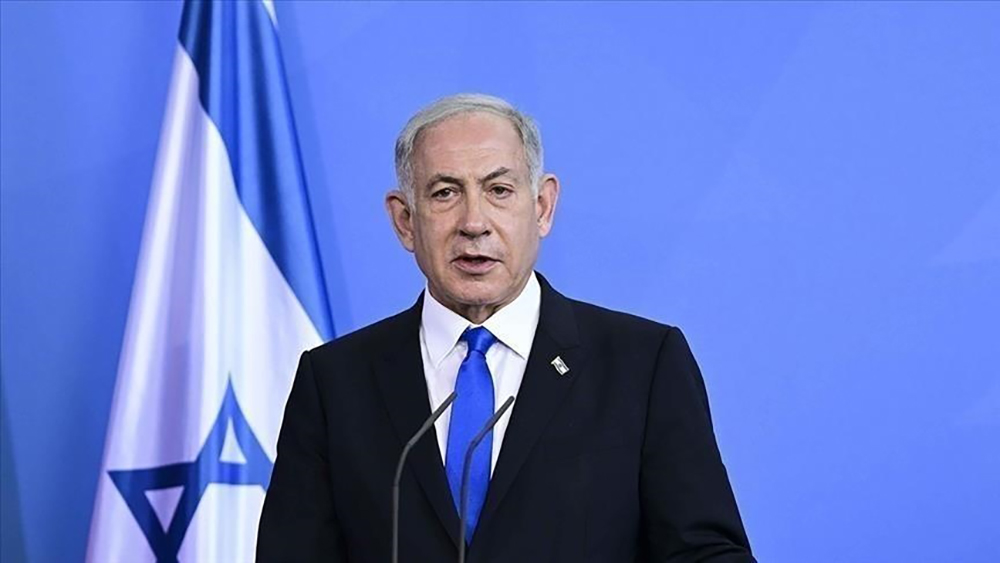
Against a backdrop of rising regional uncertainty and mounting strategic concern, Israeli Prime Minister Benjamin Netanyahu convened an urgent and highly sensitive meeting of the nation’s security cabinet on Sunday morning, focusing squarely on what officials described as “the Iranian issue.” The session, reported on Sunday by Israel National News, to have been dramatic in tone and substance, underscored the gravity with which Jerusalem is viewing the evolving security landscape.
Although no formal statement was released detailing the content of the deliberations, the mere convening of such a high-level forum — particularly on short notice — sent a powerful message both domestically and abroad. According to the information provided in the Israel National News report, participants characterized the meeting as unusually tense, with discussions centering on the full spectrum of Iranian threats, including nuclear ambitions, regional proxy activity, and the possibility of escalatory confrontation.
The cabinet gathering comes amid a series of notable military movements and diplomatic developments that, taken together, suggest Israel is quietly but methodically bolstering its readiness for a range of contingencies.
One of the most immediate signals of the evolving situation is the scheduled departure of Defense Minister Israel Katz on Monday for a several-day official visit to Greece. As reported by Israel National News, the trip will focus on deepening defense cooperation between Jerusalem and Athens — a partnership that has grown steadily over the past decade and has increasingly taken on a strategic dimension.
Greek-Israeli relations, particularly in the military sphere, have flourished in recent years, encompassing joint air force exercises, naval coordination, and energy security collaboration in the Eastern Mediterranean. Analysts note that Katz’s visit is unlikely to be routine; rather, it is widely believed to be connected to broader regional security concerns, including the need to coordinate with European partners in the face of potential Iranian escalation.
While Israeli officials have declined to explicitly link the Greece visit to Iran, the timing is difficult to ignore. The Israel National News report pointed out that the defense minister’s trip follows days of heightened rhetoric from Tehran and a string of intelligence assessments warning that Iran continues to advance its missile and nuclear capabilities despite international pressure.
Adding to the atmosphere of heightened vigilance, flight-tracking data revealed the arrival in Israel of a U.S. Navy KC-130J Hercules cargo aircraft on Sunday. According to the Israel National News report, the aircraft — callsign RANGR93 — departed Gdańsk, Poland, and was monitored en route to Ben Gurion Airport.
Although no official confirmation has been provided regarding the nature of the cargo, the aircraft is widely believed to have transported military equipment. Speculation has swirled that the delivery could be connected to preparations for potential defensive or offensive operations. Israeli authorities, however, have refrained from commenting on any link to Iran-related contingencies.
The deployment of American military logistics assets to Israel is not unprecedented, but the timing has fueled conjecture among regional observers. The Israel National News report emphasized that the United States and Israel maintain deep and ongoing security coordination, particularly when it comes to confronting shared threats emanating from Tehran.
“The strategic partnership between Jerusalem and Washington is the backbone of regional stability,” one Israeli defense source told Israel National News. “Movements like this reflect the seriousness with which both nations treat the Iranian challenge.”
Perhaps the most visible indicator of Israel’s military posture came later on Sunday, when three new F-35i “Adir” stealth fighter jets landed at Nevatim Air Base in southern Israel. As reported by Israel National News, the state-of-the-art aircraft — manufactured by Lockheed Martin and customized for Israeli use — will be assigned to the Israeli Air Force’s elite 116th and 140th Squadrons.
The arrival of the jets marks a further expansion of Israel’s already formidable fifth-generation fighter fleet, which has been at the forefront of the nation’s aerial operations since the outbreak of the current regional conflict. The planes were delivered emblazoned with Israeli Air Force insignia, symbolizing their immediate integration into active service.
According to the Israel National News report, the “Adir” aircraft have played a pivotal role in a wide array of missions, both defensive and offensive, across multiple theaters. Their advanced stealth capabilities, cutting-edge avionics, and precision-strike systems are considered critical to maintaining Israel’s qualitative military edge.
“The strengthening of the Adir fleet significantly enhances the operational capabilities of the Israeli Air Force,” a senior military official was quoted as saying by Israel National News. “These aircraft give us the ability to operate freely, decisively, and effectively wherever the security of the State of Israel requires.”
The timing of the delivery was not lost on analysts. While Israel routinely receives new aircraft as part of long-term procurement agreements with the United States, the addition of advanced platforms during a period of acute tension carries symbolic and practical weight.
For Israeli policymakers, the Iranian threat is not a distant abstraction but a persistent and multifaceted danger. Tehran’s nuclear program, ballistic missile development, and network of regional proxies — including Hezbollah in Lebanon, militias in Syria and Iraq, and the Houthis in Yemen — are viewed in Jerusalem as elements of a coherent strategy aimed at encircling and weakening the Jewish state.
Israel National News has repeatedly documented Israeli concerns that Iran is steadily approaching nuclear weapons capability, despite international sanctions and diplomatic efforts. Recent intelligence assessments have suggested that Tehran continues to enrich uranium at levels far beyond civilian needs, while simultaneously advancing its missile delivery systems.
In that context, Sunday’s security cabinet meeting took on added significance. While the Israeli government has not disclosed specific decisions emerging from the discussion, it is widely assumed that the forum reviewed military options, diplomatic initiatives, and civil defense preparations.
Netanyahu has long made clear that Israel reserves the right to act unilaterally to prevent Iran from acquiring nuclear weapons. His convening of an urgent cabinet session signals that this doctrine remains firmly in place.
Throughout the unfolding developments, Israeli leaders have repeatedly emphasized the centrality of their defense relationship with the United States. The Israel National News report highlighted that the recent arrival of American aircraft and equipment reflects the enduring commitment of both nations to maintaining stability in the Middle East.
Successive U.S. administrations, including the current one, have pledged to ensure that Israel retains its qualitative military advantage and the means to defend itself against existential threats. Joint military exercises, intelligence sharing, and weapons transfers are all part of this long-standing alliance.
“Israel recognizes the importance of its defense partnership with the United States,” Israel National News reported, citing officials who stressed that cooperation between the two countries remains robust even amid occasional policy disagreements.
What makes the current moment particularly intriguing is the combination of visible military activity and conspicuous official restraint. Israeli leaders have offered few public details, yet the steady drumbeat of events — emergency meetings, strategic travel, aircraft arrivals — paints a picture of a nation preparing for uncertain days ahead.
For now, Jerusalem appears to be pursuing a dual-track approach: reinforcing its military capabilities while keeping diplomatic channels open and carefully managing the public narrative.
Whether the dramatic cabinet session heralds imminent action or is merely a prudent precaution remains to be seen. But as the Israel National News report observed, the Jewish state has learned through hard experience that in the Middle East, preparedness is not optional — it is existential.
As the week unfolds, attention will remain fixed on further movements in both Jerusalem and Tehran. Defense Minister Katz’s visit to Greece, potential additional military deliveries, and any new statements from Iranian officials will all be scrutinized for clues about what lies ahead.
For Israel, the message conveyed on Sunday was unmistakable: the nation is alert, capable, and determined to safeguard its security in an increasingly volatile region.
In the words of one analyst quoted by Israel National News, “Israel does not seek confrontation — but it will not shy away from it if its survival is at stake.”
With tensions simmering and the stakes higher than ever, the coming days may well determine whether the current storm clouds dissipate or give way to a far more turbulent horizon.
