



|
Getting your Trinity Audio player ready...
|
Steel Resolve: IDF Chief Zamir Greenlights Gaza City Offensive, Orders Unprecedented 100,000-Troop Call-Up
By: Fern Sidman
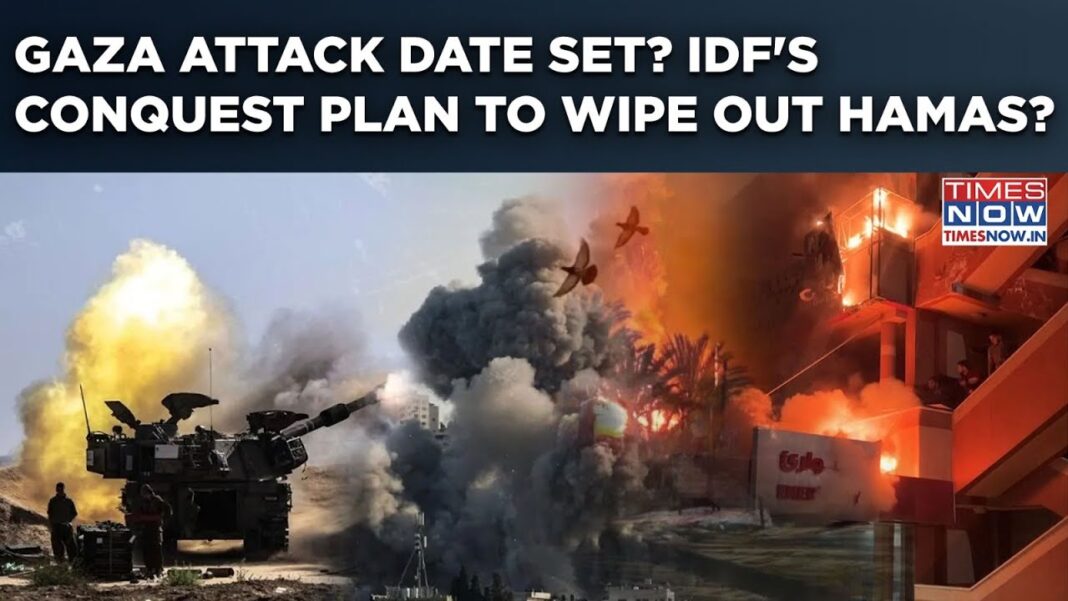
In a development signaling a deepening phase in Israel’s military campaign in Gaza, Israel Defense Forces (IDF) Chief of Staff, Lt. Gen. Eyal Zamir, has approved the general framework for a major offensive aimed at capturing Gaza City. As VIN News reported on Thursday, the formal endorsement came only days after Israel’s security cabinet directed the military to prepare for the seizure of the coastal enclave’s largest and most strategically significant urban center. The move comes against the backdrop of heightened ground operations and intensified aerial bombardments, even as the government refrains from providing a definitive timeline for the assault.
According to the information provided in the VIN News report, the IDF confirmed that the “main concept” of the Gaza City operation was discussed and approved during a meeting Zamir chaired with the General Staff Forum, attended by senior commanders and representatives of the Shin Bet internal security agency. This high-level review not only evaluated recent operational progress — including the offensive launched a day earlier in Gaza City’s Zeitoun neighborhood — but also laid out the guiding principles for the next stage of combat.
The IDF statement emphasized that the plan was authorized “in accordance with the directives of the political leadership,” underscoring the close alignment between military command and Prime Minister Benjamin Netanyahu’s government. However, no official date has been set for Israeli forces to enter Gaza City, a metropolis now hosting large numbers of displaced Palestinians who fled from previous combat zones further south and east.
Under the operational framework endorsed by Zamir, the IDF anticipates mobilizing between 80,000 and 100,000 reservists through emergency call-up orders, known in Hebrew as Tzav 8. As the VIN News report noted, this extraordinary mobilization reflects the magnitude of the planned maneuver, which will confront entrenched Hamas positions in dense, high-rise districts of western Gaza City.
The scale of the task is compounded by intelligence assessments that Hamas has established fortified guerrilla units in these urban strongholds, leveraging the city’s vertical density and complex street networks. Military planners expect the operation — which also encompasses the northern Gaza Strip — to be protracted, potentially extending well into 2026.
VIN News further reported that Lt. Gen. Zamir’s approval follows reported disagreements with Defense Minister Israel Katz over the advisability and timing of seizing Gaza City. Zamir had previously been described as cautious about launching such a massive urban operation, reportedly voicing concerns about readiness and sustainability.
Despite this, the IDF chief is now said to have emphasized the importance of enhancing force preparedness, conducting refresher drills, and providing “breathing room” for units between combat assignments. This focus on operational conditioning is seen as critical for sustaining troop effectiveness over a long and demanding campaign.
While the full offensive into Gaza City has yet to commence, Israeli operations in and around the city have already intensified markedly. The Hamas-run civil defense agency alleges that Israeli airstrikes have grown heavier in recent days, particularly targeting Zeitoun and Sabra neighborhoods, with claims of strikes against high-rise residential blocks.
The Hamas-run Gaza health ministry announced on Wednesday that 123 people had been killed in the past 24 hours — the highest daily toll in a week — although these figures could not be independently verified and do not differentiate between civilians and combatants.
Residents reported to VIN News and other outlets that eastern Gaza City has been subjected to intense bombardment, with extensive destruction in Zeitoun and Shejaiya overnight. Al-Ahli hospital stated that 12 people were killed in an airstrike on a Zeitoun home.
The violence is not limited to the north. Tanks have reportedly demolished several houses in the eastern sector of Khan Younis, deep in southern Gaza. In central Gaza, Palestinian medics claim that nine civilians seeking aid were killed by Israeli gunfire in two separate incidents, though the IDF has not issued any comment on these allegations.
The director general of the Hamas government media office, Ismail Al-Thawabta, accused Israel of pursuing “a dangerous escalation aimed at imposing a new reality on the ground by force” through what he termed a “scorched-earth policy” and “complete destruction of civilian property.”
Accounts from Gaza City paint a picture of civilians caught amid relentless bombardment and advancing armor. Sabah Fatoum, a 51-year-old resident sheltering in a tent in Tel al-Hawa, told AFP that “the explosions are massive” and that “tanks are advancing in the southern area of Tel al-Hawa with drones above our heads.”
She described witnessing dozens of civilians fleeing westward in search of relative safety. Such accounts underscore the fluidity of the civilian displacement crisis in Gaza, where repeated shifts in the frontlines have forced many families to relocate multiple times over the course of the conflict.
Amid these developments, the hostage crisis remains a central factor in Israel’s strategic calculus. Terror groups in Gaza are still holding 50 hostages, according to the information in the VIN News report, with Israeli officials believing that twenty are alive, twenty-eight confirmed dead, and grave concern expressed over the fate of the remaining two.
The continued captivity of Israeli nationals and others is both a pressing humanitarian concern and a political constraint, complicating military planning and international diplomacy.
Military analysts cited by VIN News caution that the planned Gaza City operation will likely be among the most complex urban warfare campaigns in modern IDF history. High-rise combat presents distinct tactical hazards, including sniper fire from elevated positions, improvised explosive devices, and the potential for ambushes in narrow corridors.
The anticipated need to clear and hold large numbers of multi-story buildings, often in the presence of civilians, will demand careful integration of intelligence, precision firepower, and infantry maneuver — all while under the constant threat of Hamas’ extensive tunnel network.
The decision to approve the Gaza City offensive is being closely watched internationally, with potential implications for Israel’s diplomatic standing. While the government frames the operation as a necessary step to dismantle Hamas’ military infrastructure, critics warn of the humanitarian toll and the risk of inflaming tensions with regional and global actors.
Prime Minister Netanyahu’s government has thus far resisted calls to commit to a specific timetable, likely in part to maintain operational flexibility and avoid telegraphing intentions to Hamas. However, this ambiguity also fuels speculation — both domestically and abroad — about Israel’s long-term strategic objectives in Gaza.
If the IDF’s own projections are accurate, operations in Gaza City could stretch well into 2026, making this not just a military campaign but a sustained national undertaking. The mobilization of tens of thousands of reservists under Tzav 8 orders will have significant social and economic repercussions within Israel, as large segments of the workforce are redirected to military service.
For Gaza’s population, the prospect of a drawn-out battle for their largest city raises fears of further displacement, destruction, and humanitarian crisis. The fact that many civilians have already sought refuge in Gaza City after earlier offensives adds a layer of urgency to relief efforts, even as the fighting intensifies.
The approval of the Gaza City operation’s general outline marks a pivotal juncture in the ongoing war between Israel and Hamas. As VIN News has documented, the decision reflects both the political leadership’s resolve to deliver a decisive blow to Hamas’ urban strongholds and the IDF’s recognition of the formidable challenges such an undertaking will entail.
With mobilization plans on a scale not seen in decades, a battlefield stretching from northern Gaza to Khan Younis, and a hostage crisis still unresolved, Israel is entering a phase of the conflict that will test its military capabilities, political cohesion, and resilience.
The coming months — and possibly years — will determine whether the operation achieves its stated objectives or becomes an enduring chapter in the protracted and devastating struggle over Gaza.

Included in this “news“ is the video of CBS “news reporting” by “Kourtney Kealey, reporting as fact the otherwise totally debunked slanderous Big Lie of “deaths by starvation” and factual claim that “just over 101 children have died of starvation”.
Other news factual “sources” quoted here include “the Hamas-run Gaza health ministry”, “palestinian paramedics”, and “the director general of the Hamas government media office, Ismail Al-Thawabta”. The only casualty numbers which are “reported” are acknowledged to be not “independently verified and do not differentiate between civilians and combatants”, despite which they are still published here.
Although there have been a number of “on the record“ public statements by the Prime Minister concerning IDF information about the actual number of “civilians” killed in the different engagements, none are reported here.