



|
Getting your Trinity Audio player ready...
|
Senior Hamas Leader Declares Group Will Never Lay Down Arms, Defying All Foreign Pressure
By: Ariella Haviv
Hamas has once again drawn a stark red line around its arsenal, rejecting renewed calls to disarm and warning against what it characterizes as “foreign interference in Palestinian affairs,” even as its senior officials engage in high-level talks with Turkish leaders about the next phase of a fragile, US-backed peace plan for Gaza. The juxtaposition—defiant rhetoric paired with active diplomacy—has sharpened concerns among regional observers that the current ceasefire is less a bridge to peace than a precarious pause before renewed confrontation. As The Algemeiner reported on Thursday, the latest statements from Hamas speaks volumes about the depth of the impasse over Gaza’s future governance, security, and reconstruction.
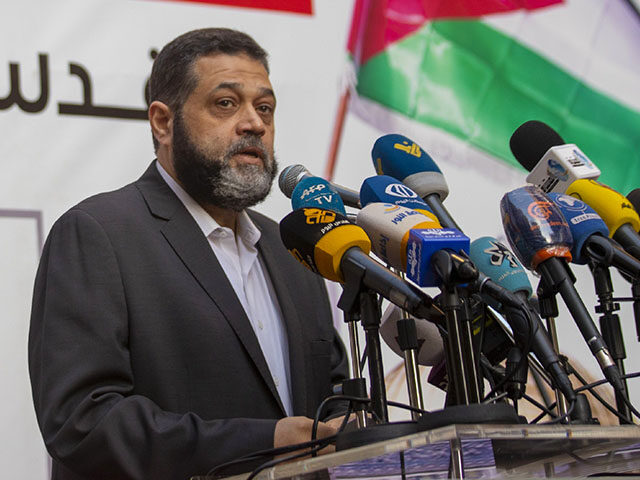
In an interview broadcast Tuesday on the Yemeni outlet Al-Masirah, Hamas Political Bureau member Osama Hamdan delivered an uncompromising message. The Islamist group, he insisted, will never relinquish its weapons to foreign powers or submit to any externally imposed demilitarization. “The resistance rejects any foreign attempt to disarm us or seize the weapons the occupation failed to take,” Hamdan said, according to The Algemeiner report. “The idea of surrendering our arms is one the resistance will never accept.”
The timing of Hamdan’s remarks was notable. Just a day later, senior Hamas officials met with Turkish Foreign Minister Hakan Fidan in Ankara, where discussions centered on the ongoing ceasefire and the contentious second phase of President Trump’s peace plan aimed at ending the two-year conflict. The meeting highlighted Turkey’s increasingly assertive role as both mediator and stakeholder in Gaza’s post-war trajectory—a role that Israel has vehemently opposed and that analysts warn could complicate efforts to neutralize Hamas’s military capabilities.
Hamdan’s interview did not merely reiterate Hamas’s long-standing refusal to disarm; it also laid bare the group’s deep mistrust of Israel and skepticism toward the ceasefire framework itself. “In the second phase of the Gaza agreement, the guarantees must be clearer, and the commitments more detailed,” he said. “The Zionist enemy does not abide by the agreement. Israel’s failure to open the [humanitarian] crossings signals its intention to resume aggression against the Gaza Strip.”
Such rhetoric has become a familiar refrain since the ceasefire took effect in October. Both sides have accused the other of violations, creating a cycle of recrimination that has stalled progress toward the deal’s next stage. Israel has continued to conduct targeted operations against what it describes as terrorist operatives, while Hamas has worked aggressively to reassert control over large portions of the war-ravaged enclave. The Algemeiner report noted that these parallel dynamics—Israeli military pressure and Hamas’s internal consolidation—have eroded trust at a moment when confidence-building measures are most needed.
At the heart of the dispute lies the second phase of Trump’s peace plan, which envisions sweeping changes to Gaza’s governance and security architecture. According to the framework outlined by US officials and reported by The Algemeiner, this phase would establish an interim administrative authority, often described as a “technocratic government,” deploy an International Stabilization Force (ISF) to assume security responsibilities, and initiate the demilitarization of Hamas. Each of these elements has proven deeply contentious.
For Hamas, demilitarization is a nonstarter. Hamdan framed the demand not as a technical security measure but as part of a broader geopolitical conspiracy. “The Americans want to impose hegemony on the region, with the Zionist entity [Israel] as its foundation,” he said. “Disarming the resistance would give Israel absolute control over the entire region.” He went further still, asserting that Hamas remains capable of sustaining the fight and predicting “the demise of this entity”—a reference to Israel—an assertion that is emblematic of Hamas’s terrorist worldview.
Turkey’s role in this equation has become increasingly controversial. A longtime backer of Hamas, Ankara has sought to position itself as a key player in Gaza’s reconstruction and security arrangements. Turkish officials have argued that their involvement could lend legitimacy and regional buy-in to post-war efforts. Yet Israeli leaders have repeatedly rejected any Turkish participation in the ISF or broader governance mechanisms, citing Ankara’s political and ideological alignment with Hamas.
Turkey has even floated proposals aimed at shielding Hamas from full disarmament, including suggestions that the group could hand over its weapons to the Palestinian Authority or place them in secure international storage. Israeli officials have dismissed these ideas as unacceptable, warning that they would allow Hamas to retain de facto influence and the latent capacity to rearm—an outcome Israel considers incompatible with long-term security.
The roots of the current stalemate can be traced back to the first phase of the ceasefire, which involved painful concessions on both sides. Under the agreement, Hamas was required to release all remaining hostages—both living and deceased—kidnapped during the group’s October 7, 2023 invasion of southern Israel, an assault that left more than a thousand Israelis dead and shocked the world. In return, Israel freed thousands of Palestinian prisoners, including many serving life sentences for terrorism, and partially withdrew its forces to a newly delineated “Yellow Line” dividing Gaza roughly between east and west.
As The Algemeiner has reported, Israel has made clear that any further withdrawal of its military hinges on concrete progress toward Hamas’s disarmament and other security benchmarks. At present, Israeli forces control approximately 53 percent of Gaza’s territory, while Hamas has moved swiftly to reestablish dominance over the remaining 47 percent. Crucially, the majority of Gaza’s population resides in Hamas-controlled areas—a demographic reality that has significant implications for governance and humanitarian access.
Since the ceasefire took effect two months ago, Hamas has launched what many observers describe as a brutal internal crackdown. The group has targeted Palestinians it labels “lawbreakers and collaborators with Israel,” seizing weapons, suppressing dissent, and violently eliminating perceived rivals. These actions have sparked clashes within Gaza and raised alarms among human rights advocates, who warn that Hamas is entrenching its rule even as international actors debate the enclave’s future.
The question of reconstruction further complicates the picture. Gaza’s infrastructure lies in ruins after two years of conflict, and rebuilding will require billions of dollars and sustained international engagement. Turkey has signaled a strong desire to participate in reconstruction efforts, a move that experts fear could inadvertently bolster Hamas’s terrorist infrastructure if not carefully monitored. Israel, for its part, insists that reconstruction must be tied to irreversible demilitarization—a condition Hamas categorically rejects.
The United States finds itself navigating a narrow path between these competing demands. While Washington has championed the peace plan as a realistic framework for ending the conflict, progress has stalled amid disagreements over sequencing and enforcement. The Algemeiner report noted that there is no consensus on when reconstruction should begin, how the ISF would be constituted, or who would wield ultimate authority in Gaza during the transition period.
Against this backdrop, Hamas’s overt defiance carries significant strategic weight. By publicly rejecting disarmament while engaging diplomatically with Turkey, the group appears to be signaling that it seeks political legitimacy without relinquishing military power. This dual-track approach risks perpetuating the very conditions that have fueled repeated cycles of violence: an armed non-state actor exercising sovereign-like control over territory, resistant to both internal reform and external constraint.
Israel’s response has been predictably firm. Officials have reiterated that they will not countenance any arrangement that leaves Hamas armed and influential. The memory of October 7 looms large in Israeli political discourse, shaping a consensus that security guarantees must be absolute rather than aspirational. This stance enjoys broad support across Israel’s political spectrum, even as debates continue over the humanitarian and diplomatic costs of prolonged military control.
For Gaza’s civilians, caught between these hardened positions, the consequences are dire. The ceasefire has provided a measure of respite from large-scale hostilities, but daily life remains precarious. Humanitarian crossings are a flashpoint, reconstruction is stalled, and internal repression has intensified. Each delay in implementing the next phase of the agreement deepens uncertainty about whether the current lull will give way to genuine stabilization or collapse into renewed war.
In the end, Hamas’s refusal to disarm is more than a tactical disagreement; it is a fundamental clash of visions for Gaza’s future. One vision, backed by the United States and Israel, seeks to dismantle militant structures and replace them with technocratic governance and international oversight. The other, articulated unapologetically by Hamas leaders like Osama Hamdan, insists that armed “resistance” is non-negotiable and that external actors have no right to dictate terms.
As The Algemeiner report indicated, the coming weeks will be critical. Diplomatic efforts in Ankara, Washington, and beyond may yet salvage a pathway forward, but the gulf between the parties remains vast. Whether Gaza emerges from this moment as a demilitarized territory on the road to recovery, or as a battleground primed for another devastating chapter, will depend on whether rhetoric hardens into inevitability—or yields, however reluctantly, to compromise.