



|
Getting your Trinity Audio player ready...
|
By: Ariella Haviv
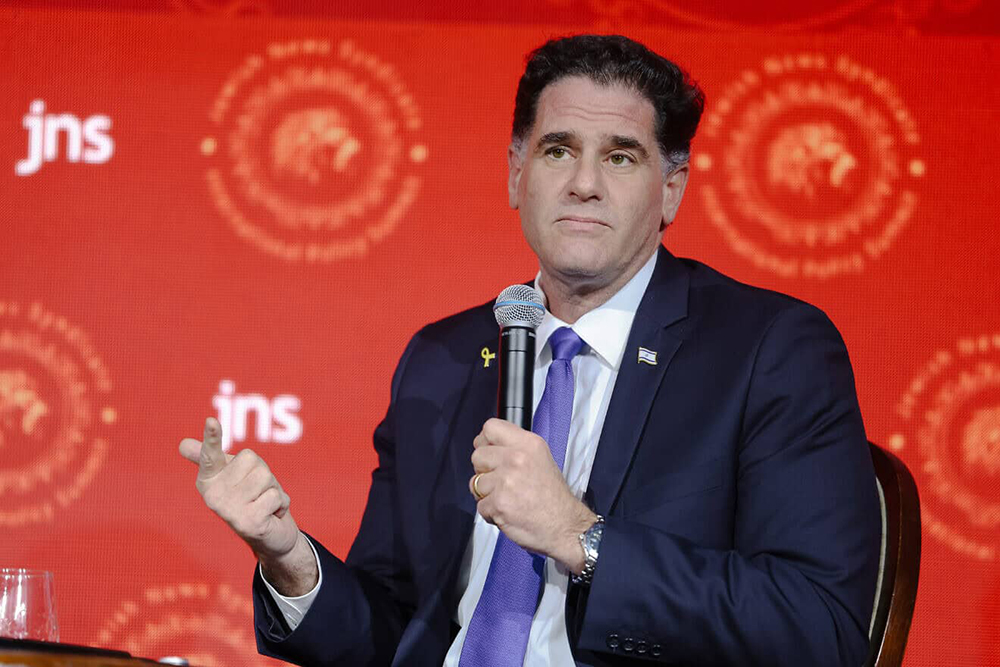
In a development that highlights the increasingly complex diplomatic maneuvers surrounding the Gaza conflict, Israel National News (INN) reported on Tuesday that Minister of Strategic Affairs Ron Dermer recently traveled to the United Arab Emirates on a confidential mission. According to the information provided by Kan Reshet Bet, Dermer led a diplomatic delegation to meet senior Emirati officials, with discussions centered on both the ongoing war in Gaza and a potential agreement to secure the release of Israeli hostages still held by Hamas.
The visit, discreet in nature, focused on Israel’s reliance on regional partners forged through the Abraham Accords. Yet, as the report at Israel National News (INN) noted, the mission unfolded against a backdrop of political unease. Just days earlier, UAE President Mohammed bin Zayed held a high-profile meeting with Israeli Opposition Leader Yair Lapid. That encounter, warmly received in some diplomatic circles, reportedly stirred frustration within Prime Minister Benjamin Netanyahu’s camp. Netanyahu, who has not yet undertaken a public visit to Abu Dhabi since the historic normalization accords, was said to view the engagement with Lapid as an affront, raising questions over Israel’s standing with its Gulf partners.
Meanwhile, parallel developments in the hostage negotiations added a layer of urgency to Dermer’s mission. On Monday, Bassam Na’im, a senior Hamas figure, publicly confirmed that the terrorist organization had accepted a proposal advanced by Egyptian and Qatari mediators. According to the information contained in the report at INN, the plan envisages a partial agreement modeled on an outline developed by U.S. Envoy Steve Witkoff. Under the terms, Hamas would release ten living hostages along with the remains of 18 deceased captives, in exchange for a 60-day ceasefire.
Israel has acknowledged receiving Hamas’s response, though officials have yet to disclose a definitive position on the proposal. As the report at Israel National News emphasized, the government remains cautious, wary of committing to a temporary halt in hostilities without assurances of broader concessions, including the release of all remaining hostages. Netanyahu has repeatedly stressed that any pause in fighting must not come at the cost of Israel’s overarching objective: dismantling Hamas’s military and governing apparatus in Gaza.
Dermer’s quiet diplomacy in Abu Dhabi may reflect Israel’s attempt to enlist regional allies in shaping the contours of a viable deal, one that secures humanitarian gains without undermining its strategic goals. The UAE, which has sought to balance its new partnership with Israel against longstanding concerns for Palestinian civilians, occupies a unique position to mediate between Israeli security imperatives and international pressure for a ceasefire.
At the same time, Netanyahu’s absence from Abu Dhabi since the Abraham Accords remains a conspicuous gap in Israel’s diplomatic outreach. As the INN report pointed out, this vacuum has allowed figures like Lapid to step into the spotlight, potentially complicating the optics of Israel’s engagement with Gulf states at a moment when unity of purpose is paramount.
Ultimately, the convergence of Dermer’s unpublicized visit, Hamas’s tentative acceptance of a partial hostage deal, and the visible diplomatic overtures toward Lapid illustrate the high stakes now shaping Israel’s war and diplomacy. As the conflict grinds on, the delicate interplay between battlefield resolve and regional negotiations will continue to define Israel’s path forward—an interplay watched closely by allies, adversaries, and, most importantly, the families of those still held hostage.
