



|
Getting your Trinity Audio player ready...
|
By: Fern Sidman
For more than a year, as Israel reeled from war, hostage negotiations, and fierce debates over Qatar’s murky role in the region, one of the country’s most recognizable political commentators was quietly receiving hundreds of thousands of dollars from a network linked to a Washington lobbyist for Doha. The revelation has now detonated into a full-blown scandal — one that VIN News reported on Saturday is rapidly becoming a watershed moment in Israeli media ethics, blurring the already fragile boundaries between journalism, private consulting, and foreign influence.
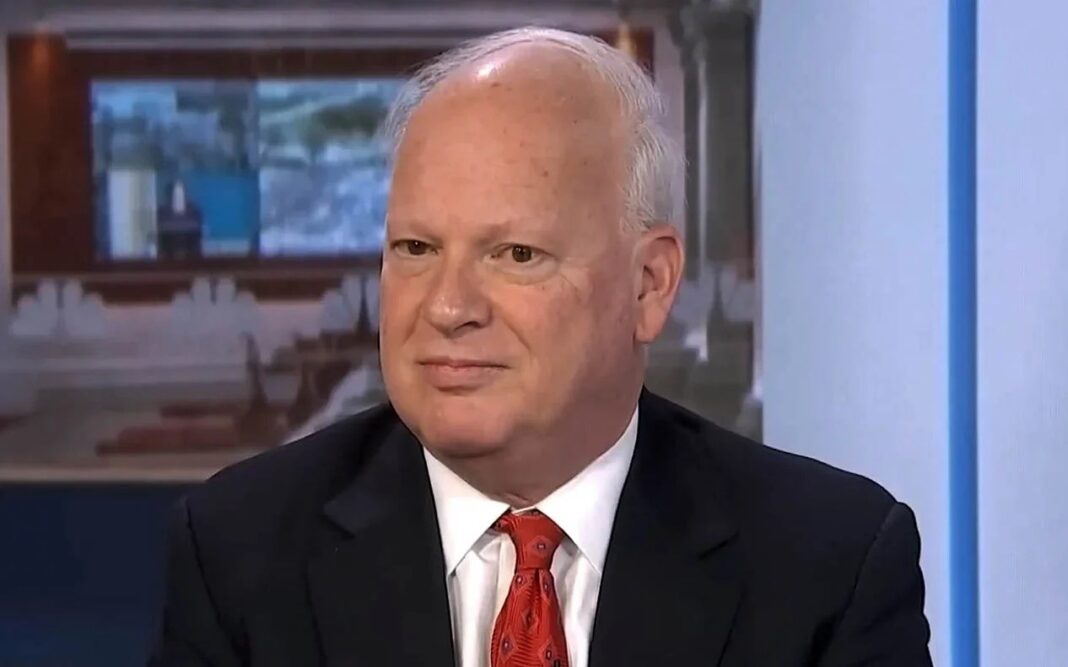
At the center of the storm is Alon Pinkas, a former Haaretz columnist, veteran diplomat, and once-trusted voice in Israeli public discourse. According to an investigative report published Saturday and covered by VIN News, Pinkas received payments between January 2024 and March 2025 that were traced to Jay Footlik, a Washington-based lobbyist known for representing Qatari interests. The funds were routed through Israeli businessman Gil Birger, creating a financial labyrinth that only later came to light.
Pinkas has not been accused of criminal wrongdoing. He insists the payments were legitimate compensation for policy research unrelated to Qatar and that his journalism remained independent. Yet, as the VIN News report documented, the timing and thematic overlap between his columns and the talking points associated with Qatar’s advocacy machine have ignited one of the most consequential media credibility debates Israel has seen in years.
According to the information provided in the VIN News report, the payments flowed in monthly installments for over fourteen months. The total sum has not been officially disclosed, but sources familiar with the investigation describe it as “hundreds of thousands of dollars.” The money did not arrive directly from Footlik or any Qatari entity, but rather through a corporate vehicle tied to Birger — a method Pinkas later said he believed was legal and transparent once he understood the arrangement.
The story might have ended as a technical dispute about disclosure requirements, were it not for the substance of Pinkas’s work during that period. Investigators and Israel’s Kan public broadcaster identified five core talking points associated with the alleged pro-Qatar influence effort:
Egypt enabled the October 7 Hamas attack by allowing weapons smuggling into Gaza.
Hamas leaders were in Qatar at the explicit request of Israel and the United States.
Israel itself had asked Qatar to transfer funds to Hamas in Gaza.
Qatar is strategically indispensable to Israel and Washington.
Qatar, rather than Egypt, should be the primary mediator in hostage and ceasefire talks.
According to the report, Pinkas echoed these themes in at least seven columns published while he was receiving the payments traced to Footlik.
The VIN News report emphasized that none of these positions were inherently fringe at the time — some were indeed echoed by senior Israeli officials and even security agencies. But the convergence between paid consulting work tied to a Qatar lobbyist and public commentary favoring Qatar has proved impossible to ignore.
Pinkas has mounted a vigorous defense. In statements cited by VIN News, he said the funds were for writing policy papers for non-Qatari clients and that Footlik had asked him only to prepare research on the Israeli-Palestinian conflict and to facilitate contacts with journalists and families of hostages.
“I never worked for Qatar, never met Qatari officials, and never set foot in the country,” Pinkas said. “In 2024, I wrote two pieces analyzing Qatar as an essential mediator. That position was shared at the time by Israel’s leadership, the security cabinet, and the Mossad.”
Yet even supporters concede that the appearance of a conflict is profound. Pinkas’s stature — he served as Israel’s consul general in New York and held senior roles in the Foreign Ministry — imbued his journalism with unusual authority. This pedigree is precisely why the revelations have landed with such force: readers trusted that his insights were shaped solely by experience and conviction, not by private financial relationships.
The fallout has not been confined to Pinkas. His former employer, Haaretz, now finds itself under uncomfortable scrutiny.
Editor-in-chief Aluf Benn told colleagues — and later confirmed in statements cited by VIN News — that he confronted Pinkas after the first media reports surfaced about a relationship with Footlik. Pinkas, Benn said, initially denied any financial arrangement.
A month later, Benn learned that Pinkas had testified to police — a fact the columnist had not disclosed to the paper. Editors convened another meeting. After what Benn described as “initial denials and evasions,” Pinkas finally acknowledged receiving monthly payments routed through Birger’s company, characterizing the work as policy research unrelated to Qatar.
Following that meeting, Pinkas quietly ceased writing for the paper. Haaretz did not announce his departure publicly. Only later did the newspaper append disclosure notes to columns he had published during the period of the payments.
This sequence of events has triggered uncomfortable questions inside Israeli newsrooms: How thoroughly are contributors vetted? How aggressively should editors probe potential conflicts? And what does transparency actually require when journalists take on outside consulting work?
Pinkas’s case has now been folded into what Israeli media have dubbed “Qatargate” — a widening investigation into whether political aides, consultants, and media figures received money linked to a broader Qatari influence campaign.
The scandal touches a raw nerve in Israel. Qatar occupies a paradoxical role: on one hand, it hosts Hamas leaders and funds Gaza; on the other, it has served as a critical intermediary in hostage negotiations and ceasefire talks. Any suggestion that Israeli discourse about Doha might have been nudged — however subtly — by paid advocacy is politically explosive.
Media ethics experts interviewed by VIN News stress that the central issue is not necessarily criminality. It is disclosure. Readers, they argue, had a right to know that a commentator analyzing Qatar’s role in the war was simultaneously receiving large sums through a channel tied to a Qatari lobbyist.
The Pinkas affair arrives at a moment when journalism worldwide is grappling with the erosion of clear professional boundaries. Many commentators supplement their income with consulting work. Think tanks blur into advocacy shops. Lobbyists masquerade as policy entrepreneurs.
The VIN News report observed that Israel, with its dense ecosystem of former diplomats, security officials, and media figures, is especially vulnerable to this convergence. When the same individuals shuttle between government service, journalism, and private consultancy, transparency becomes not merely an ethical nicety but a democratic necessity.
The question now confronting editors, lawmakers, and the public is how to draw workable lines. Should journalists be barred from consulting altogether? Should all external income be publicly disclosed? Or is the solution cultural rather than regulatory — a recommitment to norms that have quietly eroded?
Pinkas may ultimately be cleared of any legal wrongdoing. The deeper damage, however, may be irreparable. Journalism relies on trust — not only in the facts reported, but in the independence of those who report them. Once readers begin to wonder whether a column reflects conviction or compensation, the entire edifice wobbles.
For Haaretz, the episode is a cautionary tale about institutional responsibility. For Israel’s media industry, it is a moment of reckoning. And for the public, it is a reminder that in an era of globalized lobbying and shadowy financial flows, vigilance is not optional.
As the VIN News report emphasized, Qatargate is not merely about Qatar, or Pinkas, or one newspaper. It is about the porous membrane between money and meaning — and whether Israel’s democratic conversation can survive when that membrane is breached.
The coming months will determine whether the scandal fades as another footnote in the country’s turbulent politics, or whether it catalyzes a long-overdue reexamination of how influence is bought, sold, and, too often, hidden behind the reassuring bylines of trusted voices.
