



|
Getting your Trinity Audio player ready...
|
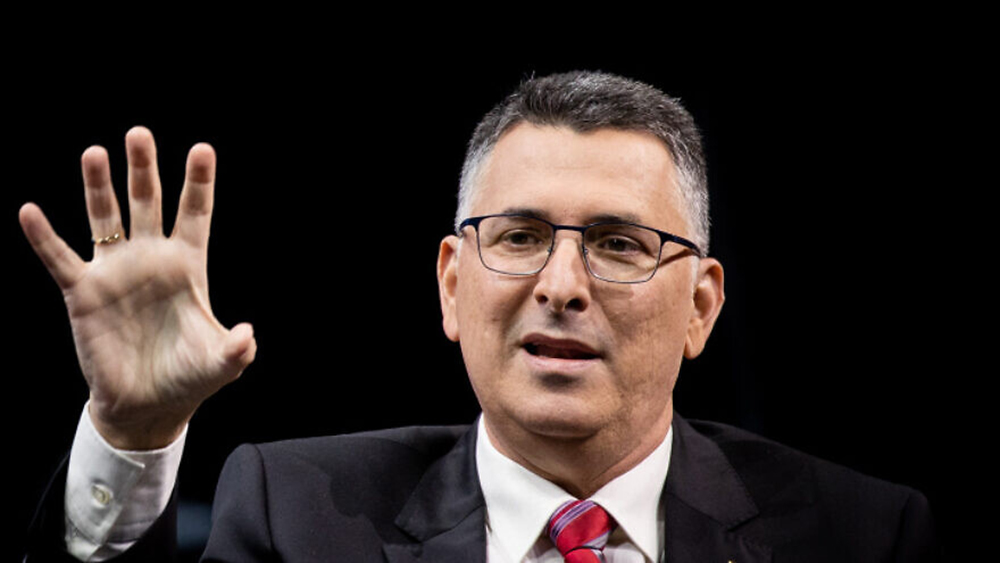
When it comes to genocide accusations, Israel does not belong in the defendant seat, but rather on the prosecuting side in a case against Iran, which is a classic genocidal state,” said Israeli Cabinet Minister Gideon Sa’ar.
By: Amelie Botbol
Israeli Cabinet minister Gideon Sa’ar announced on Sunday that he will begin work to bring Iran before the International Court of Justice on genocide charges.
After speaking with Israeli National Security Adviser Tzachi Hanegbi, Sa’ar told JNS on Monday that he will likely be bringing the matter before Prime Minister Benjamin Netanyahu in the coming days to convince him to move forward with the creation of a dedicated task force.
“When it comes to genocide accusations, Israel does not belong in the defendant seat, but rather on the prosecuting side in a case against Iran, which is a classic genocidal state,” he said.
Sa’ar’s initiative comes after South Africa brought Israel before the ICJ on charges of of violating the 1948 Convention on the Prevention and Punishment of the Crime of Genocide.
The court on Friday rejected South Africa’s request to order provisional measures against Israel including an immediate halt to Israel’s war against Hamas in the Gaza Strip.
The court, which is based in The Hague, ordered Israel to “take all measures within its power” to prevent the commission of genocide against Palestinians in Gaza, to ensure that Israel Defense Forces troops do not commit acts of genocide and to punish alleged public incitement to genocide.
The ruling also called on Jerusalem to “take effective measures to preserve evidence” of military actions that might fall under the Convention on the Prevention and Punishment of the Crime of Genocide and submit a report to the court within a month.
“Since I am certain that Israel’s enemies, Iran and Hamas, are behind South Africa’s action and Nicaragua’s submission of a request to the ICJ to prosecute Israel, it is very important to hold Iran accountable for its action against the Jewish state in the international arena,” said Sa’ar.
“There are public statements of Iranian leaders calling for the elimination of the State of Israel, which are consistent with Iran’s policy of supporting, financing, training and arming Hamas and [Palestinian] Islamic Jihad in the wake of the Oct. 7 attacks,” he added.
Iranian officials overtly praised Hamas’s Oct. 7 massacre of 1,200 people in southern Israel, with Iran’s Islamic Revolutionary Guard Corps claiming on Dec. 27 that the attack came in retaliation for the 2020 killing of IRGC Quds Force head Qassem Soleimani by the United States.
Speaking at the funeral for the 89 victims of a Jan. 3 Islamic State suicide bombing in Kerman, Iran, Iranian President Ebrahim Raisi said, “the ‘Al Aqsa Flood’ [Hamas’s name for the Oct. 7 attack] operation would bring about the end of the Zionist regime.” The ISIS bombing had targeted a memorial event for Soleimani.
Earlier this month, Iran’s Supreme Leader Ayatollah Ali Khamenei tweeted in Hebrew that Israel’s “crimes” will still be remembered after the Jewish state is gone.
“The crimes of the Zionist regime will never be forgotten. These crimes will not be forgotten even after the Zionist regime is destroyed, by the grace of God. Authors will write in books that these people killed thousands of children and women in a matter of weeks,” the country’s top religious authority wrote.
Iran is widely believed to have played an important role in the planning of the Oct. 7 attacks.
(JNS.org)