




















|
Getting your Trinity Audio player ready...
|
By: Carl Schwartzbaum
In a stark and deeply consequential warning that underscores the mounting volatility across multiple fronts, Israeli security officials have sounded the alarm over what they describe as a rapidly deteriorating security landscape in Judea and Samaria, driven by an increasingly sophisticated and coordinated nexus of Iranian, Turkish, and Hamas-backed terrorist activity. As reported on Monday by The Algemeiner, the convergence of external state actors and entrenched militant organizations has transformed the territory into a focal point of strategic concern, raising fears of a large-scale escalation reminiscent of past catastrophic attacks.
According to intelligence assessments cited in The Algemeiner report, Israeli defense officials have identified a significant intensification of foreign involvement in the orchestration, financing, and operational support of terrorism in Judea and Samaria. Iran and Turkey, in particular, are believed to be playing increasingly active roles in sustaining militant infrastructure, while Hamas has sought to expand its operational footprint by leveraging networks linked to Gaza and beyond.
This evolving threat matrix is placing extraordinary strain on Israeli military resources. The local command structure in Judea and Samaria is currently operating with 22 battalions, a substantial deployment that nonetheless faces a daunting array of responsibilities. These include dismantling entrenched terrorist infrastructure, intercepting financial channels that sustain terrorist activity, locating and neutralizing hidden weapons caches, safeguarding Israeli communities, and curbing the persistent flow of illicit arms smuggled across the Jordanian border.
The scale and complexity of these challenges have led Israeli officials to issue increasingly urgent warnings. As The Algemeiner has reported, there is growing concern that a coordinated, large-scale terrorist attack targeting Israeli communities in Judea and Samaria could serve as a destabilizing flashpoint, particularly in the context of ongoing conflicts involving Gaza and Iran. Such an event, officials fear, could ignite a broader regional conflagration.
Evidence uncovered in recent operations has only deepened these anxieties. Last year, Israeli forces reportedly discovered documents indicating that Hamas had been actively developing plans for raids on Israeli settlements in the region. These plans, according to The Algemeine report, bear troubling similarities to the tactics employed during the October 7, 2023 attacks, which left an indelible mark on Israel’s security consciousness.
Compounding the threat is the emergence of sophisticated financial networks designed to sustain militant operations. In a significant development, Israel’s domestic intelligence agency, the Shin Bet, arrested six Arab Israeli citizens suspected of facilitating the transfer of millions of shekels from Hamas’s Turkish branch into Judea and Samaria. The network is believed to have smuggled more than 3,000,000 shekels to fund terrorist activities, highlighting the transnational nature of the threat.
The Algemeiner report emphasized that these financial pipelines are not merely ancillary but central to the operational viability of militant groups. By channeling resources through complex and often opaque mechanisms, these networks enable sustained attacks while complicating efforts to disrupt them.
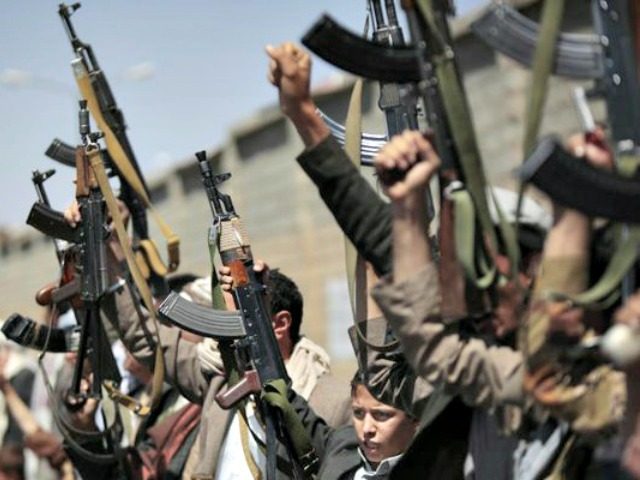
Among the most alarming developments is the rise of the Jenin Brigades in northern Samaria. This coalition of operatives affiliated with Hamas and Palestinian Islamic Jihad has effectively transformed refugee camps into fortified hubs of militant activity. According to The Algemeiner report, these areas now serve as staging grounds for shootings, bombings, and ambushes, creating a persistent and unpredictable security challenge.
The operational resilience of these groups is underpinned by a multifaceted financing system that draws on Iranian support, exploits Palestinian banking channels, and even siphons funds from tax revenues collected by Israel. International facilitators further enhance the network’s reach, enabling the flow of resources across borders with relative ease.
Jose Lev Alvarez, a writing fellow at the Middle East Forum, offered a comprehensive analysis of the strategic implications of this dynamic in remarks cited by The Algemeiner. “By sustaining this Judea and Samaria front through Hamas and Palestinian Islamic Jihad networks, Tehran forces Israel to fight simultaneously across multiple fronts, drains resources that could otherwise consolidate gains in Gaza, and keeps the Palestinian issue politically radioactive enough to sabotage broader Arab-Israeli alignment,” he explained.
Alvarez further elaborated on the strategic calculus underpinning Iran’s approach. “Tehran advances its axis-of-resistance doctrine at minimal cost — no Iranian boots, no direct missile exchanges, just calibrated chaos designed to obstruct any credible day-after plan for Gaza and derail normalization agreements with Saudi Arabia or Gulf states demanding Palestinian stability,” he said.
These insights underscore the broader geopolitical dimensions of the crisis. What is unfolding in Judea and Samaria is not merely a localized security challenge but a component of a larger strategy aimed at reshaping the regional balance of power.
Israeli military officials have long warned of the potential for Iranian-backed arms smuggling to dramatically alter the threat landscape. According to The Algemeiner report, there are growing concerns that increasingly advanced weaponry is making its way into the hands of Palestinian terrorists, raising the specter of attacks that could breach existing Israeli defenses.
Intelligence assessments indicate that some terrorist operatives in the region may now possess what officials have described as “standard Iranian weapons,” a development that significantly elevates the risk profile. The possibility that such weapons could be used in a coordinated assault has heightened the urgency of Israeli counterterrorism efforts.
Joe Truzman, a senior research analyst at the Foundation for Defense of Democracies, highlighted the strategic timing of these developments in comments cited by The Algemeiner. “Hamas and its allied factions understand that igniting violence in the territory would divert Israel’s attention during a critical time of rebuilding the group’s infrastructure in Gaza,” he observed.
Truzman also pointed to the potential impact of recent developments related to prisoner releases. “The release of convicted terrorists to Judea and Samaria under the ceasefire agreement may be a factor in the resurgence of organized violence in the territory,” he added.
The cumulative effect of these factors has been a marked increase in the number of attempted attacks. As of last February, Israeli security forces had successfully foiled nearly 1,000 terrorist plots over the preceding year, a statistic that underscores both the scale of the threat and the intensity of the response.
Despite these successes, concern within Israel remains acute. Public sentiment, as reflected in a survey conducted by the Jerusalem Center for Security and Foreign Affairs and cited by The Algemeiner, reveals widespread anxiety about the possibility of an October 7-style attack originating from Judea and Samaria. Approximately 70 percent of respondents expressed such fears, with the figure rising to 81 percent among Jewish respondents. In contrast, 53 percent of Arab respondents indicated that they were not worried about such a scenario, highlighting a divergence in perceptions that adds another layer of complexity to the situation.
In response to these mounting challenges, the Israel Defense Forces have taken decisive steps to bolster their capabilities in the region. A special command has been established to address the evolving threat landscape, and a large-scale counterterrorism operation has been launched in northern Samaria—an initiative described by The Algemeiner as nearly unprecedented in its scope and intensity.
These measures reflect a recognition that the situation in Judea and Samaria has entered a critical phase. The convergence of external support, internal militancy, and strategic intent has created a volatile environment in which the risk of escalation is both real and immediate.
At its core, the unfolding crisis represents a test of Israel’s ability to navigate a multidimensional security challenge while maintaining stability across its borders. The stakes are exceptionally high, not only for Israel but for the broader region, where the consequences of miscalculation could be profound.
As The Algemeiner report emphasized, the developments in Judea and Samaria must be understood within the context of a broader strategic contest, one in which state and non-state actors alike are vying to shape the future of the Middle East.
For Israeli security officials, the message is unequivocal: vigilance must be maintained, resources must be mobilized, and the evolving threat must be confronted with both precision and resolve. The alternative—a failure to adequately address the growing nexus of terrorism—could have consequences that extend far beyond the immediate confines of Judea and Samaria.
In the words of those tasked with safeguarding the nation, the current moment demands not only awareness but action. The storm, they warn, is already gathering.



