



|
Getting your Trinity Audio player ready...
|
By: Fern Sidman
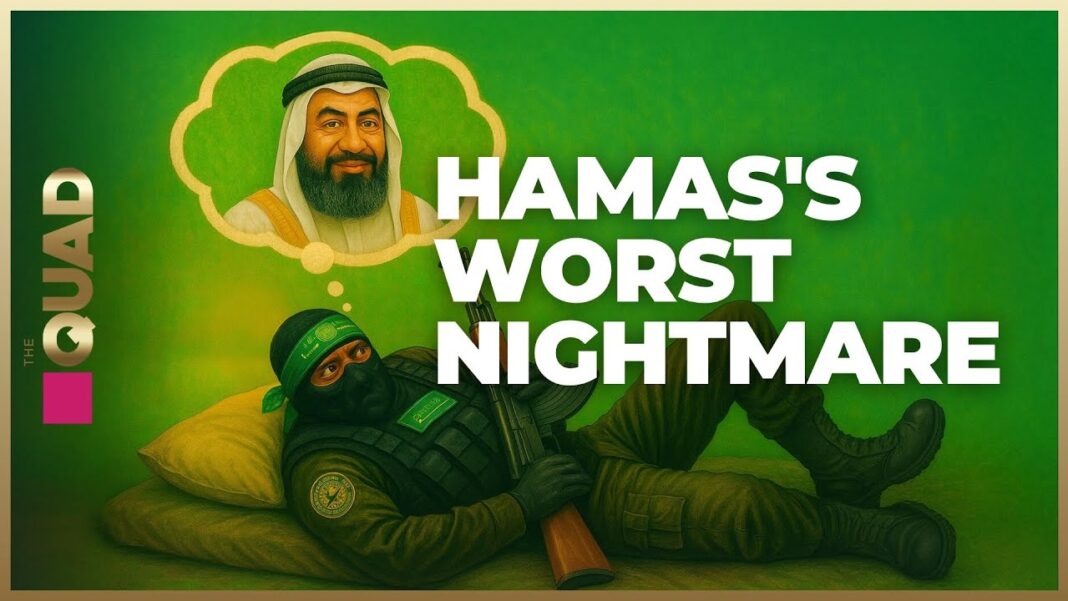
A bold and unprecedented political initiative emerging from the heart of Hebron is shaking the foundations of Palestinian politics and drawing a furious response from the Palestinian Authority (PA). According to a report that appeared on Wednesday at Israel National News, several tribal leaders and sheikhs in the Hebron region have launched a proposal to secede from the PA and establish a locally governed emirate that would formally recognize the State of Israel and seek to join the Abraham Accords.
This movement, driven by frustration over years of PA corruption, economic stagnation, and authoritarian governance, represents the most serious internal challenge to the PA’s monopoly on political legitimacy in Judea and Samaria in recent memory. It also signifies a dramatic and rare alignment with Israeli and American-backed normalization efforts in the region.
Among the leading voices in this initiative is Sheikh Wadih al-Jabari, a prominent elder of Hebron’s largest and most influential clan. On Tuesday night, in what appears to be a politically motivated act of retaliation, Sheikh al-Jabari’s car was torched in eastern Jerusalem. The act, as reported by Israel National News, is widely viewed as a warning shot — a physical manifestation of the escalating campaign of incitement being waged by the PA against those involved in this controversial movement.
The Palestinian Authority has wasted no time in branding the initiative as treacherous. Through official PA-controlled media channels and a coordinated blitz on social platforms, the leadership in Ramallah has labeled the movement “a new version of treason” and warned of the dangers of what it described as the “de facto partition of Judea and Samaria.” The report at Israel National News noted that the PA’s language in these condemnations has grown increasingly severe, signaling just how seriously the leadership perceives the threat.
“The hysteria of the corrupt officials from the terrorist Palestinian Authority proves that they too understand the Oslo-era of terror is over,” Samaria Regional Council Governor Yossi Dagan said in response to the developments. Dagan, a longtime critic of the PA and advocate for new governance models in Judea and Samaria, lauded the courage of the Hebron sheikhs. “When Arab leaders begin to see that peace and prosperity can come from cooperation with Israel rather than from clinging to failed ideologies and violence, we are witnessing history.”
The sheikhs’ proposal includes the creation of a new industrial zone — a tangible first step toward economic autonomy. They have emphasized a model of pragmatic coexistence, one that would prioritize economic development, civil order, and regional stability over confrontation with Israel. As Israel National News has reported, the initiative has attracted interest from Arab business leaders abroad and even informal inquiries from Gulf States who are themselves signatories of the Abraham Accords.
What makes this movement all the more significant is its origin: the tribal strongholds of Hebron, often viewed as bastions of traditionalist Palestinian society. If momentum builds among the clans — long the bedrock of social and political order in Palestinian life — the implications for the PA’s grip in Judea and Samaria could be profound.
For the Palestinian Authority, the potential unraveling of its hegemony comes at a perilous moment. Beset by accusations of financial mismanagement, a crisis of succession around aging President Mahmoud Abbas, and a waning public legitimacy exacerbated by its suppression of dissent, the PA sees this initiative not merely as a political irritation, but as an existential threat. As one Ramallah official told Israel National News anonymously, “This is a test of our national cohesion. It cannot be allowed to succeed.”
Yet within Hebron, the tide appears to be shifting. Sources cited by Israel National News describe an increasing number of clan leaders and civil figures quietly expressing interest in joining the initiative. Some are motivated by ideological disillusionment, others by the very real possibility of economic advancement under a model aligned with the stability offered by the Abraham Accords.
Critics within the Palestinian community have derided the move as a “tribal betrayal” and an attempt to Balkanize the Palestinian cause. But supporters argue the initiative reflects a growing realization that continued allegiance to the PA has yielded neither sovereignty nor prosperity — only repression and international marginalization.
According to the information provided in the Israel National News report, Israeli officials have not commented officially on the initiative, but analysts suggest that Jerusalem is watching developments closely. The prospect of a cooperative Arab entity emerging organically from the Palestinian street — and not imposed through international fiat — could offer a transformative new dynamic for regional peacebuilding.
Still, the road ahead for the Hebron sheikhs is fraught with danger. The torching of Sheikh al-Jabari’s vehicle is a reminder that the PA is prepared to use intimidation and possibly worse to maintain its control. Human rights observers have long documented the PA’s use of arbitrary detention, torture, and political persecution against dissidents.
Nevertheless, momentum may be on the side of reform. As Israel National News has reported, Palestinian dissatisfaction with the PA has reached historic highs, particularly among younger generations. With the failure of successive peace processes and no viable path to statehood in sight, alternative governance models that offer security, economic opportunity, and a pathway to regional integration may no longer be dismissed as fringe.
The formation of a local emirate aligned with the Abraham Accords remains hypothetical — and enormously controversial — but in the streets and hills of Hebron, the seeds of political reformation have been planted. Whether they will take root or be smothered by the iron grip of the PA remains to be seen.
As one unnamed tribal leader told Israel National News, “We are not enemies of the Palestinian people. We are their sons. But we believe the time has come to try something different — something that works.”
In the volatile landscape of Judea and Samaria, that sentiment may yet prove revolutionary.
