



|
Getting your Trinity Audio player ready...
|
By: Fern Sidman
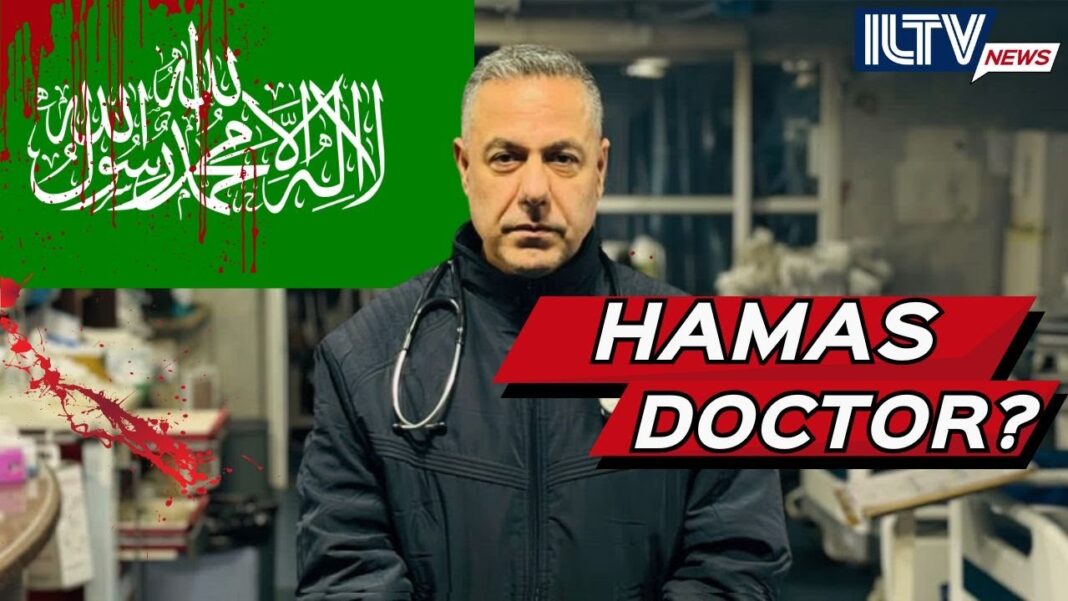
In the long and bitter wars over narrative as much as territory, photographs have a way of returning at the most inconvenient moments. This week, a single image taken nearly a decade ago has surged back into public view, unsettling long-standing assumptions about the line between humanitarian institutions and terrorist power structures in Gaza. As first reported by the New York Post and closely examined by NGO Monitor, the photograph shows Hussam Abu Safiya, the director of Kamal Adwan Hospital in northern Gaza, clad in what appears to be a Hamas uniform and standing alongside senior figures from the terror organization. The resurfacing of this image, now widely discussed and scrutinized, has reopened a debate that VIN News has followed closely throughout the war: whether Gaza’s medical infrastructure has been systematically entangled with Hamas’s military and political apparatus.
According to NGO Monitor, the photograph dates back to 2016 and was originally posted on a Facebook page affiliated with Hamas’s Military Medical Services. The image depicts Abu Safiya at a gathering marking the completion of Kamal Adwan Hospital, surrounded by senior Hamas officials, including commanders from the organization’s Military Medical Services and National Security Forces. Palestinian media outlets, as well as Hamas’s own Medical Services, have previously identified Abu Safiya as holding the rank of colonel within this Hamas-affiliated body. The VIN News report noted that this detail, while long accessible in Arabic-language reporting, drew little attention outside the region until now.
The Military Medical Services, while distinct from Hamas’s armed wing, the al-Qassam Brigades, occupies a crucial and often opaque position within Hamas’s organizational ecosystem. It is formally described as a separate entity, responsible for medical logistics and support, yet Israeli authorities have stated that members of this unit actively participated in the Hamas-led October 7, 2023, attack on southern Israel. That assault, which left more than 1,200 Israelis dead and hundreds taken hostage, shattered any remaining illusions about the purely auxiliary role of Hamas-linked medical bodies. VIN News has repeatedly reported that Israeli intelligence views these divisions not as neutral humanitarian services but as integral components of Hamas’s war-fighting capacity.
Abu Safiya himself has been at the center of this controversy since December, when Israeli forces raided Kamal Adwan Hospital during intense fighting in northern Gaza. During the operation, Israeli troops detained Abu Safiya along with nearly 240 other individuals found at the facility. The Israeli military asserted that the hospital had been used as a Hamas command center, an allegation that Hamas and hospital officials vehemently denied at the time. Abu Safiya remains in Israeli custody, and his attorneys have alleged that he was subjected to severe abuse during detention. These claims have not been publicly addressed by Israeli authorities, a silence that has drawn criticism from human rights advocates and sustained scrutiny from media outlets.
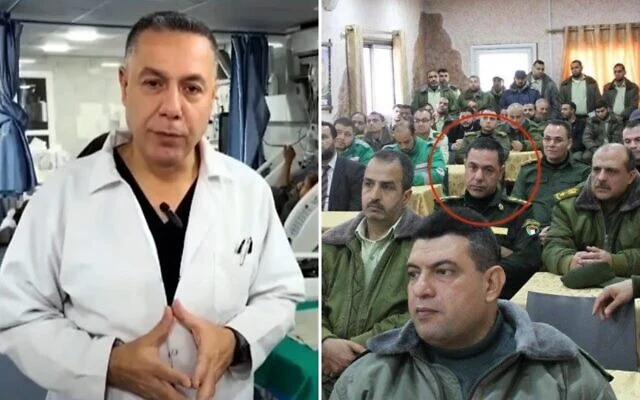
The resurfaced photograph has lent new weight to Israel’s longstanding accusations, even as it has intensified questions about transparency and disclosure in international media coverage. Abu Safiya is not an obscure figure. He has authored two opinion essays published by The New York Times in which he sharply criticized Israel’s military campaign in Gaza, portraying the devastation of the enclave’s healthcare system and the suffering of civilians under bombardment. Notably, the newspaper did not disclose any Hamas affiliation in those pieces, presenting Abu Safiya solely as a medical professional and hospital director. The VIN News report pointed out that this omission has now become a focal point of criticism, particularly among readers who argue that full context is essential when evaluating testimony from figures operating within Hamas-controlled institutions.
Israeli officials have previously described Abu Safiya as a senior Hamas operative, though they have stopped short of accusing him of direct involvement in specific attacks. This distinction, subtle yet significant, underscores the complexity of Hamas’s governance model in Gaza, where civilian, medical, and military roles often overlap. As VIN News has documented throughout the conflict, Hamas has for years embedded its personnel and assets within civilian infrastructure, a strategy designed both to shield its operations and to complicate Israel’s military response.
That strategy was laid bare in chilling detail during the interrogation of another former Kamal Adwan Hospital director, Ahmed Kahlot. Detained earlier in the war, Kahlot reportedly told Israeli interrogators that the hospital had been converted into a Hamas-controlled military site. According to his testimony, the facility at one point held a kidnapped Israeli soldier, and multiple staff members, including medical personnel, were also Hamas operatives serving in the al-Qassam Brigades. While such statements, obtained during detention, are inevitably contested and scrutinized, they align with a broader body of Israeli intelligence assessments and material evidence gathered during raids on Gaza hospitals.
The implications of these revelations extend far beyond the fate of one hospital director or one photograph. They strike at the heart of an international discourse that has often treated Gaza’s medical institutions as unequivocal sanctuaries, insulated from the politics and militancy that define the enclave’s governance. The image of Abu Safiya in a Hamas uniform does not, by itself, prove operational wrongdoing. Yet, as NGO Monitor argues and the VIN News report emphasized, it challenges the narrative of strict separation between healthcare leadership and terrorist command structures.
For Israel, the photograph reinforces its claim that Hamas has systematically violated international humanitarian law by militarizing hospitals and exploiting their protected status. For critics of Israel’s war conduct, the image complicates efforts to frame the conflict in starkly binary terms of aggressor and victim. And for global media organizations, it raises uncomfortable questions about vetting sources, contextualizing commentary, and disclosing affiliations in coverage of one of the world’s most polarizing conflicts.
The debate is not merely academic. It carries tangible consequences for how wars are fought and judged. If hospitals are indeed functioning as command centers, they lose their protected status under the laws of armed conflict, a point Israel has repeatedly stressed. Conversely, if allegations of abuse during detention are substantiated, they would represent serious violations that demand accountability. The truth, as is often the case in war, may be layered, contested, and resistant to simple moral clarity.
What is undeniable is the power of a single image to reshape discourse years after it was taken. In an era when digital archives never truly fade, the past has a way of intruding upon the present, forcing reassessments that many would prefer to avoid. The photograph of Hussam Abu Safiya, standing in uniform among Hamas officials at the inauguration of a hospital, now stands as a symbol of Gaza’s tragic entanglement of medicine and militancy.
As VIN News continues to report on developments surrounding Abu Safiya’s detention, the allegations against him, and the broader use of medical facilities in Gaza’s war, one lesson remains stark. In conflicts defined by propaganda as much as firepower, context is not a luxury; it is a necessity. And when context is withheld, whether intentionally or through oversight, the reckoning may come years later, carried on the resurfaced pixels of a photograph that refuses to stay buried.
