



|
Getting your Trinity Audio player ready...
|
Rabbi Leo Dee Detained on Temple Mount Hours Before His Wedding
By: Ariella Haviv
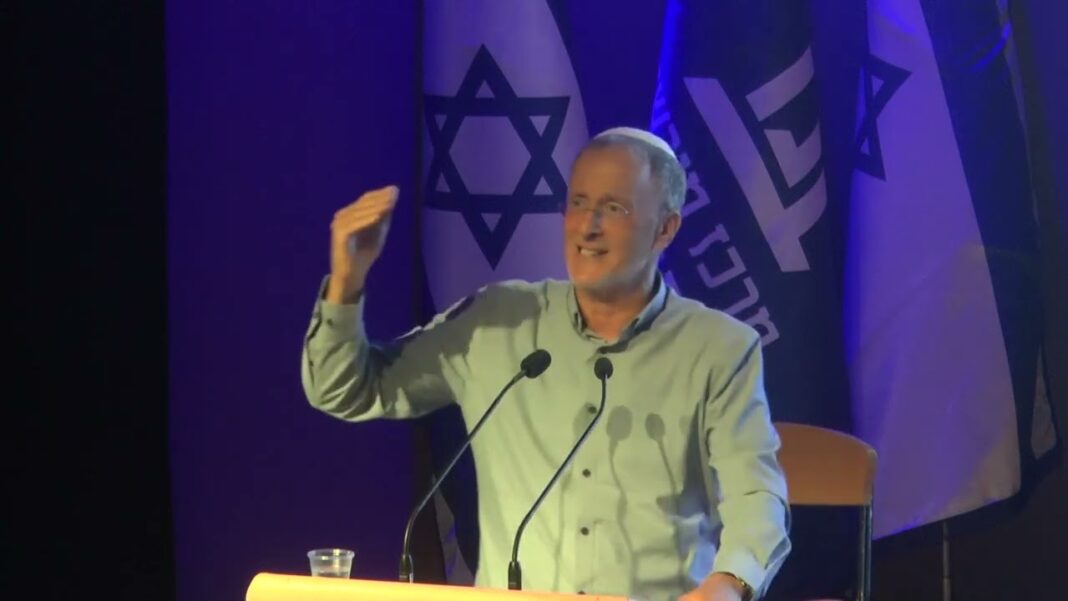
In a moment both profoundly personal and politically charged, Rabbi Leo Dee, the British-born Israeli rabbi who became a symbol of faith and resilience after losing his wife and two daughters in a terror attack, was detained on Sunday morning by Israeli police during a visit to the Temple Mount—just hours before his wedding ceremony.
According to a report that appeared on Sunday at Israel National News (INN), Rabbi Dee, who has inspired many with his public expressions of hope and determination since the 2023 Jordan Valley attack that killed his loved ones, entered the sacred Jerusalem compound early in the day and performed a simple act of devotion: he wrapped himself in tefillin (phylacteries), the black leather boxes and straps worn by Jews during morning prayers.
That act—deeply significant in Jewish tradition—proved controversial in the fraught environment of the Temple Mount, where Jewish prayer and ritual expressions are strictly regulated by police in line with longstanding status quo agreements. Security officials quickly intervened, escorting Rabbi Dee to a hearing where a ruling was issued barring him from returning to the Temple Mount for one week. Authorities added that the ban could be extended for up to six months.
The detention of Rabbi Dee, a bereaved husband and father whose personal story has touched both Israelis and Jews worldwide, sparked immediate debate. Critics condemned the police action as heavy-handed and insensitive, while supporters of the restrictions defended it as necessary to avoid tensions with Muslim worshippers at the volatile holy site.
The incident would have attracted attention under any circumstances, but the timing made it particularly poignant. As INN reported, Rabbi Dee was preparing to remarry later that day to Aliza Teplitsky, marking a new chapter in a life scarred by unimaginable loss.
On April 7, 2023, his wife Lucy, 48, and daughters Maia, 20, and Rina, 15, were ambushed by Palestinian terrorists while driving in the Jordan Valley. Maia and Rina were killed instantly; Lucy was critically wounded and succumbed to her injuries days later. The brutal attack devastated not only the Dee family but also struck a deep chord in Israel and abroad.
Thousands attended the funerals, where Rabbi Dee delivered eulogies that were later broadcast around the world. In a powerful appeal, he called for the tragedy to inspire greater unity and love within the Jewish people. He coined the phrase “Dees Day,” urging Israelis to dedicate a day to performing acts of kindness.
In the months that followed, Rabbi Dee became a public figure—delivering sermons, speaking in schools, and addressing international Jewish audiences. His message was one of resilience: that even in the face of terrorism, faith and life must prevail.
The announcement of his engagement to Teplitsky, herself a widow, was celebrated in many circles as a testament to the human capacity for renewal. As the Israel National News report highlighted, Sunday’s wedding was meant to symbolize joy returning after years of mourning.
Yet before the celebration could begin, Rabbi Dee found himself caught in the fraught dynamics of the Temple Mount, known to Muslims as Haram al-Sharif. The site is revered as the holiest place in Judaism, where the two Temples once stood, and the third holiest in Islam, home to the Al-Aqsa Mosque and Dome of the Rock.
Since 1967, when Israel captured the Old City in the Six-Day War, access to the site has been governed by a sensitive “status quo” arrangement: Muslims may pray there, while Jews and other non-Muslims may visit under strict police supervision but are formally barred from overt acts of prayer or religious ritual.
In practice, the enforcement of this arrangement has varied. Over the past decade, as Jewish visits to the site increased, incidents of Jews quietly praying or performing rituals have led to frequent confrontations with both Muslim worshippers and Israeli police. These flashpoints often reverberate regionally, as Palestinian leaders accuse Israel of attempting to change the status quo, while many Jewish activists argue for greater freedom of worship at their most sacred site.
According to the information provided in the INN report, Rabbi Dee’s decision to don tefillin on the Temple Mount was viewed by police as a violation of those restrictions, prompting his removal and subsequent detention.
The police statement, summarized by Israel National News, confirmed that Dee was detained after “violating visitation rules” and that a hearing determined he would be barred from the Temple Mount for seven days, with the possibility of an extension up to six months.
Security officials insisted that the measure was not punitive against Dee personally, but part of their broader responsibility to maintain order on a site where even minor incidents can trigger large-scale unrest.
Still, the optics of detaining a rabbi who lost half his family to terrorism—and doing so on the morning of his remarriage—drew swift condemnation. Critics accused authorities of excessive rigidity, questioning whether greater sensitivity should have been shown in handling the situation.
Reactions to the incident were divided, reflecting broader tensions over the Temple Mount issue.
Many Jewish commentators, particularly on social media, expressed anger and disbelief. “How could Israeli police detain a grieving father for wrapping tefillin on the holiest site in Judaism, on the very day he was to remarry and rebuild his life?” one popular columnist asked, echoing sentiments carried by INN.
Some activists called the detention a humiliation and demanded that authorities reassess their enforcement policies, arguing that Jews should have greater freedom of worship on the Mount. Several pointed out the irony that while the state mourns with Dee over the terror attack, it also restricts him from the most sacred expression of Jewish prayer.
Others, however, defended the police, noting that the rules of the site are well known and designed to prevent violence. “The Temple Mount is a powder keg,” one security analyst told Israel National News. “The fact that he is a bereaved father does not exempt him from the laws that everyone must follow there.”
For Rabbi Dee, the episode was a brief but jarring interruption in what was otherwise meant to be one of the most hopeful days since his family’s tragedy. Hours after leaving police custody, he was to stand under the chuppah with Aliza Teplitsky, surrounded by relatives, friends, and community members who have walked with him through both grief and renewal.
INN reported that Dee has largely avoided political commentary in the wake of his loss, choosing instead to emphasize messages of faith and resilience. His detention, however, has placed him involuntarily at the center of one of Israel’s most enduring religious and political controversies.
The incident once again highlights the unresolved debate over Jewish prayer rights on the Temple Mount. Advocates for change argue that the prohibition infringes upon basic religious freedoms in the Jewish state. Opponents warn that altering the status quo could inflame tensions across the Muslim world and spark violence in Jerusalem and beyond.
As Israel National News has noted in multiple reports, Israeli governments have long walked a delicate line between asserting sovereignty over the Mount and maintaining international and domestic stability. Rabbi Dee’s case may reignite calls for a reevaluation of these policies, particularly given the symbolic weight of his personal story.
Rabbi Leo Dee has become, unwillingly, one of the most recognized faces of Israeli resilience. His journey from the agony of April 2023 to the joy of a new marriage in 2025 has inspired many. Yet his detention on the Temple Mount serves as a reminder of the deep complexities and tensions that continue to define Israeli life, where personal faith intersects with national politics and security concerns.
As his story unfolds, Israelis are left to ponder not only the balance between religious freedom and security but also the profound symbolism of a man who, despite unbearable loss, continues to rebuild and reaffirm life.

In the 1980s and 1990s there were a number of novels written about how a fake Israeli move to “take over” the Temple Mount would or did cause a war of previously unknown proportions. Israeli actions real or unreal regarding the Temple Mount was a subject so volatile that it made for fiction that might appeal to masses of people. Apparently, that fictional “take” on the subject promoted by “palestinians” and their myriad enablers mesmerized official Israeli policy to the extent that Jewish sovereignty over, well, Israel has taken a second seat to Arab intransigence. It’s time that Israeli policy of “concessions” and nice “gestures” be utterly abandoned because NOT compromising and fiercely promoting Israel’s legitimacy and strength is what will prevent, not result in, cataclysmic results.