



|
Getting your Trinity Audio player ready...
|
By: Fern Sidman
As the tenuous ceasefire in Gaza continues to hold, analysts and officials are voicing growing alarm over the expanding roles of Qatar and Turkey in the enclave’s reconstruction, warning that their involvement could inadvertently strengthen Hamas’s terrorist infrastructure and undermine Israel’s long-term security goals.
According to a report that appeared on Tuesday on The Algemeiner website, both countries have positioned themselves as major players in the post-war rebuilding process, with Qatar already launching debris-removal operations and Turkey pledging to deploy humanitarian teams and participate in the U.S.-backed peace plan. Yet their deep political and financial ties to Hamas — coupled with years of public hostility toward Israel — are raising urgent questions about whether reconstruction efforts could become a cover for reconstituting the very terrorist apparatus that plunged the region into war.
Last week, Qatar’s Minister of International Cooperation, Mariam bint Ali al-Misnad, announced that Doha had begun operations in Gaza to clear debris and reopen key roads as part of what she described as an effort “to restore hope and return life to its normal course.”
“As part of assistance to Gaza, the State of Qatar has commenced debris removal operations and opening of primary routes,” al-Misnad told reporters, emphasizing that the initiative was driven by “humanitarian duty.” “We take pride in belonging to a nation that makes humanity an obligation,” she added.
Qatar has been at the center of diplomatic mediation throughout the two-year conflict between Israel and Hamas, often serving as a conduit for negotiations over ceasefires and hostage exchanges. But as The Algemeiner reported, Doha’s track record is anything but neutral. The Gulf state has provided Hamas with billions in financial aid since the group seized control of Gaza in 2007, while also offering sanctuary to its top leadership, including figures who continue to direct the organization’s military and political activities from Doha.
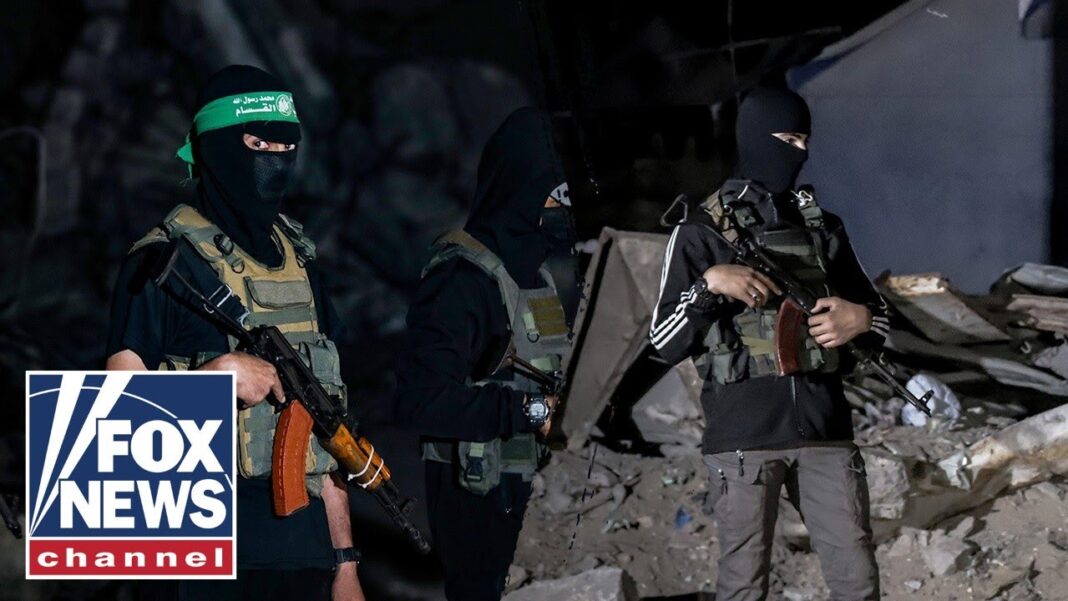
Now, as bulldozers and heavy equipment roll into Gaza, experts fear that these same resources — ostensibly for rebuilding — could be repurposed to restore Hamas’s military tunnels, bunkers, and command infrastructure.
“Qatar has long been a political and financial patron of Hamas and has previously signaled that it’s OK with the terror group surviving to rule another day,” said Natalie Ecanow, a senior research analyst at the Foundation for Defense of Democracies (FDD), speaking to The Algemeiner. “That’s incompatible with the Israeli and American position.”
Ecanow noted that Qatar’s current efforts to “clear debris” may have unintended military implications. “When you have a state sponsor of Hamas operating in Gaza under the banner of reconstruction, you have to ask whether they’re rebuilding homes or rebuilding Hamas’s operational base,” she cautioned.
According to the information provided in The Algemeiner report, Hamas has reportedly requested specialized machinery from Qatar to assist in recovering the remains of deceased Israeli hostages buried under the ruins of Gaza City — an operation that forms part of the first phase of the ceasefire deal brokered with U.S. backing. Israeli officials, however, have voiced concern that such machinery could be misused to excavate Hamas tunnels or fortifications that survived Israeli bombardments.
Ecanow told The Algemeiner that Qatar’s urgency to expand its operations in Gaza appears linked to a September 9 Israeli strike in Doha that killed several Hamas leaders, exposing Qatar’s vulnerability and prompting it to accelerate its diplomatic engagement. “Qatar only intensified its push for reconstruction after that attack,” she said. “The ceasefire is on shaky ground, which isn’t wholly surprising — at the end of the day, Hamas is a terrorist group that has repeatedly shown little regard for ceasefire deals.”
She also stressed that the multi-phase peace plan—which combines hostage returns, disarmament verification, and long-term rebuilding—was never going to unfold smoothly. “The hostage release was only one part of a larger plan for Gaza,” Ecanow explained. “There were always going to be roadblocks along the way.”
If Qatar’s role has raised eyebrows in Jerusalem, Turkey’s growing involvement has set off alarm bells. The Algemeiner reported that Ankara, under the leadership of President Recep Tayyip Erdoğan, has pledged to join the reconstruction effort and contribute search-and-rescue teams to Gaza as part of the Trump administration’s peace plan. Turkey’s government has also expressed readiness to assist in training local security forces and participate in a proposed International Stabilization Force to oversee the ceasefire.
Yet Israeli officials have flatly rejected the idea. Amichai Chikli, Israel’s Minister of Diaspora Affairs and Combating Antisemitism, told The Algemeiner that Ankara’s involvement was “a red line.”
“Erdogan is a sworn enemy of Israel and the West, a jihadist in a suit,” Chikli said. “We will not tolerate a Turkish presence — not on our northern border and not on our southern border.”
The minister’s comments reflect long-standing Israeli distrust of Erdoğan, who has for years styled himself as a champion of the Palestinian cause while pursuing an increasingly Islamist and authoritarian agenda at home. According to the information contained in The Algemeiner report, Turkey has not only funded Hamas-affiliated charities and hosted senior operatives but has also provided logistical support for Hamas activities beyond the Middle East, including cyber and propaganda operations.
As The Algemeiner report detailed, Erdogan’s anti-Israel rhetoric has grown more virulent in recent years. He has described Hamas terrorists as “resistance fighters,” accused Israel of committing “genocide,” and even likened Prime Minister Benjamin Netanyahu to Hitler.
In a series of inflammatory speeches, Erdogan has claimed that Israel operates “Nazi concentration camps” in Gaza and called on the United Nations to use force against Jerusalem if it failed to halt its military campaign. “Such statements,” one Israeli diplomat told The Algemeiner, “make it impossible to view Turkey as a credible peace partner.”
While Ankara’s officials insist their motives in Gaza are humanitarian, Israeli defense sources cited in The Algemeiner report fear that Turkish engineers and aid workers could act as fronts for intelligence-gathering operations aimed at bolstering Hamas’s residual capabilities.
“Turkey’s involvement in any capacity risks legitimizing Hamas as a political actor and undermining the very disarmament that the U.S.-brokered plan depends on,” said one former Israeli intelligence officer quoted in The Algemeiner report.
Israeli Prime Minister Benjamin Netanyahu has reportedly made clear to U.S. officials that Turkey’s participation in the stabilization force is unacceptable. The Algemeiner reported that he has informed Washington that while Israel supports the deployment of international personnel for humanitarian oversight, it will “not accept forces from nations that directly or indirectly support Hamas.”
This stance places the U.S. in a delicate position. Both Qatar and Turkey are key strategic partners for Washington — hosting major American military bases and playing roles in regional counterterrorism efforts. Yet their open sympathy for Hamas and harsh criticism of Israel complicate U.S. efforts to maintain the credibility of its peace initiative.
One senior U.S. official told The Algemeiner that excluding either nation from postwar efforts could alienate allies needed to stabilize Gaza. “There’s an acknowledgment that Qatar and Turkey have leverage,” the official said, “but that leverage cuts both ways.”
For Hamas, the presence of Qatar and Turkey in Gaza’s reconstruction represents a potential lifeline. Both nations have served as diplomatic protectors and financial patrons, offering the Islamist movement international legitimacy even as it remains designated a terrorist organization by the U.S., EU, and Israel.
“The rebuilding process gives Hamas breathing room — time to reorganize, rearm, and rehabilitate its image under the guise of humanitarianism,” an Israeli defense analyst told The Algemeiner. “It’s not about cement and steel; it’s about survival.”
Israel, by contrast, views the postwar period as a final opportunity to eradicate Hamas’s military and political influence from Gaza. Officials quoted in The Algemeiner report emphasized that any reconstruction plan must proceed only after full disarmament and verified dismantling of the group’s remaining tunnel network.
“Without strict oversight, reconstruction risks becoming rearmament,” one Israeli official warned.
While international donors prepare to pour billions into rebuilding Gaza’s shattered neighborhoods, the question of who controls the process looms large. As The Algemeiner report observed, the struggle over Gaza’s reconstruction is, in many ways, a continuation of the conflict by other means — a political contest over whether the enclave will emerge as a peaceful neighbor or revert to being a base of terror.
Ecanow, the FDD analyst, summed up the stakes succinctly in her interview with The Algemeiner: “You can’t build peace on foundations of terror. If Hamas is allowed to survive politically or militarily, no amount of reconstruction will make Gaza safe — for Israelis or Palestinians.”
For now, the ceasefire endures, but its foundations remain fragile. The bulldozers in Gaza may clear the rubble, but the deeper challenge — rebuilding trust, ensuring accountability, and preventing Hamas’s resurgence — is far more complex.
As The Algemeiner report observed, “The success of Gaza’s reconstruction will not be measured in roads or bridges, but in whether the region can finally be freed from the cycle of violence perpetuated by those who speak of peace while empowering terror.”
Israel – and Israel alone – must control Gaza. Why the PM of Israel would agree to anything else is mindboggling. It is October 7th all over again some time in the future and the “Great Rabbis of our generation” say nothing. With “Great Rabbis” like that – who needs enemies.