



|
Getting your Trinity Audio player ready...
|
By: Fern Sidman
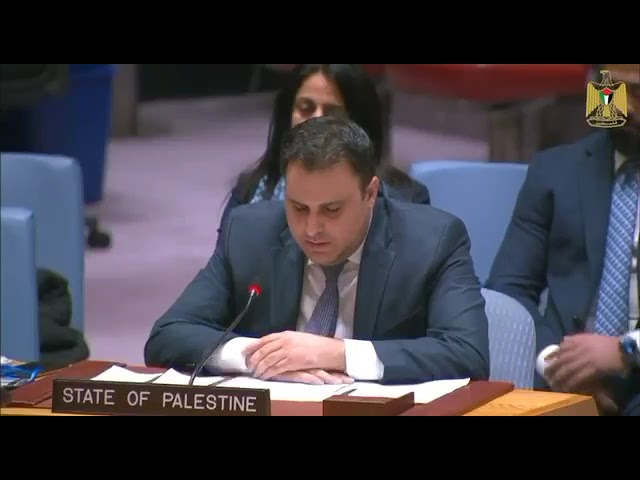
When Majed Bamya, the Palestinian Deputy Permanent Observer to the United Nations, takes the floor at UN headquarters in Turtle Bay, his rhetoric is unrelenting. He accuses Israel of “genocide,” describes a convicted terrorist as a Palestinian “Mandela,” and paints a picture of Gaza as a place strangled into famine by Israeli policy. Yet, as The New York Post reported on Thursday, Bamya himself enjoys a markedly different reality: a luxury lifestyle in one of Manhattan’s most exclusive residential towers, surrounded by Jewish neighbors who are increasingly uneasy about his presence.
According to reporting first uncovered by the Washington Free Beacon and amplified in The New York Post report, Bamya resides in the Regency Towers on East 63rd Street, an opulent 34-story building with three-bedroom apartments fetching up to $11,000 a month. The property, managed by Carlyle Property Management, boasts a 24-hour doorman, a fitness center, and a roof terrace—amenities that sharply contrast with his rhetoric about Palestinian hardship.
His residence there, in the heart of New York’s Upper East Side and just minutes from Central Park, has struck a nerve among the tower’s predominantly Jewish residents. One resident told reporters that “80% of the apartments on his floor have a mezuzah,” underscoring the irony and tension of the arrangement. As The New York Post report noted, chatter about Bamya’s presence has become common in the building’s elevators, where questions circulate: “Is he a murderer? Did he become an ambassador by killing Jews?”
The concerns of Bamya’s Jewish neighbors are not without cause. His public record includes remarks that many view as openly hostile not only to Israel but to the Jewish people.
In a 2015 post on X, then-Twitter, Bamya praised Marwan Barghouti—a Fatah leader serving multiple life sentences in Israel for orchestrating terrorist attacks that killed five Israelis—calling him a “new Nelson Mandela” and suggesting that he deserved a Nobel Peace Prize. That statement was widely condemned, yet Bamya has never publicly disavowed it.
Years earlier, in a since-deleted 2012 blog post, Bamya had called upon Palestinians to “rise against the Israeli occupation” and to “fight once more to protect our cause.” These words, coupled with his later official role as “Coordinator of the Free Marwan Barghouti and All Palestinian Political Prisoners” campaign for the Palestinian Authority (PA), position him squarely in a tradition of Palestinian officials who valorize figures responsible for bloodshed.
At the United Nations, Bamya has leveraged his platform to broadcast these views to a global audience. In May 2024, for example, he declared: “There are people starving only a few feet away from aid and yet unable to reach it. Israel has made sure that famine has set in.” His repeated use of the term “genocide” to describe Israel’s war against Hamas has sparked particular outrage, especially in light of Hamas’s massacre of 1,200 Israelis on October 7, 2023.
The New York Post report emphasized the bitter irony: a man who paints Israel as the architect of Palestinian suffering lives comfortably in a Manhattan tower while Israelis bury the victims of Hamas terror.
Part of what allows Bamya to maintain this lifestyle lies in the peculiarities of diplomatic immunity and UN privileges. While the Trump administration last month revoked visas for numerous Palestinian officials attending the UN General Assembly, Bamya and his wife, Sahar Salem—who also works as an adviser to the Palestinian mission—retained their visas under pre-existing agreements between the U.S. and the UN.
That legal shield has raised questions about accountability. As The New York Post report noted, the U.S. government technically has limited options for restricting the residency of accredited UN officials, even when those officials espouse views that glorify convicted terrorists or undermine American policy interests.
The reaction within Regency Towers has been visceral. Residents interviewed by reporters have spoken of a gnawing anxiety, describing the bizarre juxtaposition of mezuzahs lining the hallways next to the apartment of a man who has publicly celebrated Palestinian leaders convicted of killing Jews.
“It’s a very Jewish building—a lot of religious Jews, too,” one resident told the Free Beacon. The resident admitted to wondering whether Bamya’s career was built on violence: “This has been discussed in the elevator: ‘Is he [Bamya] a murderer? Did he become an ambassador by killing Jews?’ This is a thought process in my head.”
Such sentiments, reported by The New York Post, highlight a broader unease among American Jews at a time of rising antisemitism. For those living literally next door to Bamya, the contrast between his rhetoric and his reality has become too stark to ignore.
Bamya’s lifestyle is not unique among Palestinian officials, who have often been accused of enjoying extraordinary wealth while ordinary Palestinians suffer.
As The New York Post and other media outlets have scrupulously documented, PA President Mahmoud Abbas is believed to possess a fortune of over $100 million, with reports suggesting that he and his family have enriched themselves through Western aid money intended for the Palestinian people. Abbas’s predecessor, Yasser Arafat, reportedly accumulated more than $1 billion during his lifetime, holding stakes in businesses ranging from airlines and shipping to banana plantations, an African diamond mine, and prime real estate across the Middle East.
Against this backdrop, Bamya’s $11,000-per-month apartment in Manhattan appears less like an anomaly and more like a continuation of a longstanding pattern: Palestinian leaders thriving personally while publicly lamenting the plight of their people.
The juxtaposition of Bamya’s Upper East Side comfort with his fiery rhetoric at the United Nations raises pressing questions about credibility. How can a diplomat, living in luxury thousands of miles from Gaza, claim to speak for those enduring deprivation under Hamas rule and Israeli strikes?
As The New York Post report stressed, this disconnect between rhetoric and reality risks eroding the Palestinian mission’s moral authority. When a representative who brands Israel as genocidal is simultaneously paying Manhattan rents that dwarf the annual income of most Gazans, the credibility of his advocacy inevitably comes under scrutiny.
For the Jewish residents of Regency Towers, the issue is not only one of hypocrisy but of personal safety. Living alongside someone who has praised a convicted terrorist responsible for killing Israelis is unnerving at best, terrifying at worst.
The unease extends beyond the building. At a time when antisemitic incidents in New York City have reached historic highs—as documented by the NYPD — the presence of a Palestinian diplomat with a record of inflammatory rhetoric in a heavily Jewish residential building feels like a bitter provocation.
Requests for comment from Bamya and the management of Regency Towers have gone unanswered. Their silence only fuels speculation and suspicion. In the absence of clarification, neighbors are left with their fears, amplified by Bamya’s own words from past speeches, posts, and blog entries.
As The New York Post report noted, the optics of such silence are damning. When a diplomat accused of hypocrisy and glorification of terrorists refuses to engage, it leaves the narrative uncontested—and the concerns of Jewish residents unaddressed.
This story is not only about one man or one building. It encapsulates the contradictions at the heart of Palestinian diplomacy at the UN: the simultaneous embrace of victimhood narratives and the pursuit of luxury lifestyles; the denunciation of Israel as genocidal paired with the glorification of those who have murdered Jews; the claim to speak for the downtrodden while living among Manhattan’s elite.
For many observers, particularly those following the coverage in The New York Post, this episode exposes the yawning gap between rhetoric and reality. It also underscores the urgency of holding Palestinian officials accountable—not only for what they say on the world stage but for how they live in private.
Majed Bamya’s presence in the Regency Towers may not violate any laws, but it violates the sensibilities of those who share the hallways with him—and perhaps the broader conscience of New York itself. His words at the UN, his past praise of convicted terrorists, and his luxurious lifestyle together paint a picture that is hard to reconcile with his professed concern for Palestinian suffering.
As The New York Post report framed it, this episode is a microcosm of the contradictions that have long plagued Palestinian leadership: leaders living in opulence abroad while ordinary Palestinians languish, and rhetoric of resistance masking a reality of privilege.
For the Jewish residents of the Regency Towers, the sight of mezuzahs on nearly every door around Bamya’s apartment is a powerful symbol of resilience. Yet it is also a stark reminder that antisemitism is not only a historical memory but a present reality—even in the heart of Manhattan.

Funny- they know exactly where he lives, and yet he needs no police protection from violence, etc. Maybe that’s the problem, maybe there should be more consequences to claiming a fake genocide… I miss the JDL at times like these.