



|
Getting your Trinity Audio player ready...
|
By: Fern Sidman
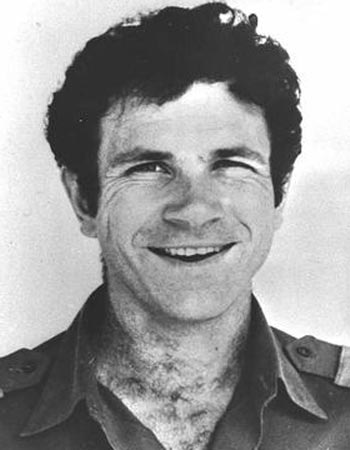
As Israel marks the 49th anniversary of the fateful mission at Entebbe, Prime Minister Benjamin Netanyahu offered a deeply personal tribute to his older brother, Lt.-Col. Yonatan “Yoni” Netanyahu, the only Israeli soldier killed during the audacious July 4, 1976 hostage rescue operation in Uganda. Writing on X (formerly Twitter), the Prime Minister reflected on Yoni’s enduring legacy as a national hero and cherished brother, while visiting his grave at Mount Herzl, Israel’s military cemetery.
“Almost 50 years have passed – but it feels like it was yesterday,” Netanyahu wrote. “Not a day goes by that I don’t think of him. Of his final moments. Of what he managed to be – and all that he didn’t have the chance to become. Of his laughter. His vision. His spirit.”
According to a report that appeared in The Jerusalem Post, the Prime Minister’s tribute resonated widely, echoing a collective national reverence for a man whose life and death embody both the courage and tragedy woven into the fabric of modern Israeli history.
Born in New York City in March 1946, Yonatan Netanyahu moved between the United States and Israel throughout his youth, embodying a unique transatlantic identity. His formative years were steeped in Zionist values and intellectual rigor, nurtured by a family deeply devoted to Jewish heritage and national service. After returning to Israel for high school in 1963, Yoni enlisted in the Israel Defense Forces (IDF), eventually joining the elite Paratroopers Brigade and rising rapidly through the ranks.
As The Jerusalem Post report recounted, his combat leadership during the Six Day War in 1967 foreshadowed the strategic brilliance and resolute bravery he would become known for. After the war, he married his high school sweetheart, Tirza “Tuti” Goodman, and the couple moved to Boston, where Yoni briefly attended Harvard University. Despite academic success, he was restless—Israel was engaged in the War of Attrition, and his place, he believed, was not in lecture halls but on the front lines.
By 1968, he and Tuti returned to Israel. Yoni resumed military service, this time enrolling at Hebrew University in Jerusalem, studying mathematics and philosophy—subjects that complemented his intensely analytical mind and reflective nature. As The Jerusalem Post report noted in a feature on his intellectual depth, Yoni was a prolific letter writer whose correspondence revealed a man of uncommon introspection and moral conviction.
During the Yom Kippur War of 1973, Yoni commanded a Sayeret Matkal unit in the Golan Heights, where his leadership proved pivotal in halting a Syrian commando advance. In one of the operation’s most daring moments, he orchestrated the rescue of Lt.-Col. Yossi Ben Hanan under fire at Tel Shams, an act that remains legendary within the IDF to this day.
But it was Operation Entebbe—later renamed Operation Yonatan in his honor—that forever enshrined his name in Israeli history. On July 4, 1976, Israeli commandos flew 2,500 miles into hostile Ugandan territory to rescue more than 100 hostages held by Palestinian and German terrorists at Entebbe Airport. Yoni, commanding the operation on the ground, was shot and killed while leading the assault. His death occurred just minutes before the operation’s successful conclusion.
The Jerusalem Post has frequently commemorated Entebbe as a defining moment in Israeli military history—a mission that was as symbolic as it was strategic. In the words of one IDF historian, “Yoni’s sacrifice reminded us that heroism is not measured solely by victory, but by the moral clarity of purpose.”
Yoni Netanyahu’s death left a permanent mark not only on his family, but on the soul of the nation. His letters and writings were later compiled and published, offering rare insight into the internal struggles and ethical dilemmas faced by a warrior-philosopher. His life inspired the 2012 documentary “Follow Me” which used archival footage, interviews, and Yoni’s own words to trace the evolution of a soldier shaped by history—and in turn, shaping it.
On this 49th anniversary, The Jerusalem Post published a special retrospective, recalling the unity and grief that swept across Israel after news of his death spread. In communities across the country, from Jerusalem to kibbutzim in the Galilee, families gathered in silent reflection for the man who gave everything to bring his people home.
In his tribute on X, Prime Minister Netanyahu concluded: “Thank you to everyone who remembers him. Yoni, my brother, you were so dear to me. I miss you – every single day.”
The name Yoni Netanyahu is etched not only into the stone of Mount Herzl, but into the Israeli ethos—of valor, duty, and unwavering devotion to the Jewish people. His sacrifice continues to inform the values of the IDF, the resolve of Israeli leadership, and the education of generations who study his life not merely as history, but as moral compass.
As Israel approaches the 50th anniversary of Operation Entebbe next year, Yoni’s legacy will almost certainly be revisited with solemn ceremony.
