



By: TPS
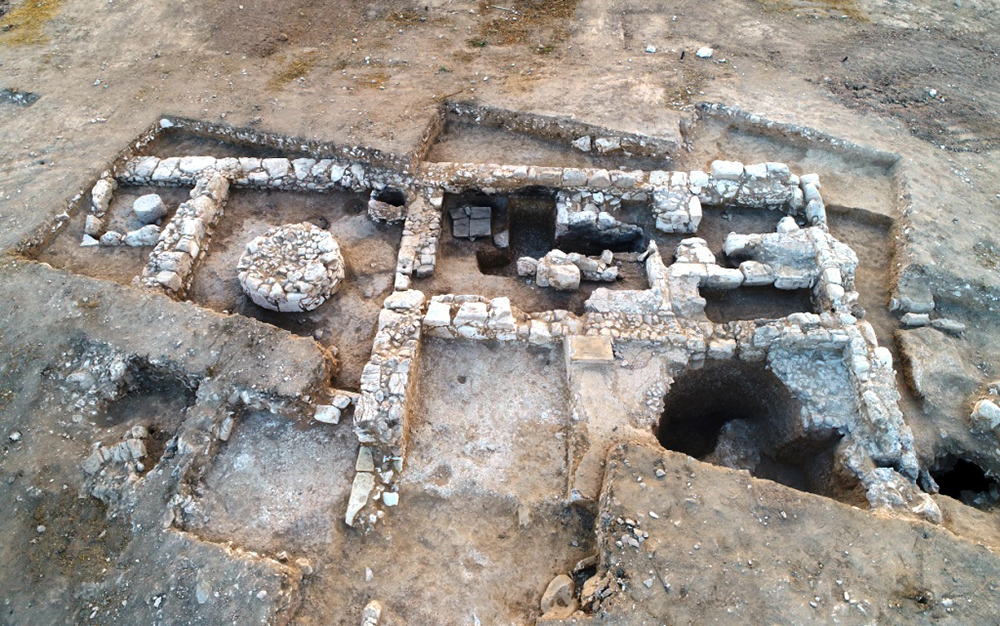
A 1,300-year-old olive oil soap making workshop, farmhouses and gameboards were discovered in an excavation site by the Israel Antiquities Authority (IAF) in the Bedouin city of Rahat in southern Israel.
Israel’s most ancient soap making workshop was exposed in recent weeks inside a wealthy home from the period after the Islamic conquest.
As in many previous cases in Israeli archeology, the excavations were carried out following new neighborhood developments in Rahat and the fascinating findings were chanced upon.
The production of olive oil soap is mentioned in writings since the 10th century CE and it has been a significant industry in the region from the Middle Ages and until the early 20th century.
During the soap-making process, olive oil was used as the base material, mixed with ashes produced by burning salsola soda (saltwort) plants, which contain potash and water. The mixture was cooked for about seven days, after which the liquid material was transferred to a shallow pool, where the soap hardened for about 10 days until it could be cut into bars. These were piled for additional drying, and the final product was ready after an additional period of two months.
The site at Rahat displays facilities associated with this industry. The IAA’s researchers obtained samples from the finds, with the purpose of identifying the materials used in the production process.
Dr. Elana Kogen Zehavi, the IAA excavation director, said that “this is the first time that a soap workshop as ancient as this has been discovered, allowing us to recreate the traditional production process of the soap industry. For this reason, it is quite unique.”
“We are familiar with important soap-making centers from a much later period – the Ottoman period. These were discovered in Jerusalem, Shechem (Nablus), Jaffa, and Gaza,” she added.
Svetlana Tallis, IAA Northern Negev District archaeologist, explained that “one of the underground spaces of the wealthy building contained another exciting finding, shedding light on the daily life of the inhabitants – a round limestone gameboard used for a strategy game called the ‘Windmill’.”
This game is known to have existed as early as the 2nd and 3rd centuries CE in the Roman period, and it is still being played to this day.
Nearby, a second gameboard known as “Hounds and Jackals”, or “Fifty-eight Holes” was also found. This game was first played in Egypt and it spread to other parts of the Mediterranean basin and to Mesopotamia around 2,000 BCE. In Israel, it has been discovered in ancient Megiddo and Tel Beth Shan. It was played by two players throwing dice or sticks that determined the number of places to move with each throw. The goal of the game seems to have been a specific point on the board.
Over the last six months, hundreds of volunteers have been employed at the large archaeological excavation, including participants from among the local Bedouin residents, university students and students in pre-military preparatory programs.
(TPS)
