



|
Getting your Trinity Audio player ready...
|
By: Fern Sidman
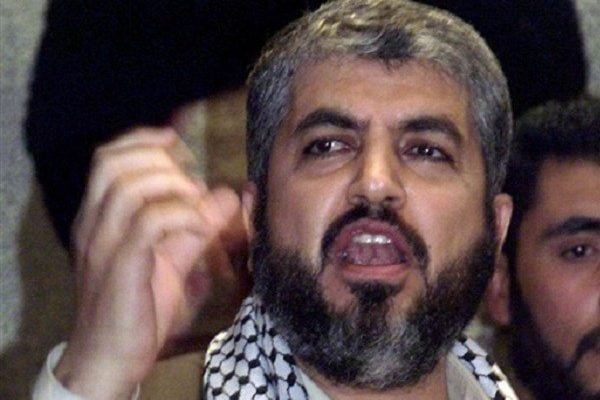
In a stunning escalation of Israel’s war against Hamas, five senior officials of the terrorist organization — including its leader, Khaled Mashal — were reportedly targeted and killed Tuesday afternoon in an Israeli airstrike on the Qatari capital of Doha. The Saudi network Al Hadath broke the news that Mashal, long the exiled face of Hamas’s political bureau, had been meeting with top deputies when the Israel Defense Forces (IDF) launched what it has since confirmed as Operation Summit of Fire.
If verified, the strike would mark the most consequential targeted assassination since Israel’s elimination of Hamas founder Ahmed Yassin in 2004 — and the first time Israel has directly struck Hamas’s leadership inside Qatar, a state that has long hosted the organization’s political bureau. According to a detailed report on Tuesday on Israel National News (INN), this would represent a historic turning point in the 23 months since the October 7, 2023 massacre, when Hamas gunmen killed some 1,200 people and abducted more than 250 into Gaza.
Al Hadath cited sources claiming that Mashal, alongside senior lieutenants Khalil al-Hayya, Zaher Jabarin, and Nizar Awadallah, was eliminated in the attack. These men represented the highest echelon of Hamas’s external leadership, responsible for the movement’s international financing networks, weapons procurement, and diplomatic contacts across the Arab world.
Mashal, who first rose to prominence in the 1990s and survived a botched Israeli assassination attempt in Amman in 1997, had long been a symbol of Hamas’s resilience. Based in Doha since 2012 under Qatari protection, he wielded influence both within Hamas and across Islamist networks, frequently serving as a figurehead in negotiations. His reported death would not only deal a crippling blow to the organization’s command structure but also carry enormous symbolic weight.
Yet reports remained contested late Tuesday. Al Jazeera, citing an unnamed Hamas official, claimed the leadership survived the airstrike. Hamas itself has not issued a formal statement, and Qatari authorities have refrained from confirming or denying the reports. According to the information provided in the INN report, the fog of war surrounding the incident reflects both Hamas’s desire to maintain a semblance of control and Qatar’s acute embarrassment at being caught in the crossfire.
The IDF confirmed that the operation bore the codename Summit of Fire. Though details of the strike remain classified, Israel emphasized the precision of the action and its coordination with allies. A senior Israeli official told INN that the strike was carefully timed to coincide with a gathering of Hamas’s top figures, describing it as “a rare convergence of the terror group’s most senior commanders.”
Prime Minister Benjamin Netanyahu’s office issued a terse but defiant statement: “This was an Israeli operation, carried out under Israeli authority, in defense of the citizens of Israel. The architects of the October 7 massacre cannot continue to enjoy impunity in luxury while our people suffer.”
According to multiple reports, including coverage in INN, President Donald Trump personally approved the strike, granting a green light for Israel to execute the operation on Qatari soil. This marks the first acknowledged instance of U.S.-Israel coordination in targeting Hamas leaders abroad since October 7.
The decision reflects Washington’s willingness to extend the battlefield beyond Gaza and to confront Hamas’s leadership wherever they reside. For the Trump administration, the strike serves a dual purpose: supporting Israel’s war aims while also sending a message to Qatar, a key U.S. ally that simultaneously shelters Hamas operatives.
For nearly two years, Israel had refrained from striking Hamas’s Doha-based political bureau despite widespread calls from within the Israeli public to do so. Critics accused Qatar of enabling Hamas leaders to live in five-star hotels while their operatives in Gaza waged war and ordinary Gazans endured devastation.
Israel National News has consistently highlighted the anger in Israel over this perceived double standard, noting that while Hamas’s external leadership raised funds and directed operations from abroad, Israel limited its military campaign to Gaza. Tuesday’s strike shatters that restraint, expanding the conflict into new territory.
Israeli analysts quoted by INN suggest several converging factors prompted the operation:
Intelligence indicated that Mashal and several deputies were gathered in the same location, a rare chance to strike multiple high-value targets simultaneously.
With the war entering its second year, Israel sought to demonstrate that its campaign would not stall at Gaza’s borders.
The strike took place amid reports that Hamas’s Doha-based negotiators were considering a U.S. proposal for a hostage release and ceasefire. By targeting them at that precise moment, Israel sent a message that it would not be held hostage to Hamas’s political maneuvering.
The strike has placed Qatar in an extraordinary bind. For decades, the Gulf emirate has maintained close ties with the United States, hosting the Al-Udeid Air Base, a critical hub for American operations in the Middle East. At the same time, Doha has sheltered Hamas’s political bureau, justifying the arrangement as necessary to facilitate mediation.
Now, however, Israel’s decision to strike directly in Doha exposes Qatar’s complicity. As the INN report noted, this is the first time the Qatari government has had to reckon with the tangible consequences of its patronage. Whether Mashal and his colleagues survived or not, the airstrike has made clear that hosting Hamas leaders carries risks.
If reports of fatalities are accurate, the loss of Mashal, al-Hayya, Jabarin, and Awadallah represents the most severe decapitation strike in Hamas’s history.
Each played a distinct role:
Khaled Mashal: Global figurehead and strategist, maintaining ties to Islamist movements and governments abroad.
Khalil al-Hayya: Negotiator and senior political bureau member, crucial in ceasefire talks.
Zaher Jabarin: Master of Hamas’s financing networks, responsible for channeling funds from Iran, Turkey, and Qatar.
Nizar Awadallah: Veteran Hamas leader with longstanding influence in Gaza politics.
Together, they represented the external leadership that allowed Hamas to function as more than just a local militia. Their elimination could fracture the group’s ability to coordinate internationally.
While Hamas supporters predictably decried the strike as an act of “state terrorism,” Arab governments were cautious in their responses. Qatar’s silence suggested deep unease, while Egypt and Jordan — often wary of Hamas’s destabilizing influence — avoided immediate comment. Saudi media’s rapid reporting of the strike signaled tacit approval, reflecting Riyadh’s alignment with efforts to weaken Hamas and curb Qatar’s regional clout.
Beyond its immediate tactical impact, Operation Summit of Fire carries a strategic message that Israel, with U.S. backing, will not allow Hamas’s leaders to enjoy sanctuary abroad.
As the Israel National News report observed, the strike revives Israel’s long-standing doctrine of global accountability, recalling the Mossad’s pursuit of Munich terrorists in the 1970s and the elimination of Hezbollah’s Imad Mughniyeh in Damascus in 2008. In each case, Israel demonstrated that geography offered no protection for those who targeted its citizens.
For Hamas, the reported loss of its top leadership could prove devastating — but also galvanizing. Analysts warn that the group may attempt retaliatory attacks on Israeli or Jewish targets abroad, as it has done in the past. Israel, meanwhile, is likely bracing for escalations not only in Gaza but also from Hamas sympathizers across the region.
For the wider Middle East, the strike raises questions about the sanctity of diplomatic safe havens. If Israel has shown it will strike its enemies in Doha, then other states that harbor militants may rethink their policies.
As one senior Israeli source told INN, “Hamas believed that geography and politics protected them. Today we showed them that justice has a longer reach than they ever imagined.”
Whether Khaled Mashal and his deputies are confirmed dead or not, Tuesday’s operation has already altered the trajectory of Israel’s war with Hamas. By striking in Doha, Israel crossed a historic threshold, one that signals both its determination to avenge October 7 and its unwillingness to allow Hamas leaders to enjoy impunity under foreign protection.
As the Israel National News report emphasized, the strike is more than a tactical victory: it is a strategic declaration. The message is unmistakable — Hamas’s leaders are not beyond Israel’s reach, not in Gaza’s tunnels, not in Beirut, and not even in the glittering towers of Doha.
Who Were the Hamas Leaders Targeted in Doha?
Khaled Mashal – The Global Face of Hamas
Role: Longtime head of Hamas’s political bureau and the group’s most recognizable international leader.
Background: Mashal rose to prominence in the 1990s and narrowly survived a Mossad assassination attempt in Amman in 1997. Since then, he became Hamas’s most visible spokesman in Arab capitals, a symbolic figure of survival and defiance.
Significance: Based in Qatar since 2012, Mashal was central to Hamas’s fundraising networks, its ties with Iran and Turkey, and its efforts to build legitimacy abroad. His death, if confirmed, would represent the most devastating loss for Hamas’s leadership since Sheikh Ahmed Yassin was killed in 2004.
Khalil al-Hayya – The Negotiator
Role: Deputy head of Hamas’s political bureau, frequently tasked with representing the group in ceasefire and hostage negotiations.
Background: A veteran operative with roots in Gaza, al-Hayya rose to prominence as a political strategist. In recent years, he became one of Hamas’s key envoys to Arab governments, often shuttling between Cairo, Doha, and Beirut.
Significance: Al-Hayya was considered a crucial channel between Hamas’s armed leadership in Gaza and its diplomatic front abroad. His elimination would disrupt Hamas’s ability to maintain coherent negotiation strategies.
Zaher Jabarin – The Financier
Role: Head of Hamas’s financing networks, responsible for funneling money from Iran, Turkey, and Qatar into Gaza.
Background: Jabarin spent years in Israeli prisons before being released in the 2011 Gilad Shalit exchange. Since then, he built Hamas’s financial empire abroad, cultivating ties with Hezbollah, Iran’s IRGC, and various charitable fronts.
Significance: Jabarin’s role was indispensable; without him, Hamas’s war machine would have been starved of resources. According to INN, his reported death strikes at the group’s financial lifeblood.
Nizar Awadallah – The Veteran Powerbroker
Role: A senior Hamas official with deep influence in Gaza’s political wing and historic ties to the organization’s founders.
Background: Awadallah, a close associate of Sheikh Ahmed Yassin, was among the earliest leaders of Hamas. He maintained strong ties to Gaza even while spending significant time abroad.
Significance: Awadallah’s elimination would represent not just a tactical loss, but also a symbolic break with Hamas’s founding generation. His stature within the movement made him a key legitimizing figure.
Others Present?
Arabic media suggested that additional Hamas figures, including aides and security personnel, may also have been present at the meeting. While reports remain unconfirmed, INN noted that the strike appeared to have targeted a rare gathering of Hamas’s top echelon — a “summit of terror architects” meeting in luxury while Gaza endured destruction.
Together, Mashal, al-Hayya, Jabarin, and Awadallah represented Hamas’s external political infrastructure — the machinery that allowed the terror group to raise funds, negotiate with states, and maintain international legitimacy while its fighters in Gaza executed attacks.
Their reported deaths not only weaken Hamas operationally but also send a powerful message: geography and political protection will not shield those responsible for October 7.

Excellent reporting.