



|
Getting your Trinity Audio player ready...
|
By: Fern Sidman
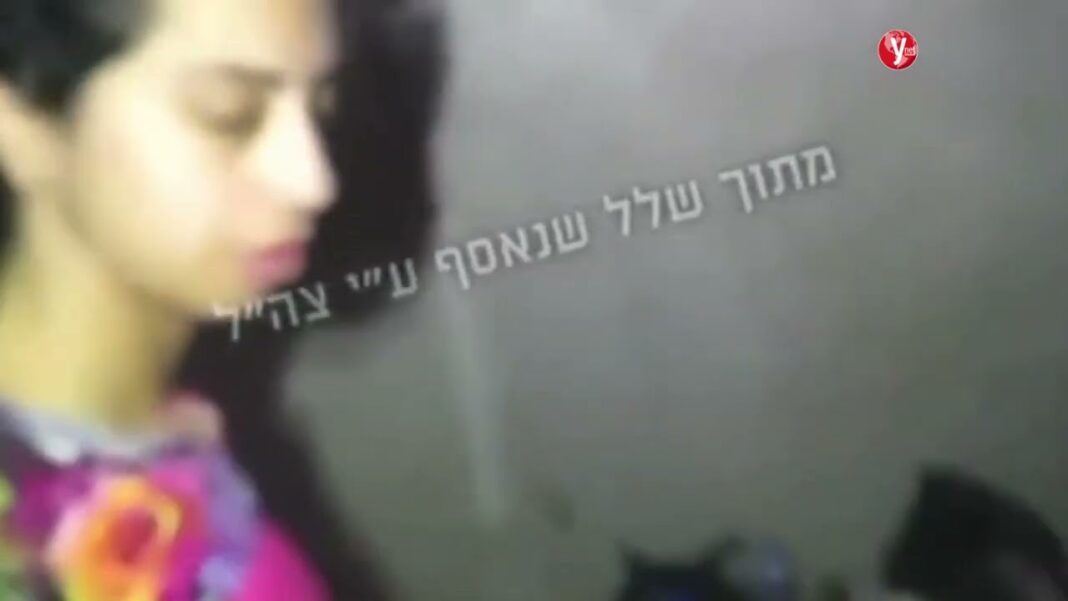
Newly obtained footage released by the Israel Defense Forces has illuminated a searingly intimate and heartbreaking chapter in the story of six Israeli hostages murdered by Hamas terrorists in August 2024. According to a report on Thursday at Israel National News, the video—retrieved during a recent IDF operation in Rafah—shows the captives quietly observing the Hanukkah candle-lighting ritual in December 2023 while deep inside a Hamas tunnel system. The scenes, unprecedented in their poignancy, offer the public a rare view into the emotional lives of hostages who struggled to preserve their humanity under inconceivable conditions.
The six hostages—Hersh Goldberg-Polin, Eden Yerushalmi, Ori Danino, Alex Lubanov, Almog Sarusi, and Carmel Gat—appear in the newly released footage praying softly, singing traditional Hebrew melodies, and offering blessings and wishes to one another. Some are visibly overcome, their voices trembling with both fear and fragile hope. As Israel National News reported, one hostage can be heard remarking, “Touching Hanukkah, huh?”—a sentence that captures the impossible duality of the moment: the quiet radiance of a Jewish ritual unfolding in the darkness of terrorist captivity.
The IDF, whose forces recovered the videos during operations targeting Hamas command-and-control infrastructure, stated that this is the first time the public has seen these hostages together alive inside the tunnel where they were later executed. For families and for the nation, the footage is not merely documentation but a painful revelation—one that adds emotional texture to the already devastating knowledge of their fate.
As the Israel National News report emphasized, the footage shows the hostages attempting to maintain elements of normalcy—rituals, humor, and spiritual reflection—despite being held underground by armed captors. At one point, a hostage is heard urging the others: “Make a wish, friends. Candles are time.” Another replies gently, “It’s always good to make wishes.” The exchange, fleeting and simple, resonates with wrenching emotional power: even in the depths of their suffering, these individuals attempted to articulate hope.
One particularly moving moment involves a conversation about the past year. When one hostage asks, “Did it come true? It’s already been a year,” a woman responds, “Yes, it came true.” He replies, almost as a blessing: “May all your requests come true for good.” The dialogue, reported in detail by Israel National News, could belong to any family gathered around a menorah—yet here it is transformed into a testament of spiritual resilience under circumstances engineered to extinguish precisely this kind of human expression.
The footage also reflects the hostages’ efforts to observe Jewish law despite their captivity. In one scene, they ask a Hamas terrorist to light a candle for them, explaining that halakha prohibits using a menorah’s flames for utilitarian purposes. Such a request, made to a captor who controlled every aspect of their survival, demonstrates both courage and devotion. The terrorists complied, providing a momentary trace of ritual permissibility amid the absolute coercion of imprisonment.
Amid the prayers and solemnity, there are flashes of humor—perhaps the most humanizing element captured. As the Israel National News report described, at one point the hostages are shown eating doughnuts, joking: “Roladin’s doughnut,” in reference to the famed Israeli bakery chain known for elaborate Hanukkah pastries. The casual banter evokes a shared national lexicon, a kind of cultural shorthand that binds Israelis to one another. That such humor persisted in the depths of a Rafah tunnel underscores an indomitable human instinct: to find normalcy and connection wherever one can.
The presence of laughter—soft, subdued, but unmistakable—makes the hostages’ eventual fate even more devastating. The footage does not show desperation or collapse; instead, it reveals individuals fighting to hold onto identity, dignity, and community. These scenes haunt precisely because they are so ordinary, so recognizably part of the rhythm of Jewish life in Israel.
According to the information provided in the Israel National News report, the IDF discovered the footage during a complex operation in Rafah aimed at neutralizing terror infrastructure and gathering intelligence on hostage locations. The video was preserved within the tunnel where the six were later executed by Hamas terrorists in August 2024. Its existence offers concrete confirmation of the conditions under which the captives were held and the extent to which they attempted to maintain morale and spiritual fortitude.
For the Israeli public, the footage has already become a symbolic artifact—an emotional distillation of both unimaginable suffering and transcendent resilience. The IDF’s release serves not only as documentation of Hamas’s crimes but also as a memorial to the hostages’ courage.
The report at Israel National News emphasized that the video calls attention to the stakes of Israel’s ongoing military operations in Gaza, particularly its efforts to dismantle Hamas’s tunnel network and secure the return of remaining captives. The footage demonstrates in stark terms the cruelty of the terrorists and highlights the psychological torture endured by those held underground.
The release of this footage has reopened wounds for the families of the hostages and for the Israeli public, which continues to grapple with the trauma of the October 7 massacres and the prolonged hostage crisis that followed. The faces of Hersh Goldberg-Polin, Eden Yerushalmi, Ori Danino, Alex Lubanov, Almog Sarusi, and Carmel Gat—faces already etched into Israel’s collective consciousness—appear here not as static images of tragedy but as human beings in motion: praying, singing, whispering hopes to one another, and marking the ancient ritual that has symbolized Jewish endurance for millennia.
As the Israel National News report noted, the Hanukkah candle is itself a metaphor for perseverance under oppression. Jewish tradition teaches that the single cruse of oil that burned for eight days during the Maccabean revolt marked a divine reminder that Jewish identity would not be extinguished. That these hostages, trapped underground with their lives at the mercy of a terrorist organization, chose to light candles and recite blessings imbues the footage with extraordinary symbolic force.
The hostages’ murder in August 2024 was one of the most agonizing chapters of the conflict. Yet this newly recovered footage stands as a testament that outlives its creators—a testament to faith and fellowship under the most dehumanizing conditions. The moments captured on camera affirm something Hamas could not destroy: the hostages’ humanity, their shared identity, and their ability to kindle light in the bowels of darkness.
As Israel continues to seek justice and closure for the victims, this footage—its songs, its blessings, its thin threads of humor—will likely become part of the nation’s long-term memory of the war. And as the Israel National News report emphasized, it serves as a stark reminder of the urgency of securing the release of all remaining hostages and ensuring that such atrocities never recur.