



|
Getting your Trinity Audio player ready...
|
By: Abe Wertenheim
As church bells echoed across the Old City and candles flickered in sanctuaries both ancient and new, Israel’s leadership used Christmas Eve not merely to extend seasonal greetings, but to deliver a resonant moral declaration—one that, as reported on Thursday by The Jewish News Syndicate (JNS), positioned the Jewish state as a rare and indispensable guardian of Christian life and liberty in a region where such freedoms have steadily eroded.
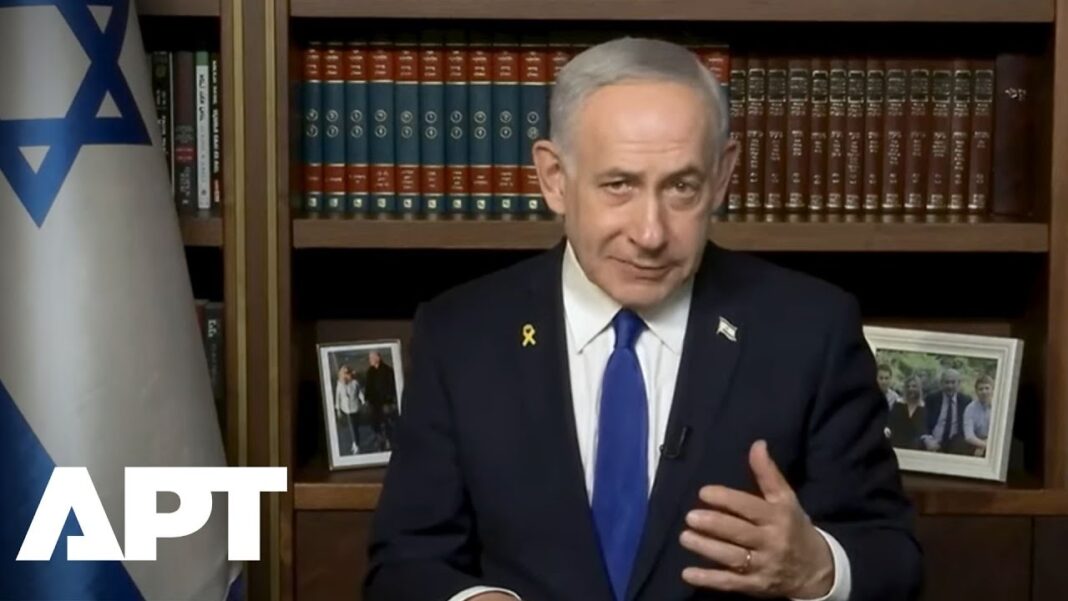
In a video message released Wednesday night from Jerusalem, Prime Minister Benjamin Netanyahu offered a Christmas greeting that doubled as a pointed geopolitical statement. Speaking from what he described as “the Holy Land,” Netanyahu declared that Israel is “the only country in the Middle East where the Christian community is thriving.” It was a remark grounded not in sentimentality, but in data, history, and an increasingly stark regional contrast—one that JNS has repeatedly documented in its coverage of religious freedom across the Middle East.
“I wish you a Merry Christmas and a happy New Year from here, the Holy Land, Israel,” Netanyahu said. “The only country in the Middle East where the Christian community is thriving.”
Netanyahu’s message underscored a reality often absent from international discourse: that Israel stands alone in the region as a state where Christians live not merely as a tolerated minority, but as full citizens enjoying civil rights, freedom of worship, and cultural autonomy. According to the JNS report, the prime minister emphasized that Israel is the only Middle Eastern country where Christians live “with full rights and in total freedom,” able to practice their faith openly and without fear.
In Israel, Christian pilgrims are not only permitted but welcomed—embraced “with open arms,” as Netanyahu put it. Churches operate freely, religious festivals are publicly celebrated, and Christian institutions flourish under the protection of law. This is not a symbolic commitment but an institutional one, embedded in Israel’s legal framework and civic culture.
As JNS has noted in numerous reports, this reality sharply contrasts with the plight of Christian communities elsewhere in the region, where intimidation, legal discrimination, forced displacement, and outright violence have driven once-thriving populations to the brink of extinction.
Netanyahu illustrated this contrast with a telling anecdote. While Jerusalem’s municipality has been distributing free Christmas trees to Christian residents for two decades—a quiet but meaningful tradition—Palestinians in the Samaria terror hub of Jenin set a Christmas tree ablaze just days earlier.
“That’s the difference,” Netanyahu said bluntly, according to the JNS report.
The juxtaposition was deliberate. It was not meant to inflame, but to illuminate. In Israel’s capital, Christmas is facilitated and protected by municipal authorities. In areas plagued by militant extremism, symbols of Christianity are increasingly targeted or erased. The difference, Netanyahu suggested, lies not in theology, but in governance and values.
Netanyahu’s remarks extended beyond Israel’s borders. “Israel stands up for Christians across the region wherever they face widespread intimidation and persecution,” he said, a statement JNS contextualized within Israel’s longstanding diplomatic advocacy on behalf of persecuted religious minorities.
While Israel’s Christian population continues to grow, Netanyahu noted, Christian communities in “countless areas across the region” have been shrinking rapidly due to systematic discrimination and oppression. This demographic divergence is not accidental; it reflects divergent political and cultural trajectories.
One of the most striking examples cited by Netanyahu was Bethlehem—the city revered by Christians worldwide as the birthplace of Jesus. Bethlehem was approximately 80% Christian when the Israel Defense Forces took control of it following the 1967 Six-Day War. Since being placed under Palestinian Authority control, that figure has plummeted to roughly 20%.
The decline, Netanyahu implied, cannot be dismissed as coincidence or economic migration alone. It reflects sustained pressures that have made life increasingly untenable for Christians under certain regimes.
Netanyahu’s Christmas message also addressed persecution beyond the Israeli-Palestinian context. He cited the ongoing displacement and slaughter of Christians in Nigeria at the hands of Muslim terrorists, calling it intolerable and demanding an end to such violence.
“Persecution of Christians or members of any religion cannot and must not be tolerated,” Netanyahu said. “Muslim militant displacement and attack against Christians in Nigeria—that too must end, and it must end now.”
In doing so, Netanyahu framed Israel not merely as a national actor, but as a moral voice—one willing to speak candidly about religious persecution regardless of geography. As the JNS report observed, this universality has become a defining feature of Israel’s public diplomacy in recent years.
He concluded with a simple but emphatic assurance: “Know that Israel will always stand with you.”
Netanyahu was not alone in marking Christmas with words of solidarity. In a separate post on X, Israeli President Isaac Herzog extended warm greetings to “all our Christian sisters and brothers in Israel, the Middle East and around the world.”
Herzog expressed “deep pride in Israel’s Christian communities,” describing them as “an integral part of our nation.” He reaffirmed Israel’s commitment to protecting freedom of worship for people of all faiths—a pledge enshrined in Israel’s Declaration of Independence and reinforced by decades of jurisprudence.
Herzog also shared that ahead of Christmas he visited the Franciscan Sisters at the St. Antonio Convent, where they prayed together for peace and fraternity. “We stood united against all forms of hatred and extremism,” he wrote—a sentiment that JNS noted reflects a broader effort by Israel’s presidency to foster interfaith dialogue and solidarity.
Foreign Minister Gideon Sa’ar echoed these messages, wishing Christians worldwide a “Merry Christmas and a Happy New Year,” and expressing hopes for joy, health, and prosperity in the coming year. Taken together, these statements conveyed a rare unity of purpose across Israel’s political spectrum—one centered on religious freedom and mutual respect.
Beyond rhetoric, the data reinforces Israel’s claims. According to a Christmas 2025 report by the Israeli Central Bureau of Statistics, cited by JNS, Israel’s Christian population now stands at approximately 184,200 people, accounting for 1.9% of the country’s population. The figure represents a 0.7% increase from the previous year—an anomaly in a region where Christian populations are overwhelmingly in decline.
This growth is not merely demographic; it is cultural and economic. Israeli Christians consistently rank among the country’s most educated communities, with high participation in higher education, medicine, and the sciences. They serve in public life, contribute to Israel’s economy, and participate fully in civic affairs.
Israel’s Christian citizens enjoy access to independent courts, free media, and legal protections that are virtually nonexistent for religious minorities in much of the Middle East.
Netanyahu’s Christmas message also served as a counter-narrative to persistent accusations leveled against Israel in international forums. While critics often portray the Jewish state as intolerant or exclusionary, the lived reality of its Christian citizens—and the stark contrast with neighboring regions—tells a different story.
In an era when antisemitism and anti-Israel rhetoric increasingly masquerade as human-rights advocacy, Israel’s treatment of its Christian minority offers a powerful rejoinder. As JNS has argued in its analysis, the measure of a society’s commitment to pluralism is found not in slogans, but in outcomes.
By that measure, Israel stands apart.
Netanyahu’s Christmas Eve address was brief, but its implications were expansive. It reminded Christians worldwide that in a region scarred by sectarian violence and authoritarianism, there remains one country where their faith is not merely tolerated, but protected and respected.
At a time when Christian communities from Iraq to Syria, from Egypt to Nigeria, face existential threats, Israel’s message was both a reassurance and a challenge—to the international community, to regional actors, and to global conscience.
As the JNS report framed it, Israel’s Christmas message was not simply seasonal goodwill. It was a declaration of identity, a statement of values, and a reaffirmation of a principle too often neglected: that true religious freedom is not proclaimed—it is practiced.
And in the Middle East, Israel remains its most enduring sanctuary.