



|
Getting your Trinity Audio player ready...
|
By: Fern Sidman
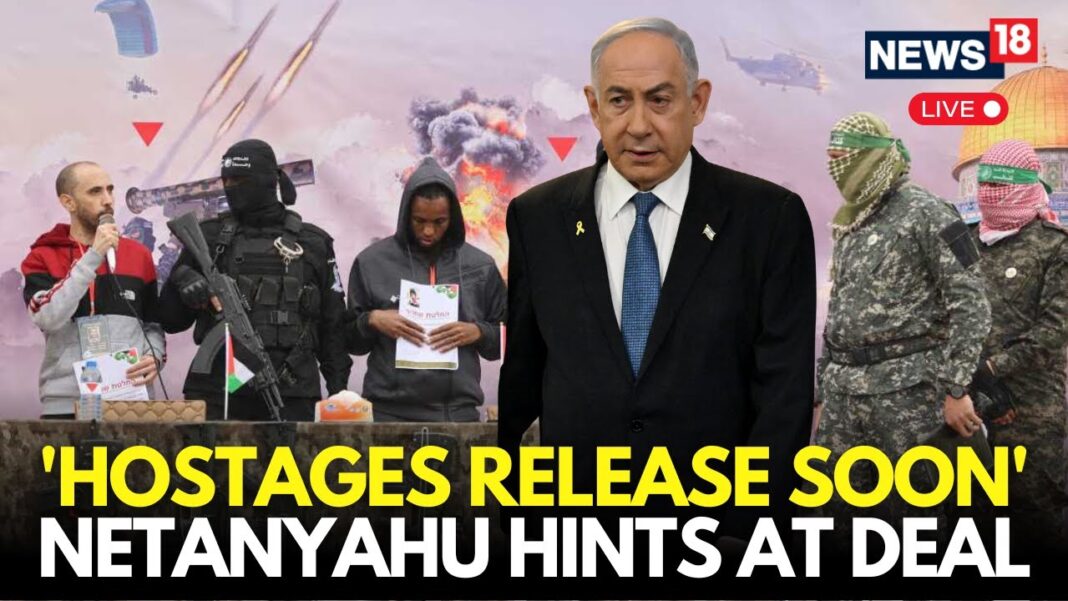
Prime Minister Benjamin Netanyahu has secured the support of the majority of his coalition for the first stage of a U.S.-brokered hostage deal, even as some of his most hardline allies, including Finance Minister Bezalel Smotrich and National Security Minister Itamar Ben-Gvir, issued blistering warnings about the risks of pausing military operations and negotiating with Hamas.
According to a report that appeared on Sunday at Israel National News (INN), Netanyahu now has the political green light to move forward with the initial phase of the agreement, which envisions the release of Israeli hostages in exchange for a halt to offensive operations in Gaza. Yet the coalition consensus is fragile, hinging on red lines drawn by key ministers regarding the complete demilitarization of the Gaza Strip and the ultimate destruction of Hamas as a governing entity.
Smotrich, leader of the Religious Zionist Party and a senior figure within Netanyahu’s coalition, announced he would vote against the deal “on principle,” but clarified he would not topple the government during the first stage of its implementation. As the INN report noted, Smotrich’s position reflects deep skepticism about halting Israel’s offensive momentum.
“The Prime Minister’s decision to stop the offensive in Gaza and, for the first time, to conduct negotiations not under fire is a severe mistake,” Smotrich declared on Saturday. He argued that the pause gives Hamas space to regroup, waste time, and weaken Israel’s leverage.
“This is a recipe for Hamas to stall and for Israel’s position to be worn down, both regarding the release of hostages in one wave within 72 hours and concerning the main goal of the war: eliminating Hamas and achieving the full demobilization of Gaza,” he warned, according to the information provided in the INN report.
Smotrich’s comments highlight a central tension within the coalition: while the humanitarian urgency of freeing hostages commands broad sympathy, the strategic objective of dismantling Hamas remains paramount for much of Israel’s political and military leadership.
National Security Minister Itamar Ben-Gvir, leader of the Otzma Yehudit faction, delivered an even sharper ultimatum. In a statement carried by INN, Ben-Gvir insisted that his party could not remain in government if Hamas survives in any form after the hostages are released.
“If, after the release of all the hostages, the Hamas terror organization continues to exist, Otzma Yehudit will no longer be part of the government,” he declared. “We will not be part of the national defeat, which would be an eternal disgrace, or become a ticking time bomb until the next massacre.”
While affirming his joy at the prospect of the hostages’ return, Ben-Gvir drew a stark line: “We can’t at all agree to a scenario where a terror organization that brought the worst disaster is reborn. We will in no way be part of this.”
His comments shine a proverbial spotlight on the ideological fault lines within Netanyahu’s coalition, where survival depends on balancing pragmatism in negotiations with hawkish demands for Hamas’s total eradication.
Despite these protests, Netanyahu pressed forward, convinced that the immediate release of hostages is an indispensable first stage. According to the information contained in the INN report, Netanyahu told close associates that the government’s approval is limited to this stage and that no additional concessions would be made until it is fulfilled.
The prime minister has sought to reassure right-wing partners by reiterating that Israel’s long-term war aims remain unchanged: Hamas must be dismantled, Gaza must be demilitarized, and Israel’s security must be guaranteed. At the same time, Netanyahu has stressed the moral and political imperative of securing the return of hostages — an issue that carries deep resonance with the Israeli public.
Other ministers voiced concerns about Hamas’s intentions, even as they stopped short of outright opposition. Minister Avi Dichter told Channel 12 that Hamas would likely exploit the negotiations to stall.
“Hamas will try to buy time; we must demand the immediate release of all living hostages,” Dichter said, emphasizing the need for vigilance even as talks advance. His remarks, highlighted in the INN report, reflect a widely held fear within the Israeli security establishment: that Hamas is adept at manipulating ceasefires and negotiations to prolong its survival.
The decision to pause operations and move forward with talks comes amid intense U.S. pressure. President Trump has made the hostage deal a central plank of his Middle East policy, warning Hamas that it faces “complete obliteration” if it rejects the agreement. Netanyahu, who has repeatedly affirmed his close coordination with Washington, has sought to align Israel’s actions with Trump’s framework without jeopardizing his coalition.
According to the report on Israel National News, Netanyahu believes that the IDF’s military campaign — particularly in Gaza City — forced Hamas to the table. By agreeing to a pause at this juncture, he hopes to convert battlefield momentum into tangible results, namely the return of hostages. Still, his political base demands assurances that the war’s ultimate objectives will not be abandoned.
The latest developments highlight the precarious balance Netanyahu must strike. While the majority of his coalition backs the first stage, both Smotrich and Ben-Gvir have articulated non-negotiable red lines. For Smotrich, the survival of a militarized Hamas in Gaza is intolerable. For Ben-Gvir, the very existence of Hamas post-hostage release would trigger his party’s exit from government.
INN reported that Netanyahu’s allies are working to keep the coalition intact by framing the first stage as a tactical maneuver rather than a strategic shift. Still, the coalition’s stability could unravel quickly if Hamas drags out negotiations, refuses to disarm, or survives in any recognizable form.
The stakes of the hostage deal extend far beyond the fate of the abducted Israelis. For Netanyahu, the deal is a test of his ability to navigate competing pressures: humanitarian urgency, U.S. diplomatic expectations, military strategy, and coalition politics.
The prime minister’s insistence that “nothing beyond the first clause begins until all hostages are home” reflects his attempt to hold these threads together. Yet, as INN observed, this balancing act is fraught with risk. If Hamas stalls, the coalition’s right wing could fracture. If Israel pushes too hard militarily, international support could waver.
Public opinion in Israel remains deeply conflicted. While the return of hostages is a national priority, there is widespread recognition that Hamas thrives on hostage diplomacy. Israel National News has frequently documented the anguish of families demanding their loved ones’ release, alongside the determination of military leaders to prevent Hamas from emerging strengthened.
The dilemma is not new: hostage deals have historically sparked fierce debates in Israel, with critics warning that concessions incentivize further abductions. The scale of Hamas’s October 7 assault, however, has magnified the stakes, making the release of hostages both a humanitarian necessity and a strategic gamble.
With the coalition’s conditional backing secured, Netanyahu is poised to implement the first stage of the hostage deal. The path forward, however, remains fraught with uncertainty. Hamas’s intentions are opaque, coalition unity is fragile, and the long-term objectives of demilitarizing Gaza and dismantling Hamas are far from assured.
As the INN report observed, the government’s decision represents “a cautious step into negotiations shadowed by deep mistrust and high stakes.” Whether the gamble yields the safe return of hostages or emboldens Hamas to manipulate the process will determine not only the course of the war but also the fate of Netanyahu’s government.
For now, Israel holds its breath, suspended between the urgent hope of seeing its citizens return and the existential demand that Hamas never again have the power to threaten the Jewish state.

From Caroline Glick: “Hamas Thought They Knew EVERYTHING About Israel – They Were Dead Wrong (w/Caroline Glick) – YouTube
https://www.youtube.com/watch?v=iLbJUbKNLAo
Caroline Glick is much more optimistic and hopeful than am I. I think Hamas is, as always, “gaming” the negotiations, and will not fulfill its obligation. The crucial question will be whether Trump will permit Hamas its victory, or permit Israel to complete its destruction of Hamas as a military organization and as a regime.