



|
Getting your Trinity Audio player ready...
|
By: Fern Sidman
Israel’s national debate over how to end the war in Gaza intensified sharply on Sunday as Prime Minister Benjamin Netanyahu delivered a stern denunciation of mass demonstrations that swept across the country calling for the immediate release of hostages and an end to the conflict.
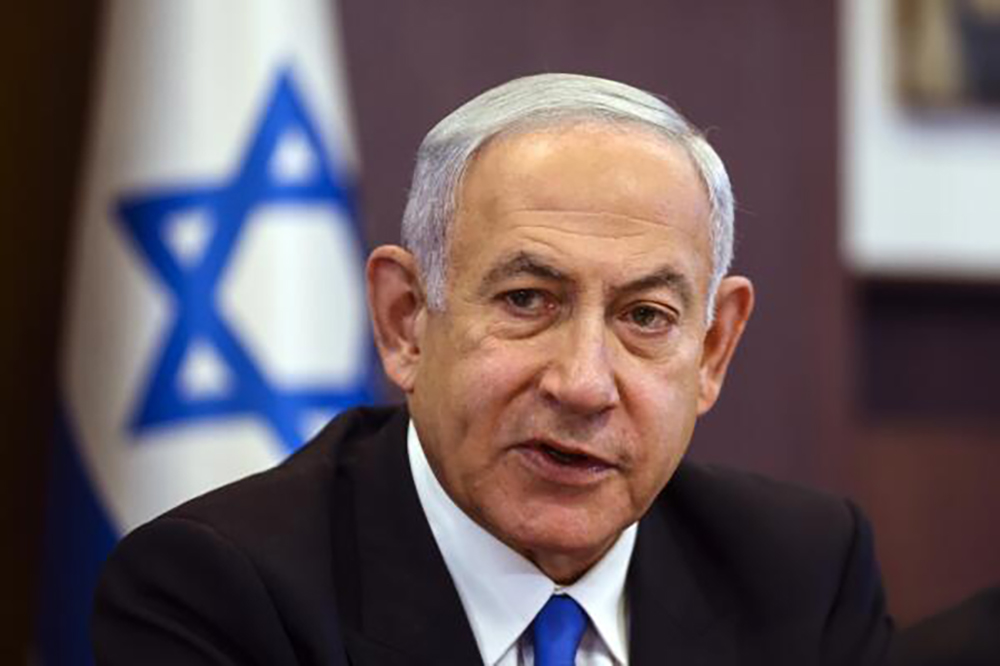
Speaking at a government meeting, Netanyahu framed the protests as dangerously counterproductive, accusing organizers of emboldening Hamas at a critical moment in Israel’s campaign. As i24News reported, the prime minister insisted that ending the war prematurely would invite a repeat of the October 7 massacre and consign Israel to an “endless war” against the terrorist group.
“Those who call today for an end to Hamas’s war not only harden the terrorist group’s position and delay the release of our hostages, but also guarantee that the horrors of October 7 will be repeated and that we will have to fight an endless war,” Netanyahu declared, according to the report at i24News.
In his remarks, Netanyahu defended Israel’s ongoing military strategy, pointing to operations carried out across multiple fronts in the previous 24 hours. According to the information provided in the i24News report, the prime minister highlighted the navy’s strikes against power stations in Yemen, IDF ground operations in Gaza’s Zeitoun neighborhood that eliminated dozens of Hamas fighters, and Israeli Air Force missions targeting Hezbollah commanders and rocket launch sites in southern Lebanon.
He stressed that Israel’s response to Hezbollah activity remained firmly within the parameters of the existing ceasefire agreement. “According to this agreement, we will meet with fire any violation and any attempt to arm Hezbollah,” Netanyahu stated.
For the prime minister, these examples illustrated the breadth and necessity of Israel’s campaign, which he described as not merely retaliatory but preemptive — designed to ensure that Hamas and its allies cannot regroup and launch new attacks on Israeli civilians.
Netanyahu used the opportunity to reaffirm Israel’s negotiating position. As the report at i24News noted, Hamas has insisted that any ceasefire agreement include a full withdrawal of Israeli forces from the Gaza Strip — a demand Netanyahu categorically rejected.
“They want us to leave Gaza entirely — from the north, the south, the Philadelphi corridor, and the security perimeter,” he said. “That would only allow them to reorganize, rearm, and attack us again.”
Instead, Netanyahu reiterated Israel’s non-negotiable conditions: sustained security control in Gaza and the complete demilitarization of Hamas. Anything less, he argued, would represent a strategic victory for the terrorist organization and a profound betrayal of the October 7 victims.
The war, now in its 681st day, continues to be defined by the plight of the 49 hostages still held in Gaza. As the i24News report emphasized, their captivity remains a searing national trauma, one that has galvanized mass mobilization among ordinary Israelis and intensified political pressure on the government.
While Netanyahu maintains that the surest path to their release lies in military victory, many families of hostages — along with their supporters — are demanding a different approach. On Sunday, those demands exploded into one of the largest coordinated protests of the war to date.
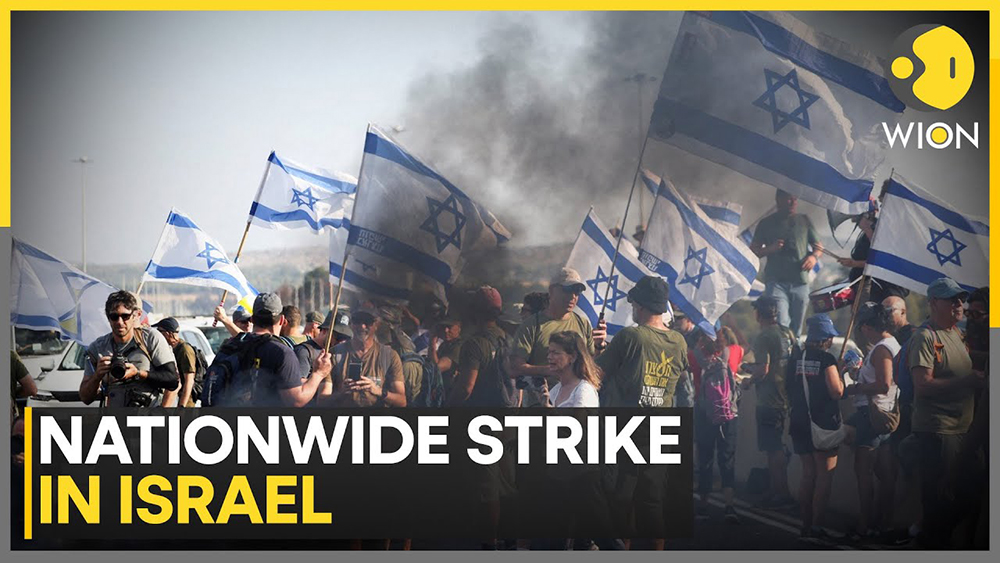
According to the information contained in the i24News report, hundreds of thousands of Israelis participated in demonstrations across the country, organized by the Hostage Families Forum. The general strike disrupted daily life in cities from Tel Aviv to Jerusalem, with rallies staged at major intersections, outside government ministers’ homes, and at iconic protest hubs such as Kaplan Junction and the Ayalon highways.
The protesters’ demands were explicit: that the government prioritize the immediate return of all captives in a single comprehensive deal, even if it requires concessions to Hamas, and that Israel halt its military operations to pave the way for such an agreement.

Chants of “Bring them home now” reverberated across city squares, with demonstrators carrying photographs of the hostages and placards condemning the government’s perceived inaction. The scale of the mobilization, as described by i24News, underscored the widening gulf between Netanyahu’s strategy of military escalation and the calls for negotiation championed by hostage families.
The competing narratives on display Sunday reflect the profound divisions within Israeli society nearly two years into the war. On one side, government officials such as Netanyahu argue that military pressure is the only language Hamas understands, and that negotiating prematurely would not only fail to free the hostages but would also entrench Hamas’s grip on Gaza. On the other side, hostage families insist that every passing day puts their loved ones at greater risk, and that the government has an overriding moral duty to prioritize their safe return above all else.
As the i24News report observed, this conflict of visions has become the defining political dilemma of the war: whether Israel should press for total victory or accept painful compromises to bring the captives home.
Netanyahu’s stance reflects both his long-standing security philosophy and the political realities of his governing coalition. The prime minister faces pressure from right-wing allies such as Finance Minister Bezalel Smotrich and National Security Minister Itamar Ben-Gvir, who have called for uncompromising military escalation and warned against any partial deals with Hamas.
At the same time, Netanyahu must contend with mounting public discontent and a protest movement that has become increasingly difficult to ignore. According to the report at i24News, the general strike marked one of the most widespread expressions of dissent since the start of the war, suggesting that the hostage issue could become a central test of Netanyahu’s leadership.
The prime minister’s remarks also situated Israel’s fight within a wider regional conflict, highlighting the interconnected threats posed by Hamas in Gaza, Hezbollah in Lebanon, and Iran-backed militias operating from Yemen. As i24News reported, Netanyahu has consistently framed the war as part of a broader struggle against Iranian influence in the Middle East, emphasizing the need for Israel to maintain a firm and united front across multiple theaters.
By citing simultaneous IDF operations in Gaza, Lebanon, and Yemen, Netanyahu underscored that Israel’s strategy is not limited to one battlefield but encompasses a comprehensive campaign to dismantle hostile networks throughout the region.
With the war approaching its two-year mark and no end in sight, Sunday’s events highlight the intensity of both the military campaign and the domestic debate surrounding it. Netanyahu’s vow to resist public pressure and pursue victory “until the end” sets the stage for further confrontations not only with Hamas but also with segments of his own populace.
As i24News has reported, the protests by hostage families are unlikely to subside; if anything, their scale and urgency are expected to grow as the war drags on. For Netanyahu, the challenge will be maintaining coalition unity while managing public anger — all while navigating the complex regional threats that make Israel’s security landscape uniquely volatile.
Sunday’s demonstrations and Netanyahu’s sharp rebuke have crystallized the central question now facing Israel: should the nation prioritize the uncompromising defeat of Hamas or pivot toward negotiation to bring the hostages home?
Netanyahu’s answer is unambiguous: protests may generate headlines, but only military force can secure Israel’s survival and prevent the return of October 7’s horrors. For the hostage families and their supporters, however, the calculus is starkly different: without a deal, the lives of their loved ones may slip away.
Whether Netanyahu’s call for resolve or the protesters’ demand for compromise ultimately prevails may determine not only the fate of the hostages but the very future of Israel’s war in Gaza.
