



|
Getting your Trinity Audio player ready...
|
Netanyahu Replaces National Security Adviser Tzachi Hanegbi Amid Strategic Tensions
By: Tzirel Rosenblatt
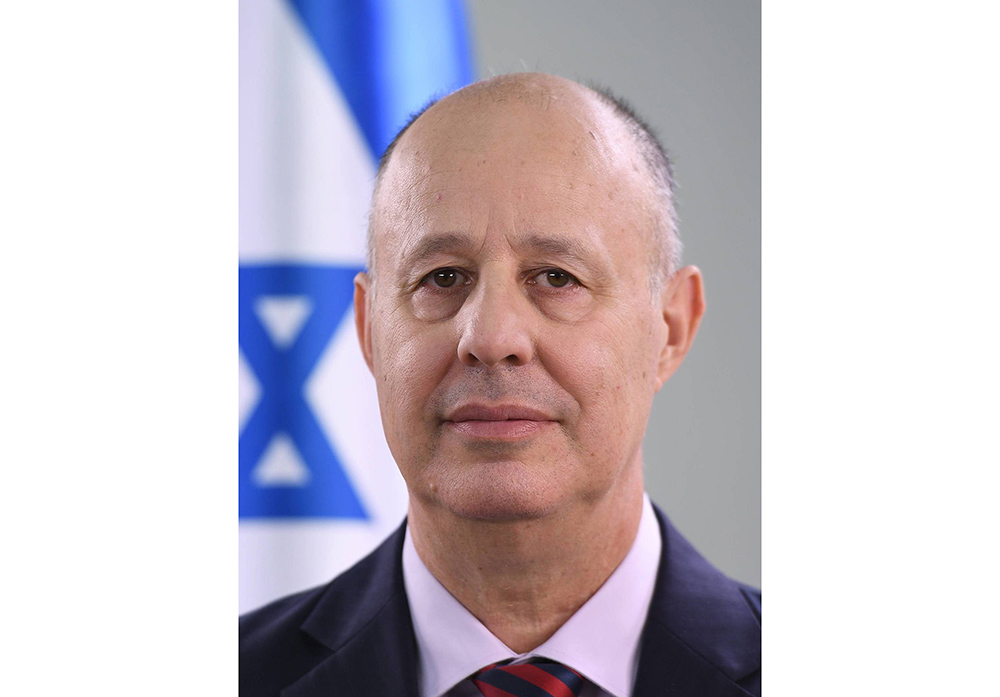
Prime Minister Benjamin Netanyahu has decided to replace National Security Council (NSC) head Tzachi Hanegbi, signaling a significant reshuffling within Israel’s national security leadership during one of the most volatile periods in the nation’s recent history. The announcement, first confirmed through a statement by Hanegbi on Tuesday evening, marks the end of a politically complex and sometimes tense working relationship between the longtime Likud ally and the prime minister.
According to a report that appeared on Tuesday at Israel National News (INN), Hanegbi — who has served as both National Security Adviser and head of the NSC since 2022 — announced his immediate resignation after being informed that Netanyahu intends to appoint a successor. In his farewell message, Hanegbi expressed gratitude for the opportunity to serve, while acknowledging the extraordinary challenges Israel continues to face on multiple fronts since the Hamas-led assault of October 7, 2023.
“I thanked the Prime Minister for the privilege of contributing to the shaping of Israel’s foreign and security policy during challenging years,” Hanegbi wrote. “I appreciated the opportunity to express independent views in sensitive discussions, and for the professional dialogue we maintained even amid disagreements.”
While maintaining a respectful tone, Hanegbi’s statement, as reported by Israel National News, underscored both the scope of his responsibilities and the heavy weight of the moment. “The multi-front campaign imposed on us on October 7, 2023, is not over,” he wrote, emphasizing that the effort to return hostages from Gaza remains unfinished and that the mission to disarm Hamas and ensure Gaza no longer poses a threat is still ongoing.
The replacement of Hanegbi comes amid growing debates within Israel’s security establishment over strategy, coordination, and the balance between military and diplomatic imperatives. As the Israel National News report noted, Hanegbi used his final statement to warn that the coming months would require “wisdom, determination, and responsibility” to navigate the pressures Israel faces from both allies and adversaries.
He stressed that the diplomatic front remains as critical as the military one, urging a focus on maintaining Israel’s achievements while confronting ongoing international scrutiny. “The challenges on the diplomatic and international fronts remain demanding,” Hanegbi wrote, “and require Israeli initiative and action with wisdom, determination, and responsibility.”
Notably, Hanegbi also called for a full investigation into the failures that led to the October 7 attacks, a rare admission from a senior government figure who has remained close to Netanyahu throughout much of his career. “The terrible failure of October 7, in which I share responsibility, must be thoroughly investigated,” he stated. “The lessons must be learned to help restore the trust that was shaken.”
His remarks, according to the Israel National News report, reflect a growing sentiment among senior security officials that accountability is essential to rebuilding public confidence in Israel’s defense apparatus.
While Hanegbi and Netanyahu have worked together for decades — their political partnership dating back to the early 2000s — their professional relationship during the Gaza war has not been without friction. Multiple reports, including those cited by Israel National News, point to disagreements over key operational decisions, including the controversial “Gideon Chariots 2” operation, which Hanegbi opposed.
Hanegbi also reportedly objected to targeting senior Hamas officials in Qatar, arguing that such an action could jeopardize diplomatic efforts involving the United States and Gulf states. These disputes led to growing tension between the two men, culminating in Hanegbi’s absence from Netanyahu’s recent trip to the United States, where he met with U.S. officials and Jewish community leaders.
According to the information provided in the Israel National News report, this absence was “a clear indicator of a widening gap” between Hanegbi and the Prime Minister on issues of timing, tactics, and communication strategy.
The Prime Minister’s Office confirmed the decision in a brief statement, thanking Hanegbi for his years of service and announcing that Deputy NSC head Gil Reich would immediately assume the position of acting head of the National Security Council.
“Prime Minister Benjamin Netanyahu thanks Tzachi Hanegbi for his service as head of the National Security Council over the past three years,” the statement read, as quoted by Israel National News. “He wishes him great success in his future endeavors and good health.”
Reich, a seasoned strategist and former IDF intelligence officer, is expected to serve on an interim basis until a permanent appointment is made. Sources cited by Israel National News said that Netanyahu is likely to name a replacement within weeks — potentially someone drawn from Israel’s military establishment rather than the political sphere.
Tzachi Hanegbi, 67, has long been considered one of the most experienced figures in Israeli public life. A Likud veteran and close confidant of Netanyahu, he previously served as Minister for Regional Cooperation, Minister of Intelligence, and Chairman of the Knesset Foreign Affairs and Defense Committee before assuming his NSC role in 2022.
Throughout his tenure, Hanegbi was known for his measured approach and his ability to bridge the gap between Israel’s political and defense establishments. However, the events of October 7 — when Hamas terrorists stormed Israel’s southern border, killing more than 1,200 people and taking over 250 hostages — marked a defining rupture in Israeli national security doctrine.
In his statement, as reported by Israel National News, Hanegbi wrote candidly that the failure to prevent the attack “will remain a permanent scar” and must serve as a catalyst for systemic reform. “The many achievements of the military and diplomatic campaign must be preserved and strengthened,” he said. “But the lessons of that dark day must be institutionalized, so that such a failure never happens again.”
Hanegbi’s call for introspection places him among a growing number of senior figures who have urged that a formal commission of inquiry be convened after the war’s conclusion.
Perhaps the most poignant section of Hanegbi’s farewell message was his plea for national unity — a theme echoed widely in Israeli public discourse since the outbreak of the war.
“We must all remain committed and attentive to the needs of those who paid the highest price: the bereaved families and the wounded — both physically and emotionally,” he wrote. “Most importantly, we must work to heal the wounds within Israeli society and strengthen our internal unity.”
According to the report at Israel National News, Hanegbi’s emphasis on unity carried particular resonance at a time when political divisions have resurfaced amid ongoing protests and debates over judicial reform. His words, observers noted, mirrored the national mood: a combination of mourning, resilience, and a collective yearning for cohesion after two years of unrelenting crisis.
“The power of Israeli unity was fully revealed on the battlefield over the past two years,” Hanegbi continued, “shattering our enemies’ illusions. Now, restoring unity across all levels of public engagement is essential to securing Israel’s future.”
The departure of Hanegbi, Israel National News observed, comes at a time of extraordinary geopolitical complexity. Israel remains engaged in low-intensity fighting in Gaza, faces persistent rocket threats from Hezbollah in the north, and is navigating delicate diplomatic ties with Washington, Ankara, and Riyadh — all while continuing to pursue the release of remaining hostages.
In this context, the role of the National Security Council — which coordinates policy between the Prime Minister’s Office, the defense establishment, and international partners — is more crucial than ever. Gil Reich’s interim leadership will therefore be closely scrutinized, as the NSC works to maintain continuity amid rapid developments.
As the Israel National News report observed, the replacement of Hanegbi marks both the end of an era and the beginning of a recalibration in Israel’s national security architecture. His departure leaves behind a legacy defined by professionalism, prudence, and the sobering lessons of October 7.
While Netanyahu thanked Hanegbi for his service, the move also calls attention to the Prime Minister’s intent to tighten control over his security apparatus as Israel enters what may be a decisive phase in its long struggle against Hamas and Iran-backed proxies.
For Hanegbi, the conclusion of his tenure does not appear to mark the end of his public engagement. Those close to him told Israel National News that he intends to remain active in shaping policy debate, particularly regarding defense reform and national resilience.
“Unity, accountability, and vigilance,” Hanegbi wrote in his parting message, “are the pillars on which Israel’s security must stand. Only through them will we safeguard our people, our nation, and our future.”