



|
Getting your Trinity Audio player ready...
|
Netanyahu Meets with Druze Spiritual Leader as Israel Steps Up Protection of Syria’s Druze Community
By: Fern Sidman
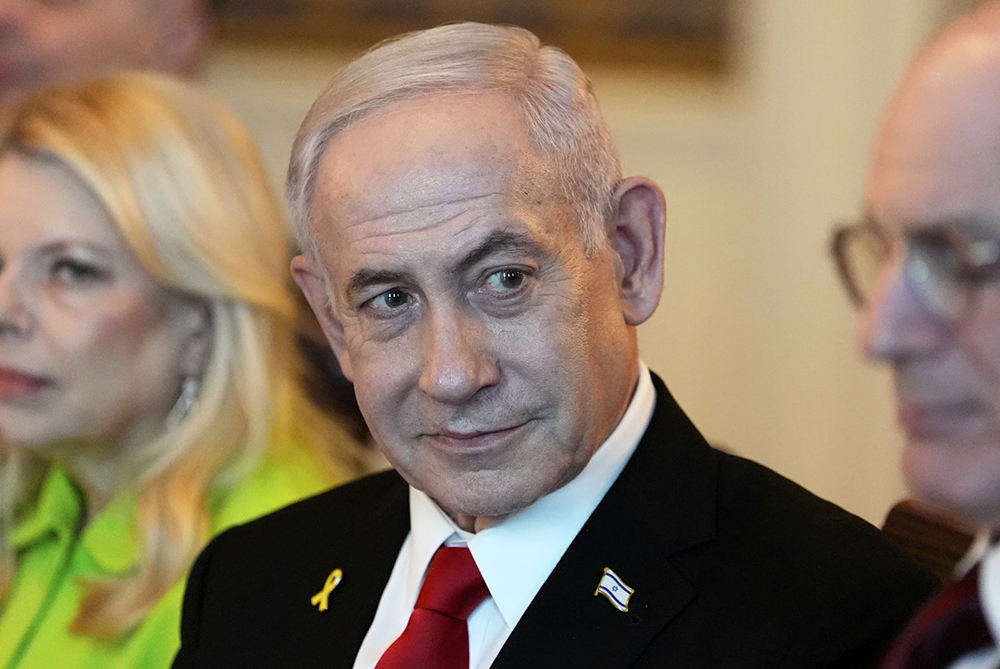
Israeli Prime Minister Benjamin Netanyahu met on Thursday with Sheikh Muwaffaq Tarif, the spiritual leader of Israel’s Druze community, amid mounting concern over escalating sectarian violence targeting Druze civilians in Syria’s southern Sweida province. According to a statement released by the Prime Minister’s Office, the meeting was held in Jerusalem and focused on Israel’s strategic and humanitarian commitment to the Druze population both within its borders and beyond.
The summit came just days after Sheikh Tarif met with President Isaac Herzog, underscoring the gravity of the situation and the state’s high-level attention to the plight of the Druze minority in neighboring Syria. The Times of Israel reported that recent developments in the region have led to a renewed emphasis by Israeli leadership on safeguarding the welfare of Druze populations, particularly in light of the deteriorating security situation in Sweida.
Sweida, a historically Druze-majority province located in southern Syria, has been engulfed by fresh waves of violence, reportedly involving both local militias and elements affiliated with the new Syrian regime. According to reports cited by The Times of Israel, the bloodshed has included targeted killings, civilian displacement, and increasing instability. These developments have sent shockwaves through Israel’s Druze community, which maintains deep familial and cultural ties with their counterparts in Syria.
In response to what it has described as an unfolding humanitarian crisis, Israel has conducted a series of precision airstrikes in southern Syria. The Israeli government has framed these operations not merely as military engagements, but as an expression of its commitment to protect vulnerable Druze populations across the border. As reported by The Times of Israel, defense officials have stressed that these strikes were carefully calibrated to target hostile regime elements without endangering civilians.
Prime Minister Netanyahu reiterated that point during Thursday’s meeting, affirming the government’s “moral responsibility” to stand by the Druze people in Syria. He emphasized Israel’s historic bond with the Druze community and conveyed assurances that the state would continue to monitor the evolving situation closely.
According to the information provided in The Times of Israel report, Netanyahu’s meeting with Sheikh Tarif reflects both a reaffirmation of internal alliances and a nuanced regional strategy. Israel’s Druze community has long played a vital role in the country’s social and military fabric, with many Druze citizens serving in the Israel Defense Forces (IDF) and participating actively in civic life. The prime minister’s engagement with Sheikh Tarif signals continued recognition of that loyalty, while simultaneously addressing external threats to Druze populations in hostile environments.
At the same time, Israel’s involvement in Syria remains diplomatically sensitive. While the IDF has routinely carried out operations against Iranian and Hezbollah targets in Syrian territory, direct engagement with the Syrian regime has historically been limited. That may now be shifting.
In a separate but related development, The Times of Israel reported that Strategic Affairs Minister Ron Dermer is expected to meet with the Syrian Foreign Minister in Paris in the coming days. If confirmed, the meeting would mark a rare direct contact between senior Israeli and Syrian officials, suggesting a possible back-channel effort to stabilize Druze regions and prevent further escalation.
Though no formal statement has been issued by Dermer’s office, The Times of Israel report noted that such engagement would be consistent with Israel’s dual-track strategy: exerting military pressure where necessary while pursuing diplomatic channels to de-escalate tensions. The involvement of a high-ranking official such as Dermer—who is known for his close advisory role to Netanyahu and his past diplomatic experience as Israel’s ambassador to the United States—indicates the seriousness with which Israel is treating the current crisis.
The Times of Israel report highlighted that the Druze issue has long held symbolic and political weight in Israeli society. With approximately 145,000 Druze citizens residing primarily in the north, the community has consistently demonstrated loyalty to the state. That loyalty, however, has also been tested—particularly in the aftermath of the controversial 2018 Nation-State Law, which many Druze leaders criticized for undermining their status as equal citizens.
Netanyahu’s engagement with Sheikh Tarif amid the current crisis may also be viewed in this context—as a reaffirmation of solidarity and a move to maintain cohesion within Israel’s multiethnic social fabric. According to the information contained in The Times of Israel report, Sheikh Tarif has previously played a stabilizing role in Druze-Jewish relations and has acted as a key intermediary in times of domestic tension.
The intensifying violence in Sweida, combined with Israel’s proactive stance, may have broader regional implications. The Times of Israel has previously reported on Israel’s increasing concern over Iranian entrenchment in Syria, particularly along the country’s southern frontier. While recent airstrikes have targeted regime-affiliated positions, Israeli defense officials remain wary of a wider destabilization that could allow Iranian proxies to gain a stronger foothold.
As such, the protection of the Druze community may also serve a dual function: addressing an immediate humanitarian need while preempting security threats that could emerge from unchecked regime or proxy activity in the region.
Thursday’s meeting between Prime Minister Netanyahu and Sheikh Muwaffaq Tarif was far more than a symbolic gesture. It represented a convergence of domestic commitment, regional strategy, and diplomatic calculation. As the situation in Syria continues to evolve, Israel’s role as both a protector of minority populations and a strategic actor in the Middle East is likely to grow more complex.
For now, Israel has made clear its intention to act—militarily when necessary and diplomatically when possible—to ensure that the Druze community, both at home and abroad, is not left to face violence alone. Whether the upcoming diplomatic engagement in Paris yields tangible results remains to be seen, but The Times of Israel reported that the groundwork for a more assertive Israeli policy toward Syria’s Druze population is already being laid.
