



|
Getting your Trinity Audio player ready...
|
By: Fern Sidman
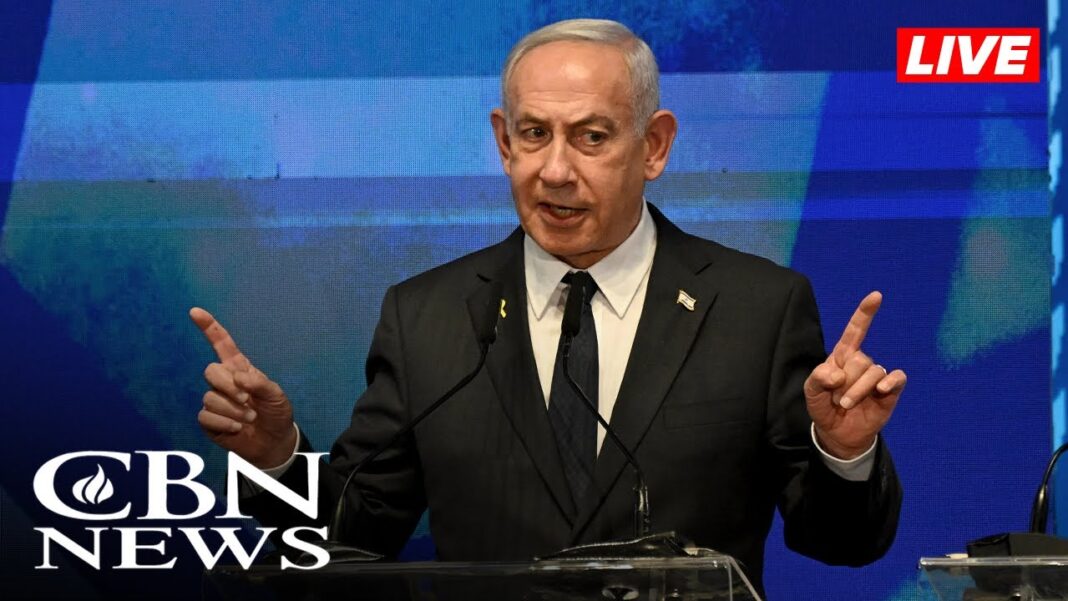
Prime Minister Benjamin Netanyahu’s address to the United Nations General Assembly on Friday morning was nothing short of sweeping in scope, dramatic in tone, and deeply uncompromising in substance. Standing at the podium in New York, the Israeli premier sought to position Israel as both a frontline bulwark against the forces of terror and as a beacon of resilience in the face of some of the darkest tragedies in Jewish history.
Israel National News (INN), which covered the address extensively, underscored how Netanyahu’s words were framed not merely for domestic consumption, but as a rallying cry to world leaders whom he accused of cowardice, appeasement, and moral confusion in the global fight against terrorism.
“Iran was rapidly developing a missile program, intended to destroy Israel, the US and blackmail nations everywhere,” Netanyahu declared at the opening of his remarks. He quickly reminded his audience that the threats facing Israel over the past year had not been theoretical but concrete: Hamas’s October 7th massacre, Hezbollah’s barrages from the north, and the Houthis’ missiles from Yemen.
And yet, with theatrical cadence, the prime minister pivoted to announce what he described as a historic reversal of fortune:
“So what’s happened since last year? We have mostly overcome all those threats—Houthis, Hezbollah and thousands of terrorists were killed, mainly we devastated Iran’s nuclear program. Half the Houthi leadership gone. Hezbollah, gone. Militias in Iraq, gone. Iran’s top military commanders, gone too.”
For Netanyahu, the centerpiece of this narrative was Israel’s twelve-day war with Iran, which he hailed as a turning point not just in Israeli history but in global security. According to the INN report, Netanyahu described the campaign as a joint Israeli-American effort that devastated Iran’s nuclear ambitions and eliminated much of its top military brass. “Between Israeli and US pilots, we have taken Iran down,” he said, pointedly thanking President Donald Trump for his cooperation.
Throughout the address, Netanyahu returned repeatedly to October 7th, describing Hamas’s brutal assault as “the worst attack on Jews since the Holocaust.” The Israel National News report noted the raw detail with which he spoke, listing atrocities including beheadings, babies burned alive, and the kidnapping of grandparents and children who remain in captivity.
In one of the more unusual elements of his speech, Netanyahu revealed that he had used massive loudspeakers placed on the outskirts of Gaza to deliver a message directly to the hostages:
“Our brave heroes, this is PM Netanyahu, speaking from the UN. We have not forgotten you. We will not rest until we have brought all of you home.”
The gesture, highlighted prominently in the INN report, was both symbolic and tactical, reinforcing his commitment to the hostages even as critics at home accuse him of failing to deliver a clear plan for their release.
“If Hamas puts down their weapons and releases the hostages, the war will be over now,” Netanyahu declared, presenting Israel’s terms in stark simplicity. “If you don’t, Israel will hunt you down.”
Much of Netanyahu’s address was not aimed at Hamas, Hezbollah, or Iran, but at the very leaders seated in the UN hall. The Israel National News report noted the biting accusation woven throughout his remarks: that while many foreign leaders privately thanked Israel for its actions, they publicly condemned it to appease domestic or international pressure.
“The Chancellor of Germany admitted that Israel is doing the dirty work for all of us,” Netanyahu claimed. “But many of you have buckled under political pressure, media pressure and more. You have turned good into evil, and evil into good.”
He posed a rhetorical challenge: “Imagine a terrorist regime that invades the US, murders tens of thousands of American citizens and takes thousands hostage. Would the US sit back and accept this? Never.”
By drawing that comparison, Netanyahu framed Israel’s war as not merely an Israeli struggle but as a universal fight against terrorism, one that Western governments hypocritically shirk while reaping its benefits.
Addressing accusations that Israel has committed genocide in Gaza, Netanyahu sought to flip the argument. He emphasized Israel’s practice of issuing evacuation warnings, dropping leaflets, sending text messages, and urging civilians to flee combat zones. “Would a country committing genocide plead with a population to get out of harm’s way? Did the Nazis ask the Jews to leave before they annihilated them? Of course not,” he argued.
The Israel National News report highlighted Netanyahu’s claim that Israel has facilitated humanitarian aid into Gaza—“tons of food, enough for each citizen”—only for 85% of the trucks to be looted by Hamas. According to the prime minister, the deprivation of Gaza’s population is thus not a product of Israeli policy but of Hamas’s corruption and theft.
In what the Israel National News report described as one of the sharpest sections of his address, Netanyahu dismantled any notion that the Palestinian Authority (PA) represents a moderate alternative to Hamas.
“Every time they were offered a state, they only attacked us again,” he said. He reminded the assembly that the PA pays stipends to terrorists who kill Jews, names schools after mass murderers, and uses the same textbooks as Hamas to indoctrinate children in hate.
Netanyahu cited the demographic decline of Christians in Bethlehem as further evidence of Palestinian misrule: “When Bethlehem was under Israeli control, 80% were Christians. That number has dwindled to 20%.”
His conclusion was unequivocal: “We will not allow the establishment of a terrorist state just because you don’t have the guts to recognize this situation. Over 90% of Israelis voted against a Palestinian state.”
Netanyahu tied the international recognition of Palestinian statehood to a broader surge in antisemitism worldwide. He cited attacks against Jews in the United States, including the burning of a Holocaust survivor and the murder of a young couple outside a Holocaust museum.
“Nearly 90% of Palestinians supported the October 7th attack… and the message they get is ‘murdering Jews pays off,’” he warned. “When you support their actions, this is a mark of shame on all of you.”
The Israel National News report called attention to the way Netanyahu wove global Jewish suffering into his appeal, portraying Israel not only as the Jewish state but as the collective guardian of Jews worldwide in an increasingly hostile climate.
Amid the defiance, Netanyahu sought to present a vision of future peace. He spoke of opportunities created by Israel’s victories, including negotiations with Syria aimed at protecting regional minorities and the potential for peace with Lebanon if Hezbollah were disarmed.
“Forward-looking Arabs and leaders know that cooperation with Israel will lead to many good outcomes, in medicine, agriculture, and more,” he said, suggesting that today’s adversaries could become tomorrow’s partners.
Perhaps most striking was his appeal to the Iranian people, whom he described as “long-suffering” under their regime. “Many of those who waged war on Israel today will be gone tomorrow. The Iranian people will once again be great, and we will restore a friendship that will benefit the entire world.”
Reaction within Israel reflected the deep political divides that dominate its domestic discourse.
Minister of Communications Dr. Shlomo Karhi praised the speech as “historic, clear, and proud,” saying it demonstrated Israel’s moral clarity and role as the key to global security. “We will not surrender to terror—we will defeat it with God’s help,” he added, according to the Israel National News report.
Knesset Speaker Amir Ohana likened Netanyahu to Churchill, declaring: “In a world of too many Chamberlains, it’s good to have an Israeli Churchill. Well done, Netanyahu.”
Defense Minister Israel Katz offered fulsome praise for Netanyahu’s address to the United Nations General Assembly, calling it a firm and unambiguous articulation of Israel’s stance. Katz, quoted in the Israel National News report, said the speech called attention to the moral justification for Israel’s campaign against what he described as a regional “Islamic axis” of terror, while also laying out a forward-looking agenda to broaden the Abraham Accords and deepen regional peace ties. He reiterated Israel’s strategic priorities — securing the return of every hostage, crushing Hamas’s military capabilities, and guaranteeing the long-term safety of the state.
Meanwhile, National Security Minister Itamar Ben-Gvir also commended Netanyahu’s remarks, telling Israel National News that the prime minister had delivered a forceful and consequential message from the UN podium. Ben-Gvir said the government must press its military campaign with maximum force to eliminate Hamas in Gaza and insisted that humanitarian shipments must be protected from diversion — a point Netanyahu raised in his address, according to the minister. He added that the ultimate objective should be to prevent the emergence of a Palestinian state and to uproot what he called the terrorist elements operating under the banner of the Palestinian Authority in Judea and Samaria, which he argued should remain an integral part of Israel, until “complete victory” is achieved.
Opposition leader Yair Lapid, however, derided the address as tired and gimmicky. “Netanyahu did not present his outline for the return of the hostages, did not present a way to end the war, did not explain why after two years Hamas has not yet been defeated. Instead of stopping the political tsunami—Netanyahu today worsened Israel’s situation,” Lapid said.
Netanyahu’s UN address, viewed in its entirety, was both an act of defiance and a bid for vindication. He sought to remind the world that Israel has faced existential threats, responded with overwhelming force, and will never accept dictates that compromise its security.
The Israel National News report framed the address as a crucial articulation of Israel’s position at a moment when international calls for Palestinian recognition are gaining momentum, and when antisemitism is surging across the globe. Netanyahu’s central message was unmistakable: Israel will not bow to external pressure, nor will it accept the rewriting of October 7th as anything less than a turning point in Jewish and world history.
The image of Netanyahu at the UN—casting Israel as a modern-day David against a host of Goliaths—will resonate powerfully with many Israelis and diaspora Jews who feel the world has turned its back on their suffering. His words underscore a narrative of resilience, moral clarity, and historic vindication.
Whether Netanyahu’s address will be remembered as a Churchillian warning ignored, or as a defensive performance that alienated allies, remains to be seen.
What is certain is that for Netanyahu, October 7th has become both the anchor of his moral authority and the justification for an uncompromising policy line: one that rejects Palestinian statehood, demands global recognition of Israel’s sacrifices, and promises to hunt its enemies to the ends of the earth.
In his own words: “Today the resolve of Israel burns brighter than before, leading to prosperity and peace.”

In addition to the growing number of enemy governments, Israel and the Jewish people are beset with enemy “mainstream” foreign media and treasonous domestic media. The numerically small minority of enemy domestic Israeli citizen’s actual numbers are vastly exaggerated.
Israel‘s domestic “fake mainstream” media is poison, and its treasonous slanders by the fringe and exaggerated minority of leftist traitors are fraudulently loudly amplified. (For example, treasonous tiny fringe antisemite “Ha’aretz“ is given tremendous publicity by the enemy foreign and domestic media antisemites.)
With most “Jewish” American organizations having BETRAYED Israel and the Jewish people, readers can only hope that the few remaining loyal Jewish American news sources, hopefully like TJV, will not “balance“ their reporting with our enemies’ criticisms of Israel’s majority government. (Netanyahu‘s strong defense of is not “defensive”; it is honest, strong, and principled).