



|
Getting your Trinity Audio player ready...
|
By: Fern Sidman
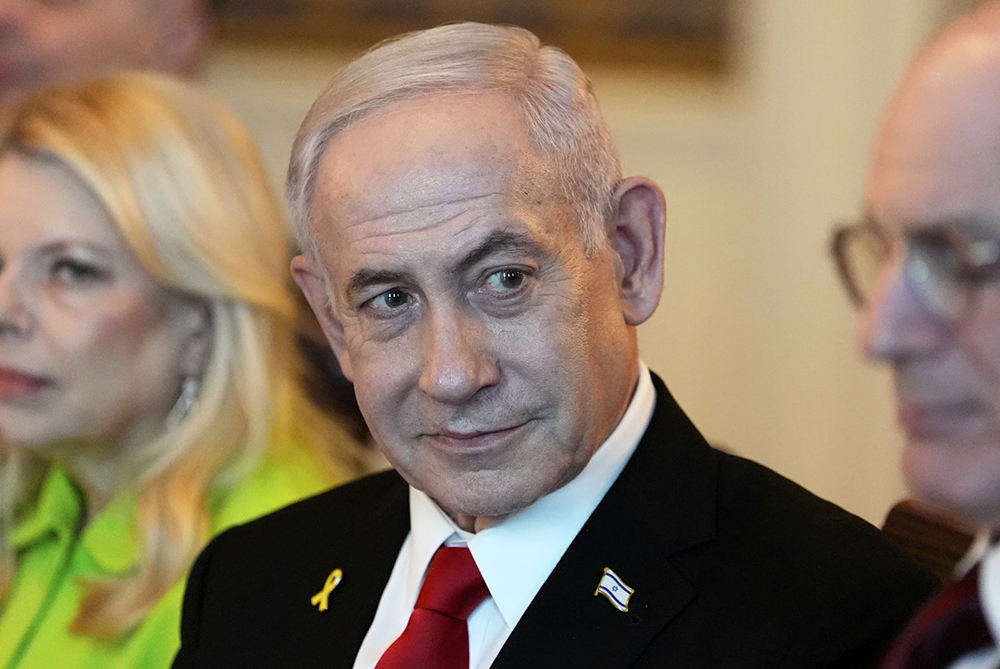
As Israel marked another painful weekend of its protracted struggle to bring home citizens held captive in Gaza, Prime Minister Benjamin Netanyahu held lengthy conversations on Saturday night with the families of two hostages whose images emerged in shocking new videos released by Hamas and Islamic Jihad.
The materials, which circulated late in the week, showed captives Rom Braslavski and Evyatar David in visibly dire conditions. According to a report that appeared on Israel National News (INN), the Prime Minister conveyed both his shock at the images and his continued commitment to pursuing the return of all hostages still held in Gaza.
In remarks relayed to the families, Netanyahu described the videos as an illustration of what he termed the “boundless cruelty” of Hamas. He stressed that Israel’s efforts to secure the release of its citizens would continue “constantly and relentlessly,” with no pause until every hostage was accounted for.
“The cruelty of Hamas has no boundaries,” Netanyahu reportedly told the families, according to the INN report. He noted that Israel has allowed humanitarian aid into Gaza for the civilian population, but that Hamas terrorists have turned this lifeline into a weapon, starving both their captives and ordinary Gazans while filming the consequences for propaganda purposes.
The Prime Minister also emphasized that the manipulation extended beyond the hostages, saying: “The terrorists of Hamas are deliberately starving the residents of the Strip as well, preventing them from receiving the aid and stirring up a slanderous propaganda campaign against Israel.”
Netanyahu concluded his remarks with a wider appeal: “The entire world must take a stand in a clear message against the criminal Nazi abuse perpetrated by the Hamas terror organization.” His words, highlighted in the INN report, placed an emphasis on the dual track of Israel’s approach: supporting the families at home while rallying international opinion abroad.
His wife, Sara Netanyahu, who has often been a visible source of support to hostage families, sent what the Prime Minister described as a “great embrace.” He conveyed her heartbreak over what she too had seen in the unbearable footage.
The release of the footage prompted responses from former hostages who had endured similar conditions. The Israel National News report noted that their testimony provided chilling corroboration of the situation depicted in the videos.
Former hostage Tal Shoham, speaking in a video statement, explained that he had been held in the same tunnel complex where Evyatar David is now being kept. He described how, just meters from where the captives languished, Hamas operatives enjoyed ample food supplies.
“Behind that iron door sit Hamas terrorists,” Shoham said, “a group of them, eating plenty of food, plenty of vegetables, meat, fish and fruits. They have everything they need, which they stole from the humanitarian aid that was supposed to be for the people of Gaza.”
Another former hostage, Omer Wenkert, who spent 250 days underground in captivity with Evyatar David, released his own testimony. “Today, Hamas released a video of Evyatar. I just saw the video, and now you know too,” he stated. “That’s what the tunnels we lived in looked like. Those are the conditions—everything is narrow, low, small.”
Wenkert’s reflections, shared by INN, offered disturbing detail: “I was in a tunnel like that for 505 days. While I lost 37 kilos in captivity, I didn’t see my captors lose even one. Some of them even gained weight.” His words underscored a recurring accusation—that Hamas not only deprives its hostages of food but systematically diverts aid away from Gaza’s civilian population for its own fighters.
The release of the footage has hit hostage families with devastating force. Israel National News reported on the statement from Ye’ela David, sister of Evyatar, who pleaded with the public not to circulate the images of her brother. Writing on Instagram, she described the impact of seeing him in such deteriorated condition as “a million punches to the stomach.”
She explained that some family members had not yet seen the footage and should not be confronted with the images inadvertently. “They shouldn’t come across an image from there by accident,” she wrote, asking for respect and restraint until the family could decide how and when to release it more formally.
The human toll on families has been relentless since October 7, when Hamas gunmen abducted more than 250 Israelis during their cross-border assault. While some have since been released, many remain in captivity, and families like that of Evyatar David endure a constant state of uncertainty.
For Idit Ohel, whose son Alon is among the captives, the new video was not only heartbreaking but also an urgent call for action. “The video of Evyatar David is an SOS call to resume negotiations and save the hostages,” she said. “Alon is severely injured, has lost an eye, and is in immediate mortal danger. I cry out as a mother—end this nightmare. Bring Alon back to us!”
Her plea, reported by INN, highlighted a growing sentiment among hostage families that negotiations must be re-energized despite the complexities of the war.
The distressing images also reverberated through Israel’s political establishment. Opposition leader Yair Lapid responded bluntly, writing on social media: “Let every government minister watch Evyatar’s video today before going to bed and try to fall asleep while thinking of Evyatar trying to survive in a tunnel.”
His statement, carried by Israel National News, was widely seen as an attempt to remind leaders of the urgency and moral weight of the hostage issue, which continues to dominate Israel’s domestic agenda even as military operations press on in Gaza.
The hostage crisis remains one of the most emotionally charged issues of the war, shaping public discourse, fueling protests, and driving political debate across the spectrum.
The videos themselves highlight a disturbing pattern. As Israel National News has documented, Hamas has repeatedly released carefully staged footage of captives, often edited with interspersed images of children or civilians in Gaza. These productions, analysts suggest, are intended both to pressure the Israeli government and to fuel global narratives accusing Israel of causing a humanitarian crisis.
Wenkert, who experienced this firsthand, called the tactic “one big lie.” He emphasized that while the videos show starving hostages and malnourished children, Hamas operatives nearby enjoy abundant food supplies stolen from humanitarian aid shipments. “It’s not Israel starving them; it’s Hamas starving them,” he said.
For families and government officials alike, the videos are a cruel double-edged sword—proof of life in some cases, but devastating evidence of suffering and an instrument of psychological warfare.
For Netanyahu, the release of the videos adds fresh urgency to an already intractable challenge. As reported by Israel National News, his government continues to seek ways to secure the hostages’ return through negotiations mediated by international actors, while simultaneously prosecuting a war aimed at dismantling Hamas’s military and governing capabilities.
The balance is delicate: humanitarian considerations, military pressure, and international diplomacy intersect in ways that leave no simple path forward. Critics argue that more aggressive negotiation is needed, while others insist that only unrelenting military pressure will compel Hamas to release captives.
What remains beyond dispute is the profound anguish endured by the families and the central place the hostages occupy in Israel’s national consciousness. Each new video, each testimony from a returned captive, each statement from a mother or sibling reinforces the urgency of their plight.
The release of harrowing footage of Rom Braslavski and Evyatar David has again laid bare the human cost of the conflict with Hamas. Netanyahu’s conversations with the families sought to offer solace and reaffirm Israel’s determination to bring its citizens home. Yet as testimonies from former hostages, pleas from anguished relatives, and calls from political leaders make clear, the road to their release remains fraught with difficulty.
The hostages remain both a national trauma and a moral imperative—symbols of Israel’s vulnerability, resilience, and unyielding demand for justice.
