



Jared Evan
(Jewish Voice News) Prime Minister Benjamin Netanyahu publicly pushed back against the Trump administration this weekend after the White House unveiled the makeup of a new international body tasked with overseeing postwar Gaza — a move Israel says was made without coordination and directly clashes with its policy, as The Times of Israel reported.
In an unusually sharp rebuke of US President Donald Trump, Netanyahu’s office said the decision to establish a powerful “executive board” under a broader Board of Peace caught Jerusalem off guard and crossed red lines for Israel, according to The Times of Israel. The criticism underscored growing friction between Netanyahu and Trump, despite their long-standing political alignment.
At the center of Israel’s objection is the composition of the executive board, which includes senior representatives from Turkey and Qatar — two countries that have been among Israel’s most vocal critics during the Gaza war. While the Board of Peace itself will be chaired by Trump and composed of world leaders, The Times of Israel reported that the executive board will wield real authority, overseeing Gaza’s postwar governance and reconstruction on a day-to-day basis.
Netanyahu’s office said the prime minister instructed Foreign Minister Gideon Sa’ar to formally convey Israel’s opposition to US Secretary of State Marco Rubio. That directive is notable, as Sa’ar has largely been sidelined from core Israel-US diplomacy, which has instead been handled directly by Netanyahu and a small circle of senior advisers, according to The Times of Israel.
The White House revealed Friday that Turkey will be represented on the executive board by Foreign Minister Hakan Fidan, while Qatar will be represented by senior diplomat Ali Thawadi. Other members include Egyptian intelligence chief Hassan Rashad, UAE International Cooperation Minister Reem Al-Hashimy, former British prime minister Tony Blair, US special envoy Steve Witkoff, Trump confidant Jared Kushner, Apollo Global Management CEO Marc Rowan, Israeli-Cypriot businessman Yakir Gabay, former UN official Sigrid Kaag, and former UN Middle East envoy Nickolay Mladenov, The Times of Israel reported.
Mladenov has been named “high representative for Gaza” and is expected to effectively lead the executive board, serving as the link between Trump’s Board of Peace and a separate group of Palestinian technocrats managing Gaza’s internal affairs. That Palestinian body — dubbed the National Committee for the Administration of Gaza (NCAG) — held its first meeting in Cairo on Saturday, chaired by former Palestinian Authority deputy planning minister Ali Shaath, according to The Times of Israel.
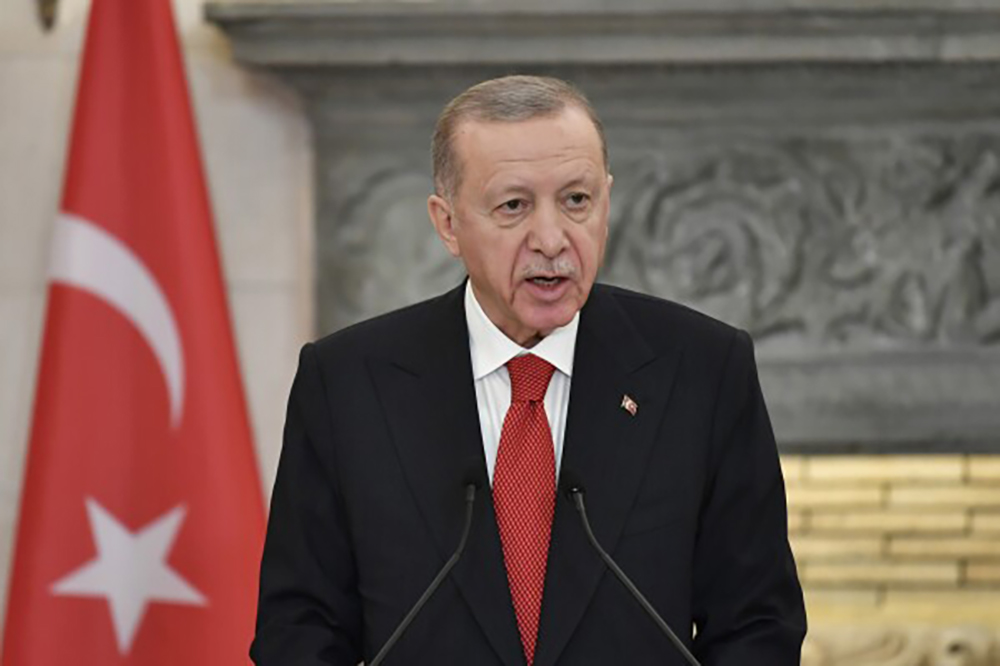
Israeli officials were particularly alarmed by Turkey’s presence on the executive board. While Jerusalem did not aggressively oppose Turkish President Recep Tayyip Erdogan being invited to the largely symbolic Board of Peace, sources told The Times of Israel that Israel sought — unsuccessfully — to block Ankara from the more influential executive panel.
That failure highlights Trump’s willingness to sideline Israeli objections in favor of what he views as pragmatic regional actors. Trump has repeatedly praised Erdogan, even in Netanyahu’s presence, and has credited both Turkey and Qatar with helping pressure Hamas into accepting his ceasefire proposal last October, The Times of Israel reported.
Meanwhile, invitations to join the Board of Peace have gone out to world leaders, with Turkey, Canada, and Argentina publicly confirming receipt. Canadian Prime Minister Mark Carney said he intends to accept, while Argentine President Javier Milei called the invitation “an honor.” Egypt has said it is still reviewing a request for President Abdel Fattah el-Sissi to participate, according to The Times of Israel.
The Board of Peace’s charter, first revealed by Haaretz and cited by The Times of Israel, notably avoids mentioning Gaza by name and frames the body as a potential alternative to existing international institutions like the United Nations. The document emphasizes “pragmatic judgment” and the need to abandon institutions that have “too often failed,” language that has raised eyebrows in Jerusalem and beyond.
The backlash in Israel extended beyond Netanyahu. Far-right National Security Minister Itamar Ben Gvir praised the prime minister’s statement while calling for a return to full-scale military operations in Gaza, rejecting any international oversight framework. At the same time, Palestinian Islamic Jihad condemned the Board of Peace, claiming it serves Israeli interests — an ironic alignment that further highlights the controversy surrounding the initiative, as The Times of Israel reported.
Together, the episode marks a rare and revealing clash between Trump and Netanyahu, exposing limits to their partnership at a moment when Gaza’s future — and Israel’s influence over it — remains deeply contested.

This is what happens when Israel allows others to determine its fate. Won’t end well. Get the job done and then Israel does not have to worry about the ‘peace board.’