



|
Getting your Trinity Audio player ready...
|
Edited by: Fern Sidman
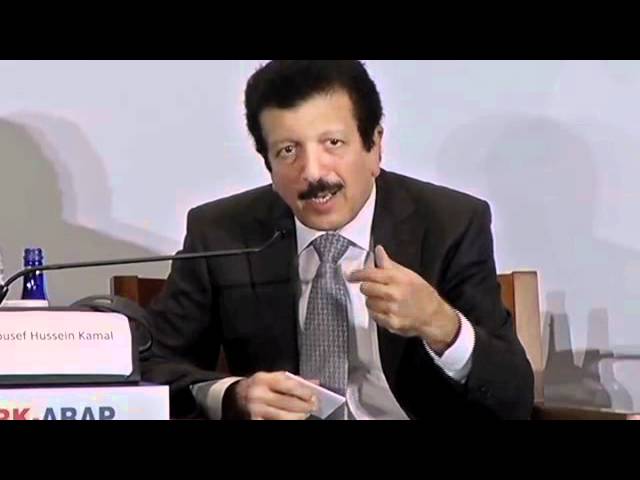
A leaked Qatari government document, reported by the Middle East Media Research Institute (MEMRI), suggests that Qatar’s regime funneled $15 million to Islamist movements in northern Mali and an entity in the Sahel, as was recently reported by i24NEWS.com The alleged letter, dated April 4, 2011, was from Youssef Hussein Kamal, Qatar’s then-minister of economy and finance, to the director of the office of the Emir of Qatar, the report added.
The letter, marked “Secret and Urgent,” reportedly stated, “I wish to refer to your Excellency’s letter (da-49-2011) of April 4, 2011, which includes the esteemed directions from His Highness, the Emir of the country, regarding sending urgent monetary support to the Islamic opposition movements in northern Mali and to the organization of the Sahel and to the Sahara in the amount of US $15 million,” according to the report on the i24NEWS web site.
The letter adds, “This sum must be distributed with the knowledge of the state security service, represented by Mr. Abdullah bin Hamad Al-Nue’eimi, under the section of humanitarian support.”
It emphasized that the distribution of the sum should be done in collaboration with the state security service and under the section of humanitarian support, represented by Mr. Abdullah bin Hamad Al-Nue’eimi.
i24NEWS also reported that according to Marc Eichinger, a former French intelligence agent, the leaked document is significant as it provides proof of the Emir’s direct involvement in financing terrorism. Eichinger stated that this funding destabilized West Africa and contributed to a wave of migration.
Speaking to i24NEWS, Eichinger said, “This document is more important than the others in that for the first time we have proof the Emir is directly involved in the financing of terrorism. He personally gave the orders to pay money to people over whom he has no control. This funding destabilized the whole of West Africa to satisfy and provoke an unprecedented wave of migration.”
Ghanem Nuseibeh, an expert on Qatar’s regime, noted that the allegations align with Qatar’s history of financing and supporting Islamist terrorist groups worldwide, including the Hamas terror organization in Gaza, as was reported by i24NEWS. He emphasized Qatar’s foreign policy, which has focused on aligning with local Islamists in various regions for the past two decades.
He told i24NEWS “the allegations aren’t surprising as they fit in with Qatar’s financing and support of Islamist terrorist groups around the world. This fits with Qatar’s foreign policy which for the past two decades has focused on aligning itself with local Islamists in many regions of the world.”
The leaked document echoes previous reports from 2012 when French-language news outlets claimed that Qatar financed Islamists in northern Mali, as was indicated in the i24NEWS report. French weekly Le Canard Enchainé published an article titled “Our friend Qatar is financing Mali’s Islamists.”
Despite these allegations, queries from i24NEWS to Qatar’s embassies in London and Washington have reportedly gone unanswered.
This development is not the first time Qatar has faced accusations of supporting radical elements in Mali. i24NEWS also reported that in 2013, French politicians Marine Le Pen and Senator Michelle Demessine explicitly accused Qatar of providing material support to separatists and Islamists in northern Mali. The source from French military intelligence, speaking to Canard Enchainé, asserted that the MNLA (secular Tuareg separatists), Ansar Dine (linked to al Qaeda), and MUJAO (Movement for Unity and Jihad in West Africa) had all received cash from Doha, the report on i24NEWS said.
At the time, Sadou Diallo, the mayor of Gao, a city in northern Mali, claimed that Qatar continued to send aid and food to the airports of Gao and Timbuktu, according to the i24NEWS report. Additionally, former Qatari Prime Minister Sheikh Hamad bin Jassim al-Thani called for dialogue with Islamists in Mali. These allegations contribute to a broader narrative accusing Qatar of financing Islamist terrorist organizations, a claim that has been raised in various forums, including a 2017 Congressional hearing.
Qatar has consistently faced criticism globally for its alleged support of terrorism. In the United States, Germany, and Israel, concerns have grown about Qatar’s role as a state sponsor of terrorism, even though they played a key role in brokering the hostage deal with Hamas. Recently, Congressman Jack Bergman went so far as to declare on the House floor that “Qatar poses the gravest and most profound threat to the national security interests of the United States in the Middle East,” as was noted in the i24News report. Bergman also criticized the Qatari-owned Al Jazeera network, accusing it of enabling Hamas’ terrorism ideology.
These allegations underscore the ongoing scrutiny of Qatar’s foreign policy and its impact on regional stability, particularly in areas prone to Islamist extremism and conflict.
