



|
Getting your Trinity Audio player ready...
|
Knesset Prepares for Crucial Vote on Sovereignty in Judea and Samaria
By: Fern Sidman
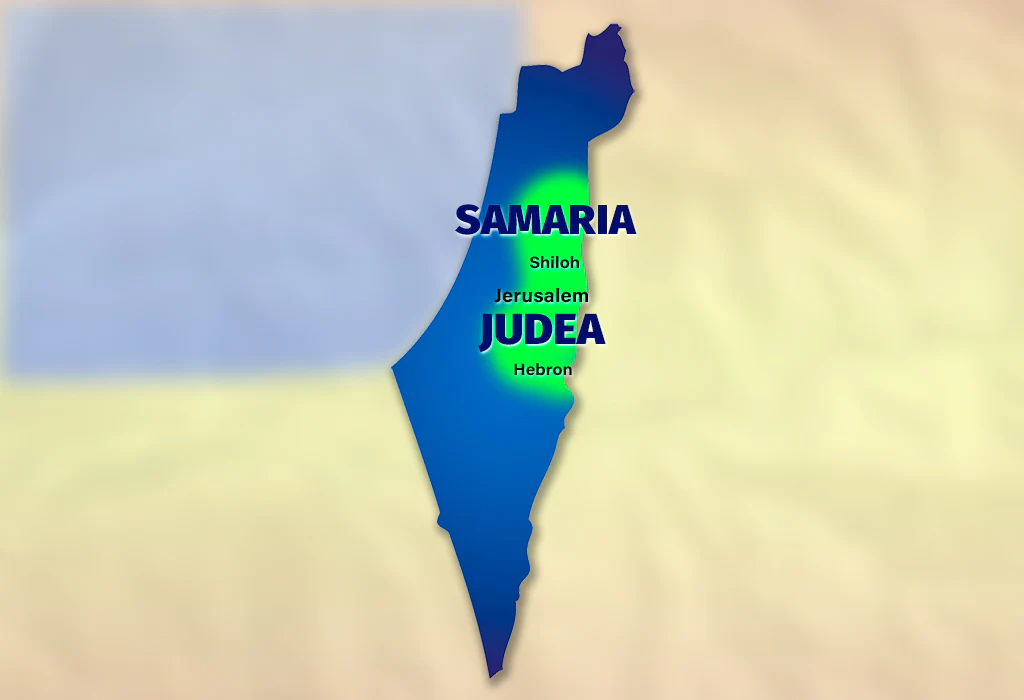
On the eve of the Knesset’s summer recess, Israeli lawmakers are poised to vote on a proposal that could mark a defining moment in the country’s modern political history. As reported by Israel National News (INN) on Tuesday, the Knesset plenum will convene tomorrow (Wednesday) to deliberate and vote on a resolution expressing support for the application of Israeli sovereignty over Judea and Samaria — a move long debated within Israeli political circles and one that carries significant implications for national security, diplomacy, and Zionist identity.
The initiative, spearheaded by Members of Knesset Dan Illouz, Simcha Rothman, and Oded Forer, received formal approval from the Knesset Presidium earlier this week. According to the information provided in the Israel National News report, this approval clears the way for what many lawmakers and observers are describing as a “historic vote” — one aimed at reshaping the future of Israel’s relationship with its biblical heartland.
The proposal’s explanatory note anchors its arguments in the deep historical and religious connection between the Jewish people and the territories of Judea, Samaria, and the Jordan Valley. “The territories of Judea, Samaria, and the Jordan Valley are an inseparable part of the historic homeland of the Jewish people,” the note states. It underscores that recent events — particularly the unprecedented Hamas-led massacre of October 7 — have intensified a broad national consensus against the establishment of a Palestinian state, reinforcing calls for decisive measures to secure Israel’s future.
As Israel National News reported, the proposal frames the extension of Israeli sovereignty as a strategic, moral, and security imperative. “The application of Israeli sovereignty over these areas will symbolize the State of Israel’s commitment to the Zionist vision, to strengthening the Jewish hold on these parts of the homeland, and to the defense of its citizens,” the explanatory note reads. The document further asserts that such a move would send a clear message to the international community: Israel will not entertain solutions predicated on territorial concessions deemed hazardous to its security and identity as a Jewish state.
Justice Minister Yariv Levin, a key figure in Prime Minister Benjamin Netanyahu’s government, took to social media ahead of the vote. In a post Levin declared, “Tomorrow the Knesset will vote on a historic decision in favor of Israeli sovereignty in Judea and Samaria. I will be there and vote in favor.” Levin’s endorsement signals strong backing for the proposal from within the senior ranks of the government coalition.
The Religious Zionism party, led by Finance Minister Bezalel Smotrich, also announced its unequivocal support. As reported by Israel National News, the party issued a statement saying, “The Religious Zionism faction will vote tomorrow in favor of the proposal by MK Simcha Rothman — the historic decision supporting the application of Israeli law in Judea and Samaria.” This aligns with the party’s longstanding platform advocating for the formal annexation of the territories as a means to consolidate Israel’s sovereignty and ensure the security of its citizens.
The timing of the vote — just before the summer recess — adds symbolic weight to the proceedings. The move not only reflects mounting domestic support but also highlights a shift in the political discourse following October 7, when Israel faced the deadliest terror attack in its history. The massacre, carried out by Hamas and its affiliates, has been cited repeatedly by proponents of sovereignty as proof of the dangers inherent in ceding territory or entertaining proposals for a Palestinian state.
The sovereignty proposal also draws on legal and historical arguments that have long featured in Israeli political debate. Supporters often point to the League of Nations’ 1922 Mandate for Palestine and other international agreements that recognized the Jewish historical connection to the land, including Judea and Samaria. While critics have argued that unilateral annexation could provoke international backlash, the proponents assert that Israel’s security needs and historical rights must take precedence.
In its detailed reporting, Israel National News emphasized the strategic significance of the areas in question. Judea and Samaria, often referred to in international forums as the West Bank, comprise critical highlands overlooking Israel’s densely populated coastal plain. Israeli control of this terrain is viewed by many defense experts as essential to maintaining national security. Furthermore, the Jordan Valley serves as a vital buffer against potential threats from the east.
The impending vote also comes amid shifting geopolitical dynamics. The Abraham Accords and evolving ties with regional Arab states have altered the landscape of Middle Eastern diplomacy. Though the sovereignty proposal stops short of full annexation legislation, its passage would represent a significant political statement — one that could impact Israel’s diplomatic posture and its ongoing dialogue with key partners in the region.
In conversations with Israel National News, several lawmakers have articulated the belief that now is the time for decisive action. They argue that Israel’s enemies interpret ambiguity as weakness, and that formalizing Israeli law in Judea and Samaria would serve as a deterrent against further aggression. The proposal’s supporters also contend that sovereignty would provide clarity for the tens of thousands of Israeli citizens living in the territories, who currently reside under a legal framework distinct from the rest of the country.
As the Knesset prepares for the critical vote, the Israel National News report highlighted the mixed reactions among opposition parties and the Israeli public. Some lawmakers warn that such a declaration could strain Israel’s relations with the United States and European allies. Others, however, believe that Israel must chart its own course, particularly in light of the national trauma inflicted on October 7 and the war that followed.
The vote on sovereignty in Judea and Samaria is not merely a legislative formality — it is a reflection of a nation grappling with its identity, its security, and its future. The decision, whether symbolic or substantive, is poised to reverberate far beyond the walls of the Knesset.
With the eyes of the nation — and indeed, the international community — fixed on Jerusalem, the outcome of Wednesday’s vote could well mark a watershed moment in Israel’s ongoing journey as a sovereign state navigating the complexities of its homeland.

It should be a no-brainer and prelude to the prompt annexation of Judea and Samaria. Israel and the Jewish people should not be the least bit intimidated or dissuaded by the world’s antisemites including in Europe and America. It will forever do away with the enemy campaign for a “palestinian state.” Should a new enemy government like the previous Obama/Biden administration ever regain power it will be confronted with this fait accompli. Am Yisrael chai.