



|
Getting your Trinity Audio player ready...
|
By: Fern Sidman
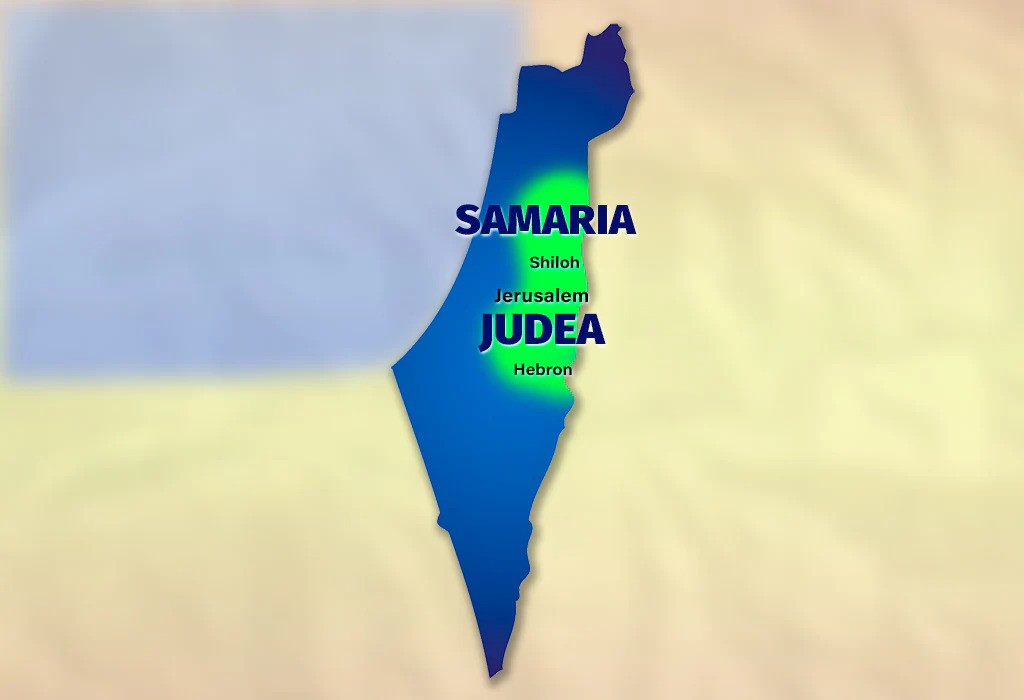
In a move hailed by right-wing leaders as a “historic milestone” for the Jewish state, the Knesset this week advanced a bill promoting Israeli sovereignty in Judea and Samaria, reigniting debate over Israel’s right to act unilaterally while preserving its deep alliance with the United States. The measure — which passed its preliminary reading by a commanding majority — has drawn praise from nationalist lawmakers and community leaders who see it as both a moral imperative and a strategic necessity for Israel’s long-term security and identity.
According to a report that appeared on Wednesday at Israel National News (Arutz Sheva), the bill marks the most significant legislative effort in years to formalize Israeli civil authority over the territories captured during the 1967 Six-Day War. Though such a step has been long debated across the Israeli political spectrum, proponents argue that the current geopolitical climate — and the vocal support of President Donald Trump — have created a rare opportunity for decisive action.
Speaking to Israel National News, National Security Minister Itamar Ben-Gvir (Otzma Yehudit) called the sovereignty vote “a historic day for the Jewish people,” emphasizing that Israel must pursue its national destiny without apology or hesitation.
“We love our friends from America and appreciate them very much,” Ben-Gvir said following the vote. “But in the end, this country is a Jewish country. We are independent. We need to do what is good for the State of Israel — and that is sovereignty and independence.”
The minister’s comments called attention to a recurring theme in right-wing discourse — that Israel’s legitimacy and survival depend on self-determination rather than international approval. “Our relationship with the United States is built on respect, not dependency,” Ben-Gvir added, according to the report at Israel National News. “True friendship means acting in accordance with our own values and our own interests.”
When asked about internal government divisions, Ben-Gvir said he was surprised by the hesitation from some within Prime Minister Benjamin Netanyahu’s Likud party. “This government was elected as a right-wing government,” he said pointedly. “I am happy that we are causing this government to be a right-wing government.”
MK Simcha Rothman, Chairman of the Knesset Constitution, Law, and Justice Committee and a leading voice in the Religious Zionism Party, dismissed concerns that extending sovereignty could strain relations with Washington.
“I do not believe there is even a bit of harm to the relationship with President Trump,” Rothman told Israel National News. “The President of the United States explicitly said not long ago that Israel is a very small country and should work to expand it. We are not doing this because Trump said so — though in this case he is right — we are doing this because it is in the interest of the State of Israel.”
Rothman, a legal scholar known for his defense of judicial reform and nationalist legislation, described the bill as rooted in both historical and biblical principles. “President Trump’s address to the Knesset reflected a deep understanding of our biblical heritage,” he said. “He spoke about the God of Abraham, Isaac, and Jacob. This land was promised to the People of Israel, and our job is to ensure that it belongs to the People of Israel — not only in name but also in territory.”
He further highlighted the overwhelming parliamentary support for the measure, noting that “eighty members voted in favor — a two-thirds majority that crosses coalition and opposition lines. The Land of Israel unites this Knesset.”
“If the Prime Minister wishes to apply sovereignty through a government decision,” Rothman continued, “he has the means to do so. Bring it to a vote, and it will happen.”
The sentiment of urgency and national purpose was echoed by Yesha Council Director General Omer Rahamim, who told Israel National News that the vote was “a victory for Zionism and a call for leadership.” The Yesha Council, representing Israeli communities across Judea and Samaria, has been at the forefront of the sovereignty campaign for more than a decade.
“Many good friends from the Likud party chose to play politics instead of doing the right thing for the Land of Israel,” Rahamim said. “But there is still time to fix it. We will advance through the readings and apply Israeli sovereignty in Judea and Samaria.”
Rahamim emphasized that the bill is not an act of provocation but a fulfillment of Israel’s sovereign right to govern its ancestral heartland. “The State of Israel is a sovereign state,” he told Israel National News. “We have excellent relations with the government in the United States, which are based on independence — not dependence.”
He also linked the sovereignty drive to Israel’s broader national momentum following recent military and diplomatic gains. “Israel has proven its strength on multiple fronts — militarily, economically, and diplomatically,” he said. “The next step is sovereignty. Without sovereignty, all our victories remain incomplete.”
Supporters of the legislation argue that formal sovereignty would solidify Israel’s legal and moral claims over the territories long referred to as Judea and Samaria — biblical names that evoke the cradle of Jewish civilization. Proponents also point to the Abraham Accords and ongoing regional normalization as evidence that Israel’s assertiveness no longer carries the same diplomatic risk it once did.
As the report at Israel National News noted, many lawmakers view the move not as annexation but as the natural extension of Israeli law to regions that already function under Israeli administration in many respects. Civil authority in these areas is currently split between the Coordinator of Government Activities in the Territories (COGAT) and military jurisdiction, creating what sovereignty advocates call an untenable legal “gray zone.”
Applying sovereignty, they argue, would not alter daily life for Arab residents but would streamline governance and affirm Israel’s right to self-determination — particularly amid persistent international campaigns to delegitimize Jewish presence in the region.
“The people of Israel do not apologize for existing,” one senior Likud MK told Israel National News after the vote. “We are returning home — not conquering foreign land. Every stone, every hill, every olive tree here tells our story.”
While previous U.S. administrations warned that sovereignty in Judea and Samaria could undermine peace efforts, President Trump’s approach has been markedly different. As Israel National News reported, Trump’s remarks in Jerusalem earlier this year reaffirmed his belief that Israel’s security and borders are matters for Jerusalem alone to determine.
Trump’s speech in the Knesset — unprecedented for an American president — drew sustained applause when he referred to the land’s divine covenant. “This land was promised to the descendants of Abraham, Isaac, and Jacob,” he declared. “No nation should be asked to surrender the land of its fathers.”
Rothman and Ben-Gvir both cited those words as validation of Israel’s historic rights, but they were equally insistent that sovereignty is an Israeli decision, not an American directive. “Our relationship with the United States is stronger than any single policy,” Rothman told Israel National News. “But that friendship is built on mutual respect — not submission.”
Still, some Israeli officials remain cautious, urging coordination with Washington to avoid diplomatic friction at a time when U.S. support remains vital for Israel’s regional deterrence and security cooperation. Netanyahu, who has yet to publicly endorse the bill, is said to be weighing the potential consequences for Israel’s international standing.
The sovereignty bill now moves to committee review before returning for its second and third readings — a process expected to draw heated debate within both the Knesset and the public sphere.
According to the information provided in the Israel National News report, the legislation represents a defining test for Prime Minister Netanyahu’s governing coalition, which includes factions ranging from Religious Zionism and Otzma Yehudit on the right to more centrist elements within Likud.
For Ben-Gvir and Rothman, the sovereignty initiative is the ultimate measure of the government’s ideological integrity. “This government was elected on a promise of national strength and Jewish identity,” Ben-Gvir said. “The people expect results — not hesitation.”
If passed, the bill would direct the government to begin the phased application of Israeli civil law across Jewish communities in Judea and Samaria — a move that would redefine Israel’s legal map and potentially reshape its diplomatic relations for years to come.
Despite differences within the coalition, Rothman expressed optimism that the measure would ultimately command broad consensus. “We passed our proposals with a majority of two-thirds, eighty members — far more than the coalition or opposition,” he said proudly. “The Land of Israel unites this Knesset.”
Indeed, as the Israel National News report noted, even lawmakers traditionally wary of sovereignty legislation acknowledged that the bill’s overwhelming support reflects a deepening national consensus on Israel’s right to its biblical heartland.
“The debate is no longer whether Judea and Samaria are part of Israel,” one coalition source told the outlet. “The debate is only about timing.”
As Israel weighs that timing, the sovereignty bill stands as both a legal proposition and a declaration of faith — a statement that, for many Israelis, the nation’s future cannot be separated from its past.