



|
Getting your Trinity Audio player ready...
|
Israel’s Defense-Tech Boom Surges Past $1B as War-Forged Innovation Redraws the Global Security Landscape
By: Fern Sidman- Jewish Voice News
Israel’s defense-technology sector has crossed a symbolic and unprecedented threshold in 2025, eclipsing the $1 billion mark in combined investments, mergers, and acquisitions—more than in all previous years combined. The figures, first detailed by Globes and amplified in a report on Tuesday by Jewish Breaking News, mark a watershed moment for a country whose innovation ecosystem has become inseparable from the ongoing security realities that shape daily life.
According to Crunchbase metrics cited in the Jewish Breaking News report, Israel’s defense-tech surge forms a formidable share of the roughly $7.7 billion funneled worldwide into defense-oriented startups this year. In global terms, the sector’s explosive expansion is an anomaly: Israel, a nation of fewer than ten million people, has become not merely a participant in the defense-tech marketplace, but a gravitational center of it.
The catalyst behind this exponential growth is as grim as it is undeniable—war. Since Hamas’s October 7, 2023, massacre and the multi-front conflict Israel has faced ever since, the nation’s Ministry of Defense and the IDF have integrated more than 130 startups directly into operational deployment, many under the auspices of Israel’s Directorate for Defense Research and Development (MAFAT/DDRD). The result, as one senior defense official told Jewish Breaking News, is unprecedented: “The funding in 2025 has been greater than all previous years combined, and the year is not over yet.”
Unlike Silicon Valley’s sanitized labs, Israel’s new generation of defense technologies is forged amid real battle conditions—tested against Hamas tunnel networks, Hezbollah missile barrages, Iranian UAV swarms, and the hybrid warfare tactics of Iranian proxy militias. This authenticity has made Israeli startups uniquely attractive to investors looking not for prototypes, but for battle-validated solutions.
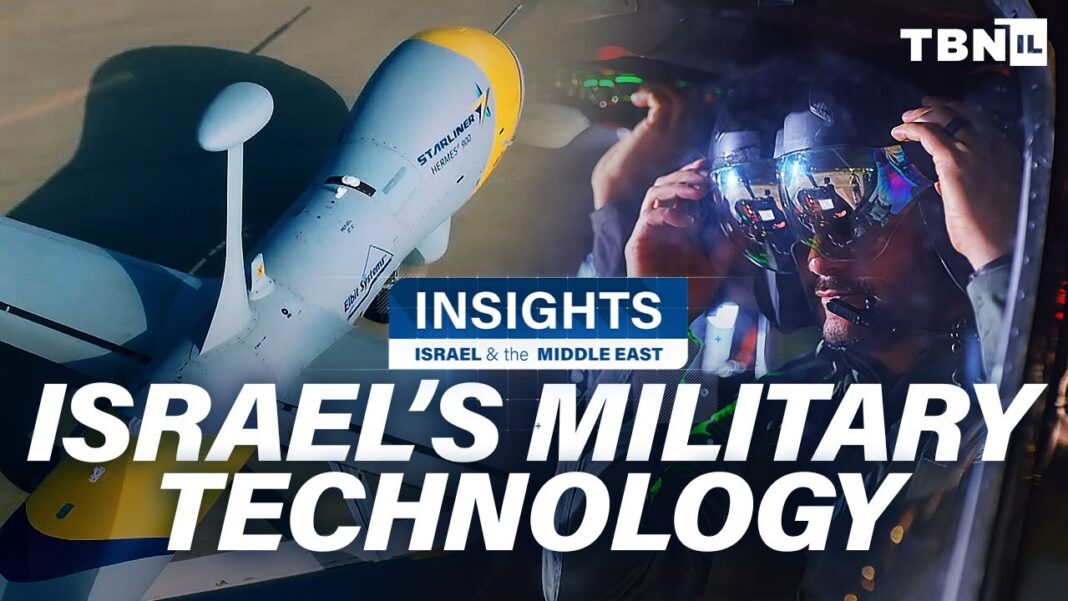
Drone innovator Heven Aerotech is perhaps the most emblematic example. The company, which is developing hydrogen-fuel-cell aerial platforms designed for long-duration intelligence and strike missions, raised roughly $100 million this year. As Jewish Breaking News reported, the infusion officially crowned it Israel’s first pure defense-tech unicorn, surpassing the $1 billion valuation threshold.
Other headline-grabbing deals followed. Quantum computing company Classiq secured $110 million in funding to scale encryption technologies and next-generation command-and-control software—tools already being studied for IDF and allied military networks. Meanwhile, Kela, a rising systems-integration firm building modular C2 environments capable of fusing disparate battlefield sensors, radars, and SIGINT nodes, also reported fundraising rounds nearing the $100 million mark.
These are not merely commercial successes—they are technological accelerants reshaping the tactical toolkit of Western militaries. “What Israel is producing is not theory,” one U.S. defense investor told Jewish Breaking News. “These are tools that have survived contact with the enemy.”
The boom is not confined to Israel; it is part of a larger global metamorphosis. With worldwide defense budgets climbing nearly 9% to a staggering $2.7 trillion—a thirty-year high—governments and private-sector players are racing to adapt to the security disorder created by Russia’s war in Ukraine, Iranian aggression across the Middle East, and the reemergence of great-power competition.
But nowhere has the alignment been more pronounced than in the aggressive expansion of American corporate buyers. Roughly 40% of Israeli defense-startup acquisitions in 2025 have been made by a single American firm, Ondas Holdings, which has poured an estimated $400 million into the sector. As the report at Jewish Breaking News documented, this included the landmark $225 million acquisition of Sentrycs, an Israeli anti-drone specialist whose intercept systems are already deployed by the IDF to counter hostile UAVs.
For Ondas and other global players, the appeal lies in hard-won proof: Israeli systems have been refined under the harshest conditions, where failure means lives lost. For defense ministries in Europe, North America, and Asia, buying Israeli technology is not speculative—it is pragmatic.
“Combat validation is the single most powerful differentiator in defense tech,” said one European procurement expert quoted by Jewish Breaking News. “Israel is effectively running a live battlefield lab.”
The boom has forced Israel’s Ministry of Defense to fundamentally rethink how it interacts with startups. Traditionally, massive defense contractors dominated procurement pipelines. But as Jewish Breaking News reported, the Directorate for R&D (DDRD) has become the central gateway through which emerging companies are integrated into defense frameworks.
This new model allows the DDRD to run controlled field trials using real border sectors, provide immediate performance feedback directly from military operators and generate credibility that signals to global buyers that a product is IDF-validated.
Officials, however, have been clear that capacity is finite. “We cannot test 200 drone companies,” one DDRD official told Jewish Breaking News. “The threshold for admission has risen. The IDF environment is not a sandbox. It is war.”
The Ministry of Defense is now preparing a suite of new policies to ensure the startup pipeline becomes durable, not episodic. These include allocating roughly 10% of next year’s MoD R&D budget directly to supporting startups, establishing approximately NIS 200 million in state-backed investment funds and adjusting export-control guidelines to allow non-sensitive technologies to scale globally without compromising national security.
If enacted, these reforms would institutionalize what has, until now, been an improvised wartime surge.
World-wide, at least ten new defense-tech unicorns have emerged in 2025, with over $48 billion invested into broader defense-related startups, according to figures echoed in the Jewish Breaking News report. This pivot reflects a recognition that traditional procurement cycles—often slow, bureaucratic, and dominated by legacy contractors—cannot keep pace with 21st-century threats.
Israel’s role in this new ecosystem is both paradoxical and inevitable. Its domestic market is small, but its perpetual exposure to existential threats forces ultra-rapid innovation. As a result, Israel has become the Silicon Valley of defense-tech: nimble, inventive, and hardened by conflict.
The convergence of global need and Israeli supply explains why investors are treating the country not as a niche incubator, but as a center of gravity.
What makes 2025 different is not only the volume of money flowing in, but the kind of technologies that have emerged. They include autonomous drones capable of AI-driven target identification, multi-domain C2 systems linking drones, ground units, radars, and interceptors, electronic-warfare platforms adapted for urban combat, robotic logistics units for frontline resupply, next-generation navigation tools resilient to GPS jamming and precision sensor suites for tunnel detection and subterranean warfare.
These are not incremental improvements—they are leaps in survivability and battlefield decision dominance. As the Jewish Breaking News report emphasized, the technologies born from Israel’s wartime environment are not only saving Israeli lives; they are reshaping the global doctrine of how technologically advanced militaries operate under asymmetric threat conditions.
Israel’s defense establishment is clear-eyed about the broader implications. This is not simply an economic story; it is a national-security imperative.
For Israeli leaders, the emergence of a durable defense-tech industrial base offers reduced dependency on foreign suppliers, faster adaptation to evolving threats, global alliances built around technology and security cooperation and resilience against economic or diplomatic pressure.
As the report at Jewish Breaking News noted, several Israeli executives now argue that the defense-tech boom is becoming a pillar of national strength akin to Israel’s energy independence gains of the past decade.
The significance of Israel’s 2025 defense-tech milestone cannot be overstated. What began as an urgent response to barbaric terrorist atrocities has quickly matured into a global-scale industrial revolution.
If the momentum continues—and if the IDF maintains its role as a live testbed—Israel could soon shape not only the future of its own defense, but the future of Western military modernization as a whole.
As one senior official told Jewish Breaking News: “We are no longer reacting to the battlefield. We are writing the next chapter of it.”
Israel’s defense-tech renaissance, born from necessity, now stands as one of the most consequential security developments of the decade—an inflection point where innovation, resilience, and national survival converge into a single, defining narrative.