



|
Getting your Trinity Audio player ready...
|
By: Fern Sidman
In the latest surge of hostilities across the Middle East, Israeli Defense Minister Israel Katz issued one of his starkest warnings yet against the Iran-backed Houthi regime in Yemen. Speaking on Thursday morning, only hours after another ballistic missile was launched from Yemen and crashed outside Israeli territory, Katz declared on X that “The Houthis are firing missiles at Israel again. A plague of darkness, a plague of the firstborn—we will complete all ten plagues.”
As The Jewish News Syndicate (JNS) reported on Thursday, the minister’s statement marked a dramatic escalation in rhetoric, underscoring the deepening conflict between Jerusalem and the Houthis, who have openly aligned themselves with Hamas since the October 7, 2023 massacre of Israeli civilians. The Houthis’ growing missile capabilities, coupled with their naval attacks on Israeli-linked vessels in the Red Sea, have placed them at the center of Israel’s wider war with Iran’s proxy network.
The latest salvo follows a deadly Israeli airstrike on August 28 in Sanaa that killed Houthi Prime Minister Ahmed al-Rahawi along with 11 senior Cabinet members. The strike, confirmed by both the IDF and Houthi officials, represented the most significant blow to the terrorist group’s political leadership since the conflict began 22 months ago.
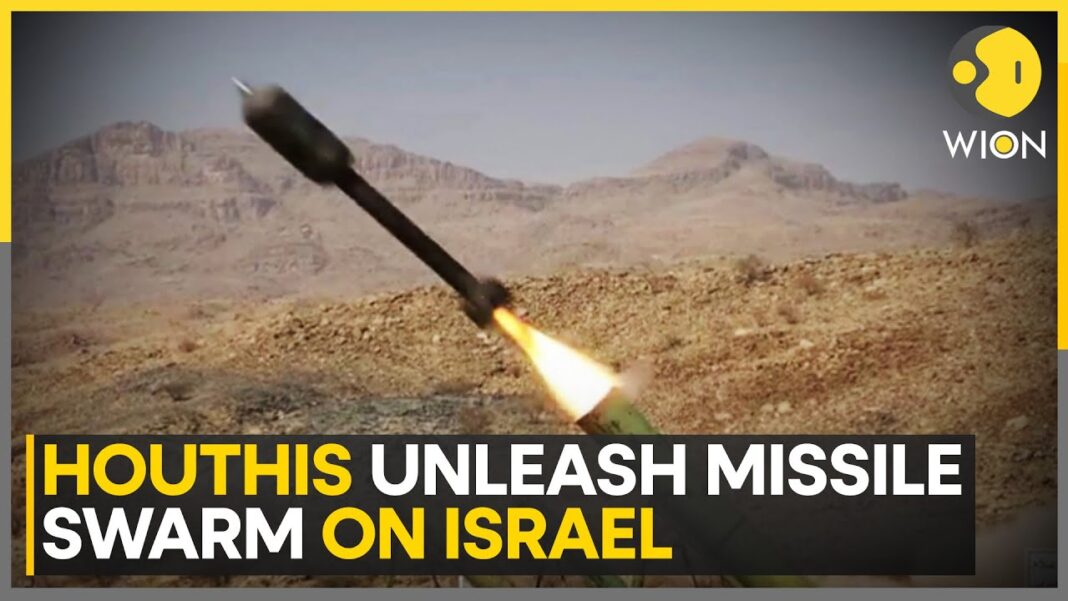
Retaliation was swift. On Wednesday, Houthi terrorists fired two ballistic missiles at Israel, sending sirens blaring across the densely populated heart of the country—including Tel Aviv and Jerusalem. While no direct hits were reported, the IDF revealed in a late-night statement that the missile examined in the morning was a cluster surface-to-surface missile, a weapon designed to inflict maximum civilian casualties.
According to the IDF’s assessment, the missile warhead carried 22 smaller sub-munitions, each capable of detonating independently when dispersed over a wide area. As the JNS report emphasized, the system mirrors an Iranian design used during Tehran’s direct strike on Israel in June.
This marks the second time in recent weeks that the Houthis have employed cluster munitions against the Jewish state. On August 22, the group launched a similar missile that fragmented in mid-air, scattering unexploded remnants into Israeli neighborhoods. By what many in the Israeli press described as a miracle, no injuries were reported.
Following Wednesday’s barrage, the IDF once again urged civilians to exercise caution. In its official communique, the military stressed: “The Houthi terrorist regime used a cluster surface-to-surface missile. We reiterate to the public: follow the instructions of the Home Front Command and be responsible and vigilant in the presence of unexploded remnants and unidentified objects. Distance yourselves and immediately report them to the Israel Police.”
As JNS has frequently highlighted, the danger of these weapons lies not only in their destructive force but in the fact that many sub-munitions fail to detonate on impact, creating lethal hazards for civilians long after the initial strike.
The Houthi campaign has not been limited to missiles. Earlier this week, the Israel Air Force intercepted a drone launched from Yemen before it crossed into Israeli airspace. According to Hebrew media cited in the JNS report, the UAV approached Israel from the west and was shot down off the central coast. No sirens were triggered, but the incident marked the latest in a series of aerial threats neutralized by Israel’s multi-layered air defense systems.
The Houthis have also expanded their attacks to maritime targets. On Monday, they claimed responsibility for launching a missile at the Scarlet Ray, an Israeli-owned tanker transiting near the Saudi port of Yanbu. Though the ship sustained no damage and continued its voyage, the attempted strike signaled the group’s intent to disrupt commercial shipping in one of the world’s most critical maritime corridors.
That attack coincided with massive funerals in Sanaa for the 12 officials killed in last week’s Israeli strike—a reminder, the JNS report noted, of the Houthis’ determination to frame their war against Israel as both revenge and solidarity with Palestinians in Gaza.
Katz’s warning that Israel would “complete all ten plagues” was not chosen lightly. Drawing on imagery from the biblical Exodus, the minister invoked one of Judaism’s most iconic narratives of divine retribution against tyranny. In doing so, he framed Israel’s campaign against the Houthis as not merely a military confrontation but a moral and historical reckoning.
As JNS analysts have observed, the Defense Minister’s statement was both a warning and a promise: Israel will not tolerate continued barrages of Iranian-made missiles, nor allow the Houthis to threaten Israeli civilians with impunity. The reference to the plagues carried an implicit message that Israel’s retaliation could escalate to devastating levels if attacks persist.
The Houthis’ use of advanced missile technology underscores the growing role of Iran in the conflict. Israeli intelligence has long accused Tehran of supplying the Yemeni group with ballistic missiles, drones, and training. The similarity between the Houthis’ cluster warheads and those used by Iran in June further cements that link.
JNS has consistently reported that Israel views the Houthis not as a distant nuisance but as an integral part of Iran’s “axis of resistance,” which also includes Hezbollah in Lebanon, Hamas and Palestinian Islamic Jihad in Gaza, and Shi’ite militias in Iraq and Syria. The death of al-Rahawi, analysts argue, was a direct strike against Tehran’s efforts to consolidate power in Yemen.
The psychological toll of repeated sirens across Israel’s central region cannot be overstated. Tel Aviv, Jerusalem, and other densely populated areas have endured multiple alarms in recent weeks, forcing millions to take cover in shelters. Though the Iron Dome and other defense systems have intercepted most incoming threats, the Houthis’ ability to trigger nationwide alerts illustrates their growing reach.
As JNS reported, many Israelis interpret the barrages as an extension of the trauma from Hamas’s October 7 massacre. The Houthis themselves have explicitly tied their campaign to that attack, declaring their participation an act of solidarity with the Palestinians.
Since October 2023, the Houthis have launched dozens of missiles and drones at Israel, with varying degrees of success. While many have been intercepted, others have landed in open areas or fragmented mid-flight, spreading fear across communities. Their entry into the war, noted JNS, demonstrates how Israel’s confrontation with Hamas has metastasized into a broader regional struggle involving multiple Iranian proxies.
The killing of Prime Minister al-Rahawi represents a milestone in this regional war. His death—the highest-ranking Houthi casualty to date—signals that Israel is willing to target not just military operatives but the political leadership that enables continued attacks.
The latest warnings from Defense Minister Katz highlight the precarious balance Israel faces: defending its citizens against long-range attacks while preventing a wider escalation that could draw in Saudi Arabia, the Gulf States, or even Western naval forces.
For now, Israel’s strategy appears twofold: preemptively striking Houthi leadership to degrade their operational capacity, while intercepting missiles and drones before they can cause mass casualties. But with each new barrage, pressure mounts for a more decisive response.
As the JNS report indicated, the Houthis’ campaign is “not an isolated insurgency but part of a coordinated Iranian strategy to encircle and exhaust Israel.” Whether Katz’s threat to unleash the full “ten plagues” will deter further attacks remains to be seen.
What is certain, however, is that Israel faces a long war on multiple fronts—one in which its enemies, backed by Tehran, seek to test both its military defenses and its societal resilience.

Stop taking about it. Do it already.