



|
Getting your Trinity Audio player ready...
|
By: Fern Sidman
Despite being engulfed in its longest and most politically charged conflict in recent history, Israel posted an unprecedented $14.8 billion in defense exports in 2024, setting a new record for its defense industry. According to a recently published report that appeared on Ynet News, which obtained official figures released Wednesday by the Ministry of Defense, this remarkable surge in arms sales was achieved even as the war in Gaza stretched into its second year and diplomatic pressures on Israel intensified across Europe and beyond.
The data, compiled by the Defense Ministry’s International Defense Cooperation Directorate (SIBAT), highlights both the extraordinary adaptability of Israel’s military-industrial complex and the shifting geopolitical demand that is reshaping global arms markets.
According to the information provided in the Ynet News report, more than half—54%—of Israel’s defense exports in 2024 were destined for European countries, many of which have ramped up defense spending in response to Russia’s ongoing war against Ukraine. In previous years, Asia-Pacific had been the dominant buyer of Israeli military technology, but the landscape has changed drastically.
“European states are under immense pressure to replenish weapons stockpiles sent to Ukraine and to modernize their own defense systems in the face of growing threats from Russia,” explained Yair Kulas, head of SIBAT, in remarks cited by Ynet News. “Israel is delivering not only innovation, but speed and reliability. Where other nations need five to seven years to supply major systems, we do it in two or three—while also supplying our own military in wartime.”
One of the most significant milestones in 2024, according to Ynet News, was Israel Aerospace Industries’ (IAI) landmark $3.8 billion contract with Germany for the Arrow 3 missile defense system. The deal, hailed as the largest defense agreement in Israeli history, marked a turning point in Israeli-European strategic cooperation, especially in missile defense.
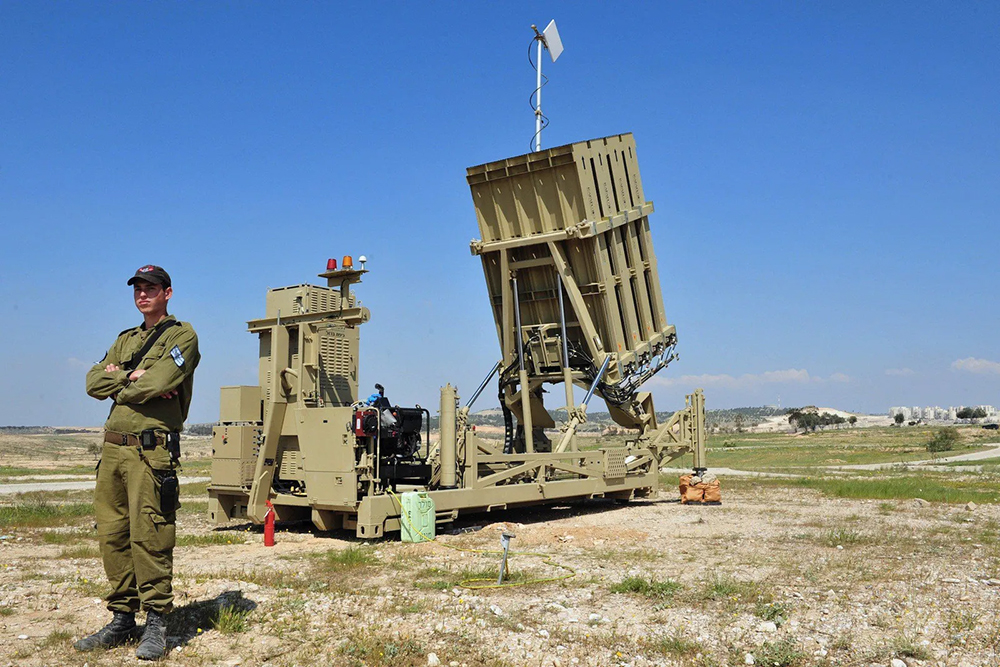
Other systems in high demand included IAI’s Barak MX, Rafael’s David’s Sling, and components from Elbit Systems. These advanced technologies not only defend Israel’s skies but are also being adopted to protect European infrastructure, military bases, and civilian populations in an increasingly unstable security environment.
However, as the Ynet News report noted, this export boom was not without complications. The continued military campaign in Gaza—now in its 20th month—has drawn sharp criticism from numerous European capitals, especially over reports of civilian casualties and widespread destruction. This diplomatic fallout has led to concrete commercial consequences for Israeli firms.
Spanish authorities suspended a $300 million deal with Rafael Advanced Defense Systems for anti-tank weapons, and previously canceled a $6.6 million ammunition order from Elbit Systems, as per the Ynet News report. Additionally, Israeli defense companies were barred from participating in several major European arms exhibitions in 2023 and early 2024—an apparent signal of growing political discomfort.
Still, Israel’s defense industry has managed to surge ahead despite mounting diplomatic friction. As the Ynet News report pointed out, European governments have continued to prioritize military readiness in light of the Ukraine crisis, with Israeli technology often seen as irreplaceable due to its proven combat performance and rapid deployment capabilities.
The data shared with Ynet News also reveals a reordering of Israel’s global defense customers. While European demand surged, exports to the Asia-Pacific region dropped by 25%, comprising just 23% of total sales. This reflects not only the reallocation of Israeli production capacity toward European contracts but also growing competition and shifting political alignments in Asia.
Interestingly, defense trade with Arab nations that normalized relations with Israel under the Abraham Accords showed strong growth. The report at Ynet News indicated that these exports rose from 3% of total sales in 2023 to 12% in 2024, with Morocco emerging as a key client.
Morocco signed a new deal for Elbit’s ATMOS howitzers, valued between €150 million and €200 million, further deepening military ties between the countries. Previously, Morocco had acquired IAI’s Barak MX system, the PULS rocket launcher, and reportedly a reconnaissance satellite, signaling a long-term strategic relationship. The Ynet News report emphasizes that these deals demonstrate how normalization has gone beyond diplomacy and tourism, evolving into high-stakes defense partnerships.
Another major trend in 2024, reported in detail by Ynet News, was the increase in direct government-to-government (G2G) sales, which now represent 54% of Israel’s defense exports, up from 35% the previous year. These G2G agreements allow for faster procurement, bypassing cumbersome tender procedures and enabling Israel to fulfill urgent defense needs around the globe.
According to SIBAT and confirmed by Ynet News, these deals have become central to Israel’s export strategy, particularly when working with allies requiring rapid capability integration, such as missile defense systems or cyberwarfare infrastructure.
“The G2G format builds trust, ensures political alignment, and streamlines delivery timelines,” explained an Israeli defense official quoted in Ynet News. “In today’s world, speed and reliability are just as important as cutting-edge technology.”
Israel’s record-setting $14.8 billion in defense exports during a year marked by war and diplomatic strain highlights the global value placed on Israeli defense technology. As the Ynet News report emphasized, this performance demonstrates the country’s dual capacity to wage war while simultaneously acting as a critical supplier of security solutions to nations worldwide.
Though the path forward may be clouded by geopolitical complexities, especially in Europe, Israeli defense firms continue to innovate, deliver, and expand market share in regions both old and new. From Berlin to Rabat, from Warsaw to New Delhi, Israeli-made weapons are redefining global security architectures—and 2024 may just be a preview of what’s to come.
As Ynet News reported, “Israel is not just exporting arms—it’s exporting readiness, deterrence, and the lessons of a nation that lives under the constant threat of war, yet thrives in the world’s most competitive defense marketplace.”
