



|
Getting your Trinity Audio player ready...
|
By: Fern Sidman – Jewish Voice News
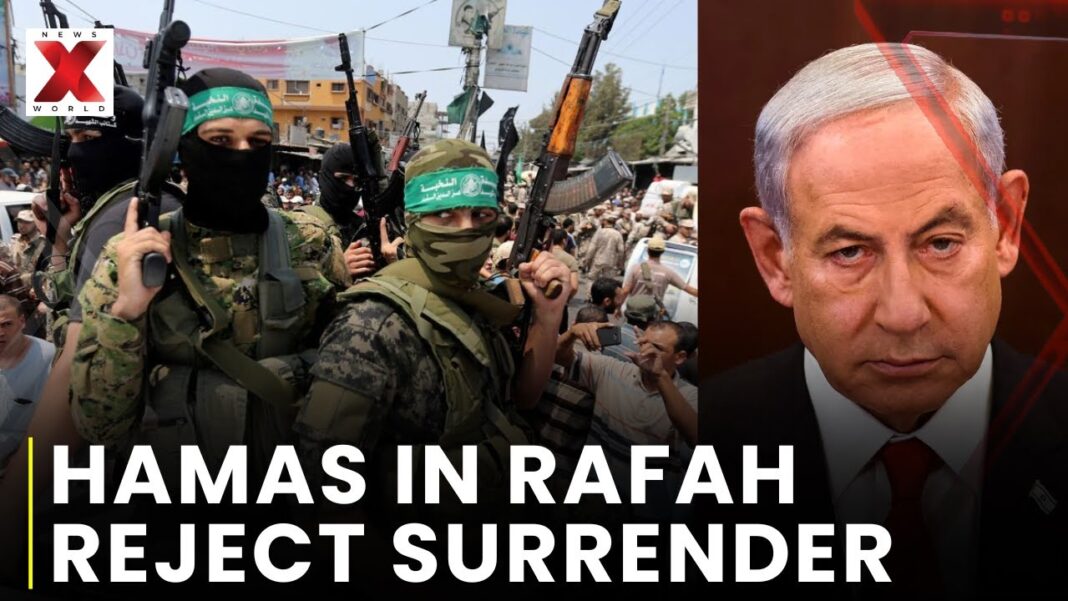
In a development that could mark a pivotal turn in the ongoing conflict in Gaza, senior Israeli officials have confirmed that Jerusalem is considering a proposal allowing the surrender and safe exit of Hamas terrorists trapped in a tunnel complex beneath Rafah, contingent upon their complete disarmament and commitment to cease all future terrorist activity. The framework, now under intense diplomatic discussion, reflects Israel’s dual desire to end the bloody standoff in southern Gaza while maintaining its firm stance on national security.
According to a report on Wednesday at Israel National News, the offer is being explored as part of a coordinated effort involving the United States and the highest levels of the Israeli government. The plan — still in its preliminary stages — has reportedly been the focus of discussions between Prime Minister Benjamin Netanyahu and U.S. envoy Jared Kushner, acting on behalf of President Donald Trump.
As the report at Israel National News detailed, the proposed arrangement would grant the terrorists currently trapped in the Al-Genina neighborhood tunnel in Rafah an opportunity to surrender peacefully under tightly controlled conditions. In exchange for laying down their weapons and pledging an end to militant activity, they would be offered a conditional pardon and temporary exile to a third country.
Under the terms discussed, the Iranian-backed terrorists could potentially return to Gaza after several years, provided they comply with the conditions of disarmament and refrain from rejoining or assisting any terrorist organization. However, the report at Israel National News noted that this aspect of the plan remains complicated by the absence of any third country willing to accept the Hamas operatives — a major obstacle that has stalled progress on implementation.
A senior Israeli official told Channel 12 News, “If the terrorists trapped in the Rafah tunnel agree to disarm and abandon terrorism entirely, Israel will allow them to exit. The State of Israel is interested in ending the Rafah confrontation as soon as possible — but only on terms that ensure no future threat to our civilians.”
The initiative, Israel National News reported, represents one of the most sensitive diplomatic balancing acts since the Gaza war began. Washington has confirmed its involvement in the ongoing mediation, with sources in both Jerusalem and the White House describing the situation as “fluid” but cautiously hopeful.
According to the information provided in the Israel National News report, the Trump administration views the crisis as a potential opportunity to demonstrate the efficacy of its peace-oriented engagement with Israel and its allies, even amid continuing instability in Gaza. Jared Kushner, who has played an instrumental role in several prior ceasefire frameworks and normalization agreements, has reportedly been in close consultation with Israeli security officials to craft a deal that preserves Israel’s right to self-defense while minimizing civilian casualties in Rafah.
American officials have not publicly disclosed the details of their involvement but have emphasized that the United States is working “in full coordination” with Israel to explore every viable path toward ending the hostilities. One senior American diplomat told Israel National News, “President Trump’s priority is to see the conflict brought to a close in a way that protects Israel’s security, maintains regional stability, and creates the foundation for rebuilding Gaza under responsible governance.”
The standoff in Rafah, one of the last bastions of Hamas resistance, has long been a focal point of the Israeli military’s counterterrorism strategy. According to the report at Israel National News, intelligence estimates suggest that dozens of Hamas operatives remain trapped inside a network of heavily fortified tunnels running beneath residential neighborhoods. Israeli forces have been conducting targeted operations to neutralize the threat while minimizing harm to civilians — a delicate operation made more difficult by Hamas’s consistent use of civilian infrastructure as cover.
For the Israeli government, the possibility of a conditional surrender offers both tactical advantages and moral clarity. As one Israeli defense official told Israel National News, “We have no interest in indefinite combat operations in Rafah. If these terrorists surrender unconditionally and disarm completely, it would be a victory for Israel’s deterrence — not a concession.”
However, the proposal has drawn internal debate within the Israeli security establishment. Some military officials argue that allowing Hamas operatives to leave Gaza, even under exile, could set a dangerous precedent that rewards terrorists with leniency rather than justice. Others see it as a pragmatic solution that could prevent further loss of life and bring closure to a devastating chapter in the conflict.
A diplomatic source quoted by Israel National News cautioned that, as of now, “there is no agreed-upon solution regarding the terrorists in Rafah.” The same source added that any plan must include ironclad verification mechanisms to ensure the operatives’ permanent disengagement from terrorist activity.
Perhaps the most significant logistical hurdle in the plan is the identification of a third country willing to accept the exiled Hamas operatives. According to the information contained in the Israel National News report, diplomatic overtures have been made to several regional actors — including Egypt, Qatar, and Turkey — but none have publicly agreed to take in the group. Egypt, in particular, has expressed deep reservations, fearing that accepting the militants would destabilize the fragile security arrangements along its Sinai border.
Qatar, a long-time financial backer of Hamas, has also remained conspicuously silent, despite American attempts to encourage its participation. Analysts cited by Israel National News noted that accepting Hamas members could expose Doha to severe international criticism and undermine its carefully cultivated image as a regional mediator.
Without a host nation, the exile provision remains largely theoretical, casting uncertainty over the framework’s feasibility. Still, both Israeli and American officials have indicated that they will continue to pursue diplomatic solutions, even as military operations in Rafah persist.
For Israel, the resolution of the Rafah crisis has both immediate military and broader political significance. As the report at Israel National News called attention to, Prime Minister Netanyahu’s government views the neutralization of the Rafah tunnels as essential to eliminating Hamas’s last operational stronghold and preventing further cross-border attacks.
Yet there is also a strong desire to conclude the campaign in a way that restores Israel’s international standing and opens the door to post-war stabilization efforts in Gaza. Ending the Rafah operation through a combination of force and diplomacy would allow Israel to shift focus toward rebuilding its southern communities, supporting hostages’ families, and addressing the humanitarian needs of civilians in Gaza — all while maintaining deterrence against future aggression.
Defense sources quoted in the Israel National News report stated that Israel’s overarching goal remains the complete dismantling of Hamas’s military infrastructure and the establishment of a demilitarized Gaza under international supervision. The potential disarmament and surrender of Hamas operatives in Rafah could represent a microcosm of that broader vision: a limited but symbolically powerful instance of terrorists choosing surrender over continued jihad.
While no formal agreement has yet been reached, Israel National News reported that negotiators on both sides of the Atlantic have expressed cautious optimism that the Rafah standoff could be resolved “within days” if progress continues.
For Israel, the prospect of ending the Rafah conflict without further bloodshed offers a rare moment of hope after months of intense combat. For Washington, it presents an opportunity to reinforce its influence as a stabilizing force in a volatile region.
As of Tuesday evening, however, the situation remains tense and fluid. A senior diplomatic source summarized it bluntly to Israel National News: “There is still no agreed-upon solution regarding the terrorists in Rafah. But all sides understand that time is short — and that the world is watching.”
If the proposed deal succeeds, it could signal a turning point in Israel’s campaign against Hamas, offering a pathway to end the Rafah confrontation and perhaps laying the groundwork for a new, more stable regional order. But if it fails, it risks plunging the enclave back into renewed violence, prolonging a war that both Israelis and Palestinians have paid dearly to sustain.
Either way, as the Israel National News report noted, “The coming days will determine whether diplomacy or defiance defines the final chapter of Rafah.”