




|
Getting your Trinity Audio player ready...
|
Israel’s AI Potential at Risk if Long Term Strategy for the Technology is Not Prioritized
Edited by: TJVNews.com
Israel, renowned for its innovation and technological prowess, is facing a critical juncture in the era of artificial intelligence (AI). As the world rides the AI wave, experts warn that Israel may miss out on becoming a global leader in AI if it does not prioritize its long-term strategy for the technology, as was reported by the Times of Israel. Amid political upheaval and dwindling investments in the tech industry, the nation must shift its focus to foster AI research, education, and infrastructure to remain competitive in the ever-evolving tech landscape, according to the report.
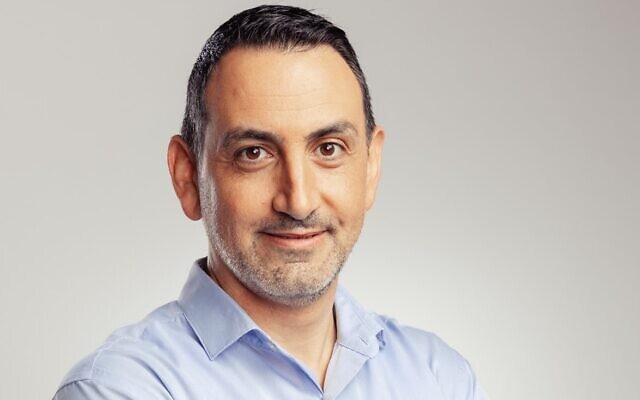
Speaking to the Times of Israel, Michael Eisenberg, the general partner and co-founder of Aleph, a Tel Aviv-based venture capital firm said, “There are going to be countries that are leaders in artificial intelligence and those that aren’t. And so, the real question is, what are we as a country doing to be leaders? And the answer is not enough. Not close.”
“The government needs to stop being distracted and get focused on what matters,” Eisenberg added.
The current political environment in Israel, characterized by a controversial judicial overhaul and multiple elections, has triggered widespread protests and economic instability, the TOI report said. The Israeli tech industry has not been immune to the repercussions. Hundreds of thousands have taken to the streets, and the tech ecosystem has been dealt a heavy blow. High-tech investments have plummeted, leading to a decline in startup exits and a slowdown in tech innovation, as was reported by the TOI.
Despite the challenges, experts believe that Israel’s tech foundation remains strong and is well-positioned to capitalize on the AI revolution, as was reported by the TOI. AI has the potential to propel Israel’s tech industry to new heights, much like its success in the cybersecurity sector. To achieve this, a long-term strategy is essential, focusing on investing in education, academic research, startups, and the infrastructure necessary to support AI models, the TOI reported.
“We need to make compute as ubiquitous and as affordable as electricity,” said Eisenberg, referring to the ability to give computers enough power to run complex calculations, according to the TOI report. “We need to bring back many Israeli Jewish academics and leaders who are in this space and are living abroad in the US, the UK, France and other places, so we can create a critical mass of talent here in Israel.”
“And we need to have a national policy managed by one person who is focused on this…We need coherent policy and action,” he urged.
The government must recognize AI as a major priority for the country’s future and allocate sufficient resources, such as a budget of NIS 10 billion ($2.7 billion) over five years, to fuel AI advancements. Encouraging the return of Israeli Jewish academics and leaders from overseas, creating a critical mass of talent, and establishing a national policy under one dedicated leader are critical steps to drive AI innovation, the TOI report said.
Also speaking with the TOI was Shlomo Dovrat, a tech veteran and co-founder of VC fund Viola, which has over $4.5 billion of assets under management. He said, “My friends in the tech industry are not doing anything else but dealing with the protest. This has consequences. If we don’t bring the train back on track, we will find ourselves 10 years behind.”
Dovrat made the comments at a conference by the Aaron Institute for Economic Policy held at the Reichman University in June, as was reported by the TOI.
Funding for Israeli startups has sharply declined, causing foreign investors to wait and observe the outcome of the current political turmoil. The TOI also reported that in the meantime, Israeli entrepreneurs are opting to set up their companies outside the country, with potential long-term consequences for Israel’s tech ecosystem. The current situation poses a serious risk that Israel may lag behind in the AI race, ultimately impacting its technological prosperity.
Uri Gabal, the Chief Executive Officer of the Start-Up Nation Policy Institute (SNPI) said, “We are definitely in the most vulnerable spot that the Israeli tech has been in the last 15 years.” As was reported by the TOI.
This is due to a dangerous combination of a global downturn and the political “chaos” in Israel around the judicial overhaul, he told the TOI. “The instability here is not a good sign for startups, it is not a good sign for entrepreneurs.”
“Startups that are in seed(stage spread their wings wherever they find a place to grow,” Gabai said, the TOI reported. “The most frightening scenario is that the next startup that will rise from this AI revolution will be based on Israeli founders but will not be Israeli.”
“To make the most of the AI revolution, wave, we must restore security and stability to Israel,” added Gabai. “The world is not waiting for us.”
Israel’s tech foundation, set up over 40 years ago, is strong. “But if you keep pounding at the foundation again and again and again, at some point the building is going to collapse,” Gabai said.
“I’m very concerned that in 10 years’ time we will look at the graph and say 2023 is the year that ended the unprecedented run of the Israeli high-tech industry since basically the 1990s…I am very concerned 2023 will mark the change,” he cautioned, as was reported by the TOI.
Despite the challenges faced in Israel, AI investments globally have skyrocketed, attracting significant attention from investors and technology giants alike. Generative AI companies, in particular, are experiencing substantial funding rounds, and the global AI industry is rapidly advancing with aggressive players dominating the market.
As the world races ahead in the field of artificial intelligence (AI), Israel, with its reputation as a global cybersecurity powerhouse, has the potential to replicate its success in this emerging technology.
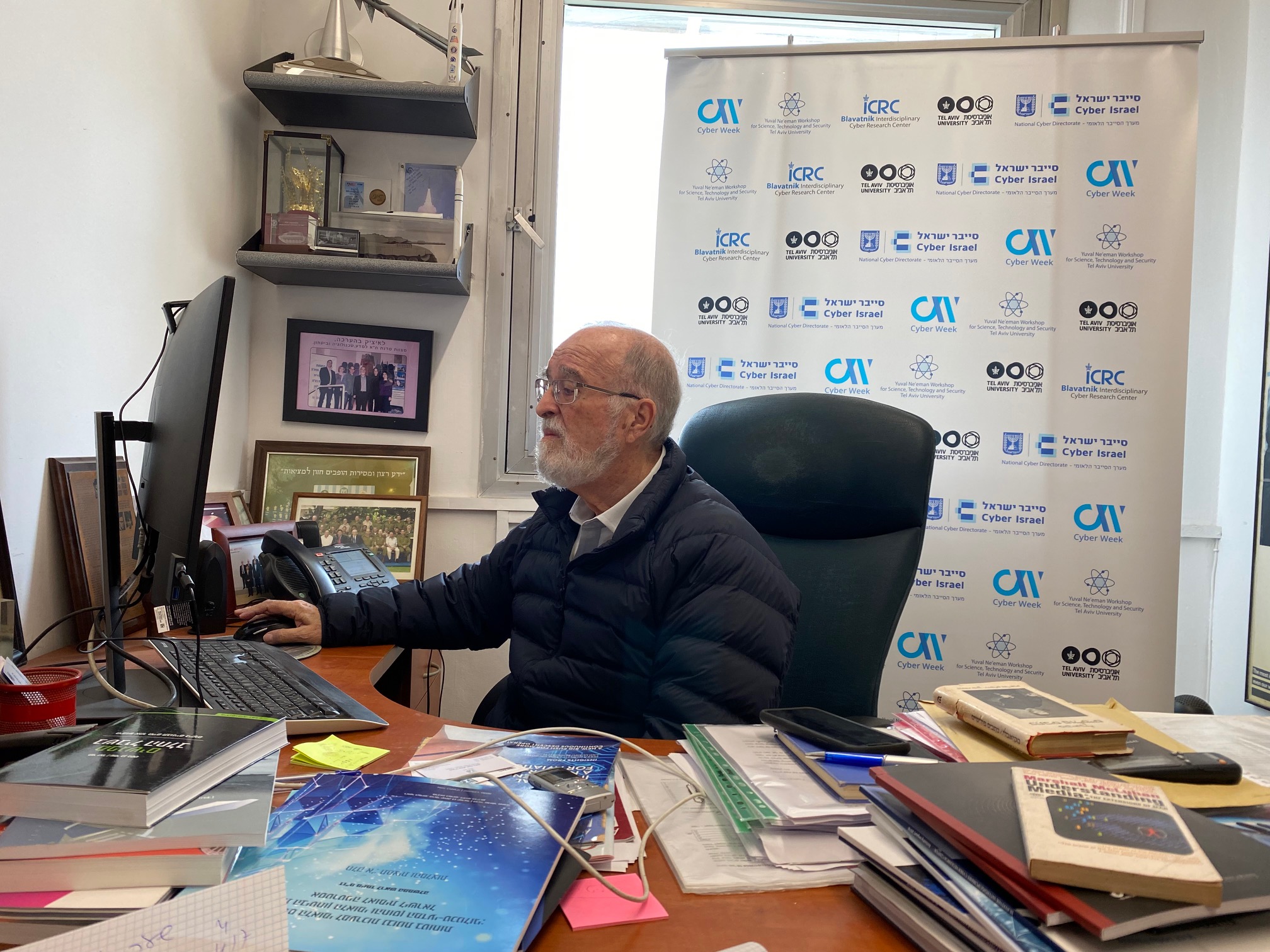
According to Professor Isaac Ben-Israel, a key figure in establishing Israel’s cybersecurity policy, all it takes to succeed in AI is a brilliant idea and a computer, making it well-suited for a small country like Israel with its edge in software-based technologies, as was reported by the TOI.
In 2019, Professor Ben-Israel and Professor Eviatar Matania presented Prime Minister Benjamin Netanyahu with a comprehensive AI roadmap for Israel, the TOI report indicated. The report highlighted the nation’s potential to become a world leader in AI and aimed to place Israel among the top five countries globally in core AI areas. To achieve this, the Israeli government must prioritize AI as a major area for the country’s future, allocate a budget of NIS 10 billion ($2.7 billion) over five years, and establish a national plan for education, research, and critical infrastructure, the report said.
The consequences of political instability are evident in the tech industry, with AI and cybersecurity investments dwindling to 20% of their previous levels. The TOI report said that foreign investors are hesitant to commit funds, while Israeli entrepreneurs are registering their startups outside the country, seeking stability and conducive environments elsewhere. This combination poses a serious threat to Israel’s advanced technology sectors, and the nation risks missing the AI train that is propelling other countries forward.
Professor Ben-Israel warns that Israel’s failure to act decisively and prioritize AI could be a missed opportunity of significant proportions, as was reported by the TOI.