



|
Getting your Trinity Audio player ready...
|
Israeli Security Cabinet to Approve Gaza City Offensive as Hostage Talks Stalled
By: Fern Sidman
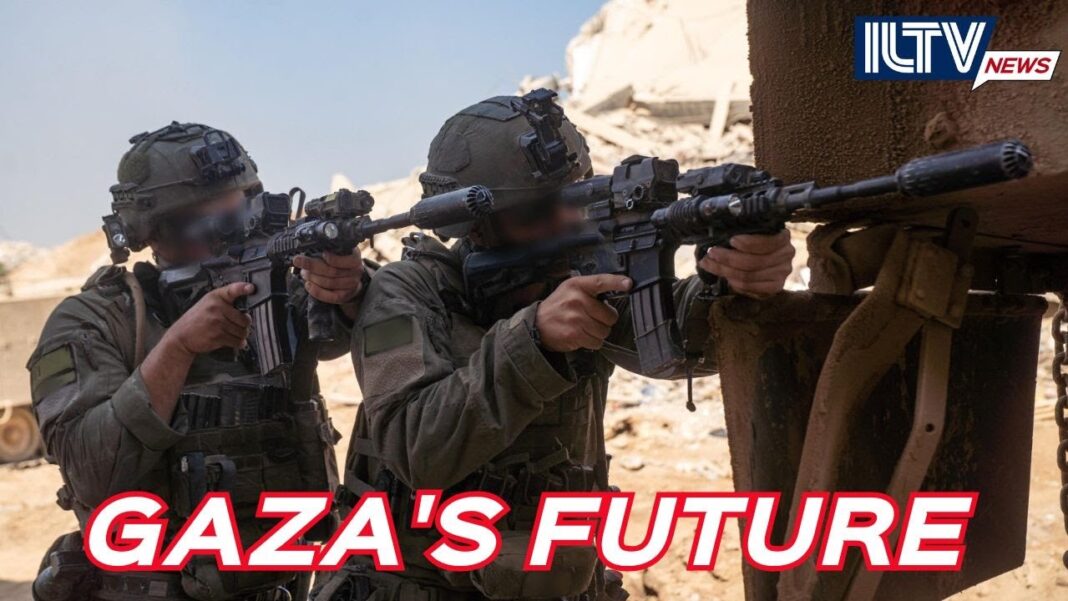
The Israeli Security Cabinet will convene on Sunday evening to formally approve a sweeping military plan aimed at seizing control of Gaza City, a move that officials describe as both a strategic imperative and a necessary escalation in the ongoing war against Hamas.
According to a report on Sunday morning at Israel National News (INN), the Cabinet session comes at a pivotal juncture, following weeks of intensified fighting across the enclave and amid growing frustration over the apparent collapse of diplomatic efforts to reach a ceasefire or secure a hostage release agreement.
A senior diplomatic source, cited by Ma’ariv and amplified in the INN report, made clear ahead of the meeting that the focus of Sunday’s deliberations is narrowly fixed on military operations rather than political or diplomatic arrangements.
“At this stage, only the military maneuver is on the table; previous frameworks for a hostage deal or ceasefire are no longer relevant,” the source stated.
The Cabinet is expected to review the operational blueprint drafted by the Israel Defense Forces (IDF) General Staff and endorsed by Defense Minister Israel Katz and Chief of Staff Lt.-Gen. Eyal Zamir. The plan reportedly outlines the logistical, tactical, and intelligence components of an urban maneuver designed to uproot Hamas’s entrenched presence in Gaza City, the largest urban center in the Strip and long considered the beating heart of Hamas’s political and military infrastructure.
The INN report noted that Gaza City remains one of the most fortified and symbolically significant strongholds for Hamas. Command centers, tunnel networks, and weapons caches are believed to be embedded beneath civilian areas, complicating Israel’s ability to strike decisively without incurring international criticism. The new military plan reflects the IDF’s determination to clear and hold the area despite the risks.
The backdrop to the Cabinet’s deliberations is the painful reality of the hostage crisis, which continues to hang heavily over the nation. Since the October 7 massacre, when Hamas abducted more than 250 people into Gaza, the release of captives has been a paramount demand of the Israeli public and government alike.
While some hostages were freed under short-lived truces earlier in the conflict, Israel National News reported that roughly 20 living hostages are still believed to be in Hamas captivity, along with dozens of bodies of slain captives.
The diplomatic source stressed that if negotiations were ever revived, the Israeli position would remain firm: any agreement must cover “all hostages, both the living and the deceased.” This condition, officials say, reflects a moral and national obligation to ensure that no Israeli—dead or alive—is abandoned in enemy hands.
Yet, for now, such a deal seems remote. “There is no indication that Hamas is willing to discuss conditions for ending the war,” the source told Ma’ariv. “Therefore, no preparations are being made for possible negotiations or the formation of an Israeli team.”
This admission calls attention to the government’s calculation that the only viable path forward lies on the battlefield, not at the negotiating table.
The emphasis on Gaza City is not incidental. As INN has repeatedly highlighted, the city is more than just a population hub; it is the nerve center of Hamas’s military and political power. Its underground tunnel systems, sometimes referred to by Israeli commanders as the “Gaza Metro,” enable the group to move fighters, weapons, and leaders with relative impunity.
Neutralizing these assets is seen as essential to degrading Hamas’s capacity to wage war. Military analysts note that without control over Gaza City, any Israeli victory elsewhere in the Strip risks being temporary, as Hamas could reconstitute itself amid the dense urban landscape.
The upcoming maneuver is expected to involve multiple IDF brigades, supported by heavy artillery, air cover, and specialized engineering units tasked with mapping and destroying tunnel networks. Sources cited by INN suggest the IDF has refined its doctrine from earlier phases of the war, combining precision strikes with ground operations aimed at limiting civilian casualties while systematically dismantling Hamas’s infrastructure.
Prime Minister Benjamin Netanyahu, who will chair Sunday’s Cabinet meeting, has faced mounting domestic and international pressure over his government’s handling of both the war and the hostage crisis.
Families of the captives, along with civil society groups, have staged weekly protests demanding a greater emphasis on securing hostages’ release—even if it means negotiating with Hamas. At the same time, hawkish members of the coalition and much of the security establishment insist that decisive military action is the only path to long-term security.
As INN has reported, Netanyahu has sought to balance these competing demands by vowing both to destroy Hamas and to secure the return of all hostages. Yet the two goals are increasingly seen as contradictory, with critics warning that an all-out assault on Gaza City could endanger the captives’ lives.
The Prime Minister’s Office has not publicly released details of the military plan, but leaks suggest that Sunday’s Cabinet approval will be framed as a necessary step toward restoring Israeli deterrence and preventing Hamas from dictating the terms of the conflict.
International observers will be closely watching the outcome of the Cabinet meeting. Washington, which has continued to provide robust military support to Israel, has also quietly urged restraint, particularly in operations that may result in high civilian casualties.
European capitals, meanwhile, remain divided: some view Israel’s offensive as a justified response to Hamas aggression, while others fear that the humanitarian toll will deepen instability across the region.
According to the information provided in the Israel National News report, Israeli officials insist that the operation will be carried out with “maximum adherence to international law” but stress that Hamas’s embedding of its fighters and weapons in civilian infrastructure makes collateral damage difficult to avoid.
The risk of escalation with Hezbollah on Israel’s northern border or with Iranian-backed militias in the wider region also looms over the Cabinet’s decision. Analysts suggest that a successful operation in Gaza City could either deter further aggression or provoke new fronts, depending on how adversaries interpret Israel’s resolve.
For Israel, the coming days are likely to mark a turning point in a conflict that has already exacted a staggering human and political toll.
The Security Cabinet’s approval of the Gaza City maneuver will signal that Jerusalem has chosen force of arms over the uncertainties of negotiation, at least for now. Whether that choice ultimately delivers security, freedom for the hostages, or stability in the region remains to be seen.
As the INN report concluded, “the Israeli government is preparing for a decisive battle in Gaza’s largest city, while bracing for the consequences—military, political, and moral—that such a move will inevitably bring.”

Treasonous “hostage talks” should have stopped long ago and should not be occurring now.
There should never have been, nor should there now be any, “diplomatic efforts to reach a ceasefire or secure a hostage release agreement”. These all guarantee the survival of Hamas.
Concern about “incurring international criticism” is laughably moronic. The “international” community is engaged in a virtually unanimous conspiracy against Israel, entirely committed to antisemitism, survival of Hamas, and the obscenity of a “palestinian state”. Short of committing national suicide, it cannot be placated.
There are no adverse “moral” consequences of the annihilation of Hamas and all of its Gazan members and (universal) supporters. The moral categorical imperative is its complete annihilation.