



|
Getting your Trinity Audio player ready...
|
By: Fern Sidman
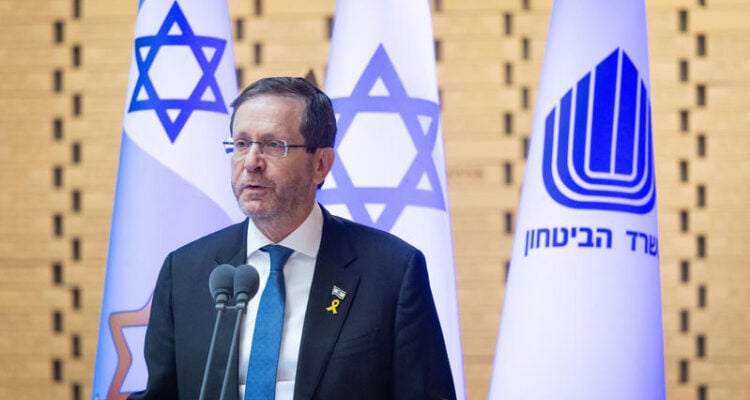
When President Isaac Herzog and First Lady Michal Herzog touched down in Australia on Sunday, their arrival carried a symbolic weight that extended far beyond the ceremonial protocols of statecraft. The visit, undertaken at the invitation of Prime Minister Anthony Albanese, was conceived in the aftermath of the December terror shooting at a Hanukkah gathering on Sydney’s Bondi Beach that claimed the lives of 15 people. As The Times of Israel reported on Sunday, the trip was framed by Jerusalem as an act of solidarity with a Jewish community still reeling from one of the most traumatic antisemitic attacks in Australia’s modern history.
Yet the visit has unfolded in a climate of acute political polarization, amid fierce opposition from anti-Israel activists, heightened security preparations, and a broader debate within Australian society about the intersection of Middle Eastern conflict and domestic cohesion.
According to the information provided in The Times of Israel report, Herzog’s office emphasized that the president’s itinerary would focus on visiting Jewish communities across Australia in order to “express solidarity and offer strength” following the Bondi Beach massacre. The language of the statement reflected an acute awareness of the psychological scars borne by Australian Jewry since the December 14 assault, when gunmen opened fire on crowds celebrating Hanukkah along the beachfront.
The victims included an elderly Holocaust survivor, a couple who confronted one of the attackers, and a ten-year-old girl whose funeral eulogies described her as a “ray of sunshine” extinguished by senseless violence. The presence of the Israeli president, Jerusalem hopes, will offer moral sustenance to a community struggling to reconcile its place within a pluralistic society that has witnessed a troubling resurgence of antisemitic incidents since the Hamas-led massacre in Israel on October 7, 2023.
The Times of Israel report detailed that Herzog’s schedule also includes official meetings with senior Australian officials, among them Prime Minister Albanese and Governor-General Sam Mostyn, as well as figures from across the political spectrum. These meetings, while formally diplomatic, are laden with political resonance. Australia, a close ally of Israel, has found itself navigating an increasingly fraught domestic debate over the Gaza war, humanitarian concerns, and the appropriate posture of solidarity with Israel in the wake of Hamas’s atrocities.
The Albanese government, led by the center-left Labor Party, has faced criticism from Jewish leaders who argue that Canberra has moved too slowly to confront antisemitism at home. The president’s presence thus serves as both a gesture of appreciation for Australia’s longstanding ties with Israel and an implicit appeal for more resolute measures to safeguard Jewish citizens.
Yet Herzog’s visit has also ignited vehement opposition from local anti-Israel groups, who have organized protests and called for his arrest. The Times of Israel reported that Palestinian Action Group activists planned a rally in central Sydney, demanding Herzog’s detention on allegations of incitement to genocide.
These accusations stem from a report by the United Nations’ Independent International Commission of Inquiry, which claimed last year that Herzog could be liable for prosecution over remarks made after October 7, in which he stated that Palestinians constituted “an entire nation” responsible for Hamas’s actions. Israel has categorically rejected the commission’s findings, denouncing them as distorted and false, and calling for the body’s abolition.
Israeli officials insist that Herzog’s comments were mischaracterized and that Israel’s military campaign in Gaza is directed at terror organizations embedded within civilian populations, not at civilians themselves.
The Times of Israel reported underscored that Australian federal police have firmly ruled out any arrest of Herzog, with senior officials informing lawmakers that the president enjoys full immunity under international law, covering both civil and criminal matters. This legal determination has not deterred protest organizers, who argue that symbolic arrests would underscore their condemnation of Israel’s conduct in Gaza. The tension between legal reality and activist rhetoric has contributed to an atmosphere of volatility surrounding the visit, prompting authorities to designate the event as a “major event,” thereby authorizing extraordinary security measures.
Prime Minister Albanese, speaking to reporters, sought to strike a careful balance. As The Times of Israel report noted, he affirmed the right of Australians to protest but urged demonstrators to exercise respect for the families of those killed in the Bondi Beach attack.
His remarks reflected a broader anxiety within Australian leadership about the importation of distant conflicts into domestic civic life. “In Australia, people want innocent lives to be protected, whether Israeli or Palestinian,” Albanese said, while adding that Australians do not wish to see foreign conflicts transplanted onto their own streets. This plea for restraint speaks to a deeper concern that the Gaza war has become a prism through which social cohesion in multicultural democracies is being tested, with Jewish and Muslim communities alike feeling exposed to hostility.
The Times of Israel reported that New South Wales police prepared to deploy an “extremely large” security presence to manage the protests. Organizers initially resisted police requests to relocate the demonstration from outside Sydney’s Town Hall to a nearby park, citing concerns about the size of the venue. The standoff underscored the delicate choreography required to balance freedom of assembly with public safety in moments of heightened tension. Ultimately, authorities sought to separate opposing groups to minimize the risk of confrontation, though few details of Herzog’s precise movements were disclosed, in keeping with standard security protocols for visiting heads of state.
Beyond the immediate politics of protest and protection, Herzog’s visit has reignited debate within Australia’s Jewish community itself. The Times of Israel report quoted Alex Ryvchin, co-chief executive of the Executive Council of Australian Jewry, as saying that the president’s presence would “lift the spirits of a pained community.”
For many Jewish Australians, the visit is perceived as a rare moment of recognition and empathy from the highest echelons of Israeli leadership, a tangible affirmation that their trauma is neither overlooked nor forgotten. In the wake of Bondi Beach, synagogues and community centers across the country have reported increased security concerns, and Jewish parents have spoken of anxiety about their children’s safety in public spaces.
Yet not all Jewish voices in Australia have welcomed Herzog’s arrival. The progressive, anti-Zionist Jewish Council of Australia has publicly opposed the visit, arguing that Herzog’s alleged role in the “ongoing destruction of Gaza” renders him unwelcome. The Times of Israel report noted this internal division as emblematic of broader fissures within Jewish communities worldwide, where debates over Israel’s policies increasingly intersect with questions of identity, solidarity, and moral responsibility.
The presence of dissenting Jewish perspectives complicates any attempt to frame Herzog’s visit as a simple gesture of communal unity; instead, it reveals a community grappling with the moral complexities of a war that has exacted a devastating toll on Palestinian civilians even as it was precipitated by one of the most horrific massacres in Israeli history.
The December attack in Bondi Beach continues to loom large over the visit. According to The Times of Israel report, the alleged shooter, Sajid Akram, an Indian national who entered Australia on a visa in 1998, was killed by police during the assault. His Australian-born son, Naveed, has been charged with terrorism and 15 murders.
The brutality of the attack, which targeted a religious celebration, has intensified fears of ideologically motivated violence within Australia and prompted renewed scrutiny of radicalization pathways. The convergence of Herzog’s visit with the aftermath of this tragedy has thus transformed what might otherwise have been a routine diplomatic engagement into a focal point for national reflection on security, tolerance, and the boundaries of political dissent.
In this sense, The Times of Israel’s coverage has highlighted the layered symbolism of the visit. Herzog arrives not merely as a foreign dignitary but as a representative of a nation at war, a figure onto whom competing narratives of victimhood, responsibility, and legitimacy are projected. His planned meetings with families of the Bondi Beach victims, as Albanese indicated, are intended to honor “those innocent lives that were stolen.”
As Herzog’s tour of Australia continues, its ultimate legacy may lie less in the communiqués issued after official meetings than in the broader conversations it provokes within Australian society. The Times of Israel report suggested that the visit serves as a microcosm of the international predicament facing Israel: how to maintain solidarity with Jewish communities abroad while confronting a wave of activism that challenges the legitimacy of Israeli leadership itself.
For Australia, the visit tests the resilience of its commitment to pluralism and the capacity of its institutions to safeguard minority communities without suppressing lawful dissent.
In the end, Herzog’s arrival in Australia is a reminder that the reverberations of Middle Eastern conflict are no longer confined to distant battlefields. They manifest in the streets of Sydney, in the anxieties of Jewish families, in the mobilization of protesters, and in the delicate calculations of political leaders striving to uphold democratic values amid global turbulence.
As The Times of Israel has chronicled, the visit unfolds at the intersection of mourning and mobilization, diplomacy and dissent, underscoring how profoundly the events of October 7 and their aftermath continue to reshape political and communal landscapes far from Israel’s borders.
