



|
Getting your Trinity Audio player ready...
|
By: David Avrushmi
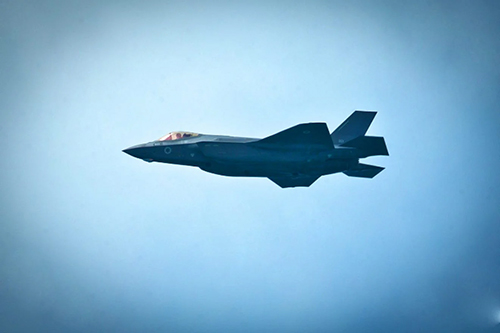
In a forceful demonstration of its enduring military resolve, the Israel Defense Forces announced on Monday that it had carried out a series of precision strikes against infrastructure belonging to the Iranian-backed Hezbollah terror organization in Southern Lebanon. The operation, described in detail by military officials, underscores the increasingly tenuous nature of the postwar ceasefire and highlights the persistent volatility along Israel’s northern border. The Jewish News Syndicate (JNS), which has closely chronicled developments in the region, reported on Monday that the strikes were aimed at degrading Hezbollah’s operational capabilities and disrupting what Israeli intelligence described as renewed preparations for attacks against the Jewish state.
According to the official IDF statement cited by JNS, Israeli aircraft targeted a network of “military camps” used by Hezbollah to train its operatives. These facilities, the military said, were not mere logistical outposts but sophisticated compounds where terrorists underwent live-fire exercises and learned to operate an array of advanced weaponry. “As part of the training conducted in the camps, terrorists underwent live-fire drills and trained in the use of various types of weapons,” the IDF declared, making clear that the sites were integral to Hezbollah’s ongoing military readiness.
JNS reported that the Israeli operation was not limited to training grounds. Additional airstrikes struck tunnel shafts believed to have been used for the storage of rockets, missiles, and other armaments. The IDF asserted that “unusual” Hezbollah activity had been observed at these locations in recent months—an implicit indication that the terrorist group had been quietly rebuilding its arsenal despite the formal ceasefire arrangement brokered late last year. Launch sites and other military buildings, allegedly used for planning attacks on Israeli territory, were also destroyed in the operation.
Israeli officials framed the strikes as a necessary response to systematic violations of the truce. “The Hezbollah terrorist organization’s activity in these sites constitutes a violation of the understandings between Israel and Lebanon and a threat to the State of Israel,” the IDF statement concluded, as reported by JNS. The language was stark and unequivocal, reflecting Jerusalem’s growing impatience with what it views as Beirut’s failure—or unwillingness—to rein in the Iran-sponsored militia.
The current flare-up comes against the backdrop of a fragile ceasefire that ended more than a year of intense hostilities between Israel and Hezbollah. That conflict erupted on October 8, 2023, when Hezbollah opened a second front in Israel’s north one day after Hamas launched its brutal assault on southern Israeli communities. For nearly 14 months, Israeli towns and villages near the Lebanese border endured rocket barrages, anti-tank missile attacks, and cross-border infiltrations, while Israel responded with sustained aerial and artillery campaigns.
As JNS has repeatedly noted, the November 27, 2024 truce was premised on a series of explicit commitments. Central among them was the requirement that Hezbollah be fully disarmed, particularly in areas adjacent to Israel. Under the terms of the agreement, the Lebanese Armed Forces were to assume sole responsibility for security in southern Lebanon, thereby establishing a monopoly over arms in the country. These provisions were later reaffirmed by a decision of the Lebanese Cabinet, raising hopes that the era of Hezbollah’s unchecked military dominance might finally be drawing to a close.
Yet events on the ground have painted a far more troubling picture. The Israeli Prime Minister’s Office, in a January 8 statement cited by JNS, acknowledged that while initial Lebanese steps were “an encouraging beginning,” they remained “far from sufficient.” Jerusalem warned that Hezbollah’s ongoing rearmament—facilitated by Iranian financing, training, and weapons shipments—posed a direct and immediate danger to Israeli civilians. “The ceasefire agreement brokered by the United States between Israel and Lebanon states clearly, Hezbollah must be fully disarmed,” the statement declared. “This is imperative for Israel’s security and Lebanon’s future.”
Hezbollah, for its part, has shown little inclination to comply. In a defiant televised address broadcast on Iranian media on Saturday, the group’s leader Naim Qassem bluntly rejected any notion of disarmament. According to the information provided in the JNS report, Qassem proclaimed that Hezbollah would not relinquish its weapons and that “the aggression against Lebanon cannot continue.” He further asserted a purported “right to defend ourselves,” language widely interpreted in Israel as a threat to resume full-scale hostilities.
Such rhetoric has only deepened Israeli skepticism regarding the durability of the ceasefire. Lebanese Foreign Minister Youssef Rajji appeared to acknowledge the complexity of the situation in a recent interview with Sky News Arabia. Rajji conceded that as long as Hezbollah remained armed, Israel retained the legal right to continue striking targets inside Lebanon. “As long as weapons are not permanently restricted,” he said, Jerusalem “unfortunately has the right to continue its attacks according to the agreement.”
These candid comments from Beirut reflect an uncomfortable reality: Lebanon’s internationally recognized government lacks the capacity—or perhaps the political will—to confront Hezbollah directly. The Shiite militia, long entrenched as a state within a state, continues to wield enormous influence over Lebanese politics and security. As JNS analysts have observed, any genuine effort to dismantle its military apparatus would require not only Lebanese resolve but sustained international pressure and enforcement.
Meanwhile, Israeli leaders appear increasingly convinced that diplomacy alone will not suffice. Reports carried by JNS suggest that Prime Minister Benjamin Netanyahu received tacit American support for a more assertive posture. During a December 29 meeting at Mar-a-Lago, U.S. President Donald Trump reportedly gave Netanyahu a “green light” to resume military action against Hezbollah should violations of the truce persist. Though neither government has formally confirmed the details of the conversation, the timing of the latest Israeli strikes has fueled speculation that Washington is prepared to tolerate a harder Israeli line.
For Israel, the strategic calculus is straightforward. The memory of October 7 and its aftermath remains vivid, and no Israeli government is likely to gamble on Hezbollah’s goodwill. The northern border communities that were evacuated during the conflict are only beginning to return home; their safety depends on the removal of the Hezbollah threat. As the JNS report emphasized, Israel views the disarmament of Hezbollah not merely as a diplomatic preference but as a fundamental prerequisite for long-term stability.
At the same time, the resumption of airstrikes carries undeniable risks. Each new Israeli action raises the specter of escalation, and Hezbollah’s vast missile stockpile still looms ominously over northern Israel. The fragile Lebanese state, already crippled by economic collapse and political paralysis, could be further destabilized by renewed warfare.
