



|
Getting your Trinity Audio player ready...
|
The hostages’ lives are in “immediate danger,” the report said, adding, “Every day that is added increases the risk of irreversible damage to their physical and mental health.”
The report, “The Consequences of Captivity on the Physical and Mental Health of Abductees Returning from Gaza January-February,” was sent to the International Committee of the Red Cross.
Most of the damage to the hostages could have been “prevented or reduced” if the hostages had received “appropriate and timely medical treatment,” according to the report. (The Red Cross has come under harsh criticism in Israel for failing to provide the hostages with any food or medical supplies.)
The ministry stated that the purpose of the report was to make it clear to the Red Cross, as well as other authorities and countries around the world, that Hamas’s conduct violates international law.
The report presented findings regarding the conditions of captivity of 12 hostages (four women, eight men) who were released as part of “Operation Wings of Freedom” between Jan. 19 and Feb. 7 of this year.
Those findings were based on the assessments of medical teams that examined the released captives immediately after their release.
“The reality of captivity was described by the captives as one that was deliberately designed to create an environment of torture—physical and mental—to damage morale, cause psychological damage and make it easier to control them,” the report states.
From medical files and conversations with doctors, the trauma began the moment the victims were kidnapped. They endured extreme violence, including gunshot wounds that “left bullets and shrapnel in their bodies.”
Some of the hostages witnessed the murder of family and friends during their abduction, in addition to the destruction of their homes and communities.
On the way to Gaza, they were set upon by local mobs, suffering direct physical assault, severe humiliation and verbal abuse.
Most of the hostages were held for long periods in Hamas tunnels, with a number having been held underground for many months, with above-ground stays lasting only a few days.
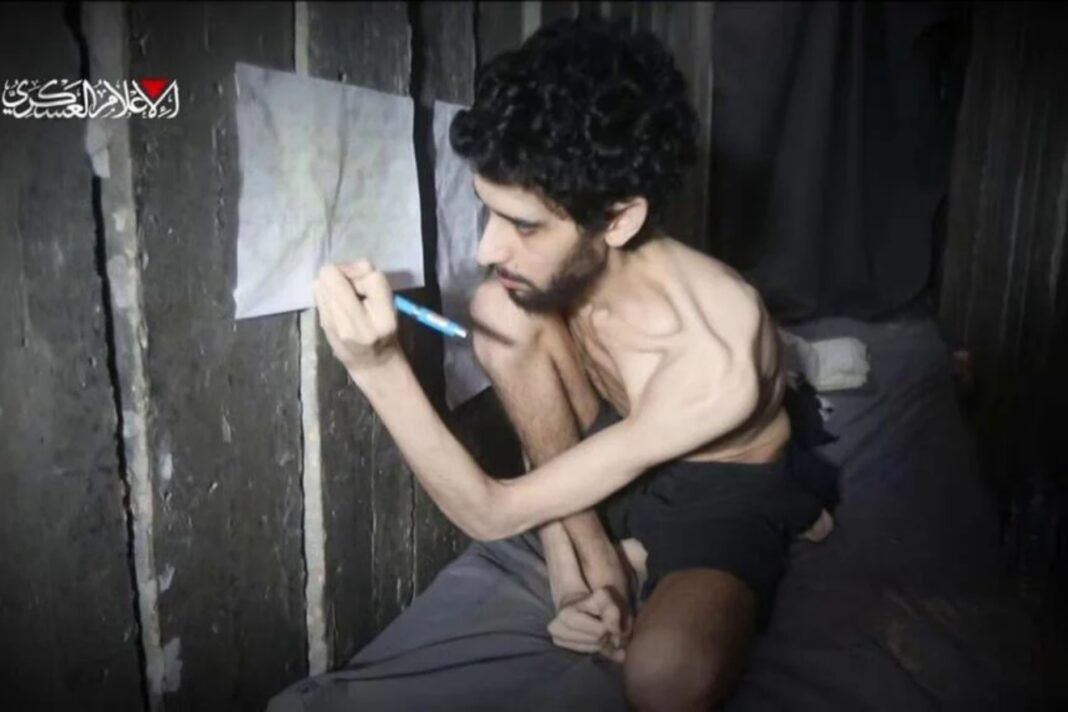
The living conditions described by the hostages were “inhumane.” They were kept in extremely crowded conditions, with up to six people stuffed into cells of about two square meters (21 sq. feet), with a ceiling at a height of about 5 feet.

The dietary regimen imposed on them amounted to deliberate starvation. It included one meal of pita bread or rice. On some days, no meal was provided.
“For the most part, the food was unfit for human consumption—stale and containing worms and insects. Water that was supplied was contaminated—sometimes seawater or unfiltered sewage water,” the report stated.
The abductees were forced to sleep on the tunnel floor or a hard floor without a mattress or blanket, among insects and pests. They described days and nights of freezing cold or extreme heat for weeks on end, depending on the season.
There was no possibility of maintaining basic personal hygiene in the absence of access to toilets and running water. Showering was every few months, in cold water and with a shared towel. Changing clothes was rare, if ever. Changing underwear was once every six months.
In the tunnels, a pit latrine dug by the abductees in their living space served as their bathroom. Above ground, restrictions were placed on the use of the toilets.
Transfers from one location to another were done suddenly, and included walking for miles, in complete darkness, or blindfolded, enveloped in a constant fear of death.
Due to prolonged starvation, the hostages had suffered a significant decrease in body weight (15% to 40%). The combination of malnutrition and immobility caused severe sarcopenia (a muscle disease characterized by the loss of muscle mass and strength), a decrease in bone density, and ongoing mental stress.
Signs of scurvy were also present, including bleeding gums, due to the low levels of vitamin C.
The survivors also suffered from a variety of injuries, including burns, fractures, irreversible nerve damage, shrapnel injuries, including to the chest and head, hearing damage and chronic tinnitus.
“Many returnees need painkillers on a daily basis. In addition, the bodies of some of the survivors are covered in scars to the point of requiring surgical treatment,” the report said.
Some had complex injuries to the musculoskeletal system, which include chronic pain in the jaw joint and structural injuries to the spine. In some cases, the damage is “irreversible, and may affect the functioning and quality of life of survivors of captivity for many years.”
The hostages also endured “severe and deliberate medical neglect,” were denied treatment for diseases, significant injuries and ongoing medical conditions. “They were almost completely denied access to adequate medical care,” according to the report.
When medical attention was provided, it was of the “most minimal kind, and included treatment with pills to reduce fever, and no antibiotic treatment, even when there were clear signs of severe infections.”
One hostage, who had an orthopedic issue, was reduced to dealing with it himself, an effort which caused him to lose consciousness.
In a third case, the hostage was given incorrect medication, which endangered him to the point where he risked long-term damage and even death.
“This medical neglect is a blatant violation of the Geneva Conventions and directly contributed to the deterioration in the health condition of the hostages and to chronic damage that requires prolonged rehabilitation and treatment that will accompany the captivity survivors all their lives,” the report said.
Hostages also suffered continual psychological abuse, with the captors using methods of “isolation, intimidation and repression.”
One hostage was held alone for more than 50 consecutive days while wounded. Two others were held in complete isolation for periods of more than a year.
“The captives testified that the prolonged isolation had serious psychological consequences, including feelings of anxiety and despair, abandonment, a loss of sense of time and reality to the point of detachment from the self,” the report said.
They also lived with a constant sense of danger. The captors would torment the hostages by pointing their guns at them, or pulling a pin out of a grenade and counting down to the last second before reinserting it. The captors enjoyed terrifying them, the hostages said, according to the report.
The continued captivity of the remaining hostages has impacted the rehabilitation and social reintegration of the survivors.
“The professional assessment is that as long as the trauma continues the collective psychotherapy and rehabilitation processes will be limited in effectiveness,” the report states.
“It is important to note that despite the enormous challenges, the survivors of captivity show impressive mental resilience and a desire to rebuild their lives. However, It is clear that the mental recovery process will be lengthy, complex, and will require long-term professional and community support.”