



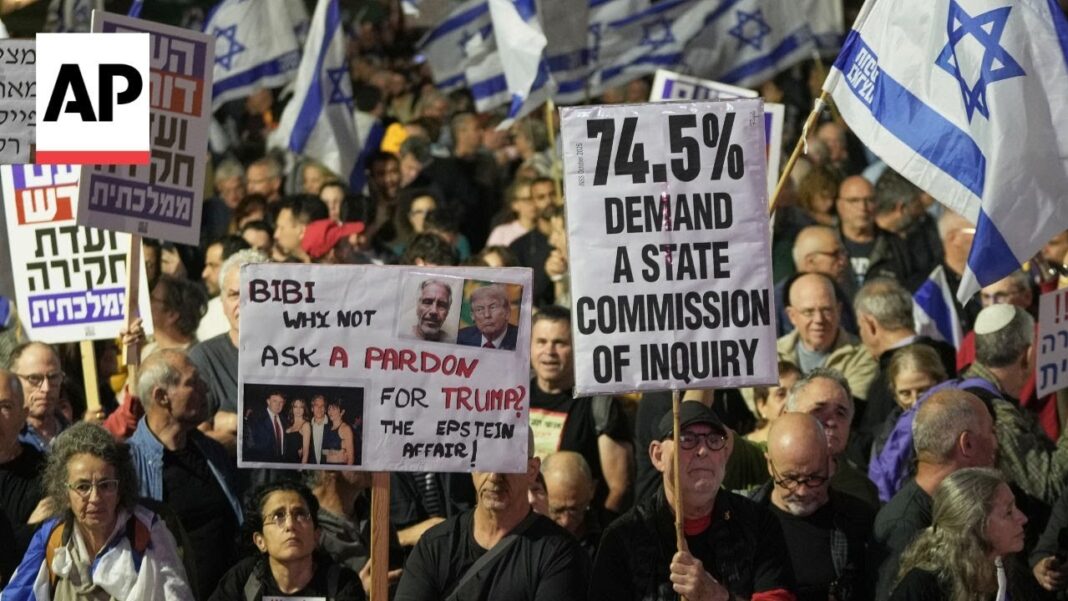
Israeli Government Approves Independent Inquiry Into October 7 Failures—But Sidesteps Formal State Commission
By: Ariella Haviv
The Israeli government has formally approved the establishment of an “independent” commission of inquiry to investigate the systemic failures that enabled the Hamas onslaught of October 7, 2023—a historic catastrophe that left Israelis demanding a full accounting at every level of national leadership. Yet the decision has already ignited fierce political backlash, as the commission will not be structured as a state commission of inquiry, the highest and most autonomous investigative body under Israeli law.
According to a report that appeared on Sunday on i24 News, critics say the move contradicts not only public expectations but also the explicit recommendation of the Supreme Court, which urged the government to convene a formal state commission endowed with broad, statutory powers. Instead, the inquiry’s mandate will be determined directly by government ministers, placing control in the hands of the very political leadership many citizens expect to be investigated.
Under the government’s resolution, the new panel will be granted “full investigative powers” and must be composed to ensure “the broadest possible public trust,” as reported by i24 News.
However, Prime Minister Benjamin Netanyahu will personally form a special ministerial committee charged with defining the inquiry’s parameters, including:
Which events and decisions may be investigated
The timeframe to be examined
The authority and enforcement tools granted to the commission
This ministerial group has 45 days to submit its recommendations. Only afterward will the commission officially begin its work.
Government officials have defended the structure, arguing that the body will have all the powers necessary to conduct a thorough investigation. Yet the absence of a formal statutory basis—alongside political control over its scope—has raised deep concerns about whether the inquiry will truly operate independently.
As i24 News recounts, the government has repeatedly resisted calls for a full inquiry since the attack.
Over the past year, the primary justifications shifted:
Initially, ministers claimed that a state commission could not function “during wartime,” despite precedents proving otherwise.
Later, some ministers accused Supreme Court President Isaac Amit of being incapable of appointing an impartial chairperson—a claim dismissed by legal experts as baseless and politically motivated.
Nevertheless, public and legal pressure intensified. On October 15, Israel’s High Court of Justice declared there was “no substantive argument” against establishing a state commission and gave the government 30 days to comply.
Instead of establishing the recommended statutory body, the government approved its alternative model—prompting accusations that it was attempting to limit oversight and shape the narrative surrounding one of the worst security failures in Israel’s history.
Prime Minister Netanyahu has consistently argued that the failures of October 7 reside primarily within Israel’s military and intelligence branches, not within the political echelon.
As i24 News has reported, Netanyahu has maintained this position despite widespread criticism from former military chiefs, intelligence veterans, and opposition leaders who insist that political decisions—particularly those regarding budget allocations, intelligence assessments, Gaza policy, warnings from the Shin Bet, and permissiveness toward Qatari-funded stabilization of Hamas—must be rigorously examined.
Netanyahu’s opponents say his framing is designed to shield him from scrutiny. They cite the fact that the ministerial committee he appoints will directly influence what the inquiry may or may not investigate.
Opposition leaders, civil rights groups, and families of October 7 victims have criticized the newly approved structure as insufficient and politically compromised.
As noted by i24 News, critics argue that:
A government-controlled panel cannot credibly investigate the government itself
Restricting the inquiry’s scope could prevent examination of political failures
The refusal to form a state commission signals a lack of commitment to full accountability
Several opposition lawmakers accused Netanyahu of “circumventing oversight” and “undermining public trust” by refusing an inquiry mechanism in which political leaders have no control over appointments or investigative powers.
Some bereaved families have announced plans to petition the Supreme Court again, claiming that the government’s alternative does not meet the legal standard set out in the Court’s October ruling.
A state commission of inquiry—the structure recommended by both the Supreme Court and legal experts—has unique features:
Appointed by the President of the Supreme Court, not politicians
Chaired by a sitting or retired Supreme Court justice
Empowered by statutory authority to subpoena witnesses, demand documents, and take testimony under oath
Entirely independent of political oversight
By contrast, the newly approved government-defined inquiry:
Is appointed by ministers
Has its mandate written by ministers
Has its scope limited by ministers
Has no statutory shield from political influence
As the i24 News report noted, opponents fear this structure could allow ministers to narrow the investigation’s focus to operational and military decisions while excluding or minimizing political responsibility.
The aftermath of the October 7 massacre continues to reverberate across Israeli society. The attack, which killed more Israelis in a single day than any event since the Holocaust, resulted in unprecedented calls for transparency and accountability.
According to the report on i24 News, a majority of Israelis have consistently supported the creation of a full state commission of inquiry, viewing it as essential to restoring trust in political leadership and national institutions.
For many, the government’s decision to establish a government-controlled body instead of a formal commission represents a significant breach of public expectation at a moment when national unity and clarity are needed most.
The ministerial committee now has six weeks to define the inquiry’s parameters. Only when its recommendations are submitted will the public know how deeply the panel will be permitted to probe the decisions leading up to October 7.
Whether Israelis—and the families of the victims—will accept the findings of a government-appointed inquiry remains uncertain.
As i24 News continues to report, the fierce debate over the structure of the investigation reflects a broader struggle over accountability, political power, and the urgent question of how the nation can prevent such a tragedy from ever occurring again.