



|
Getting your Trinity Audio player ready...
|
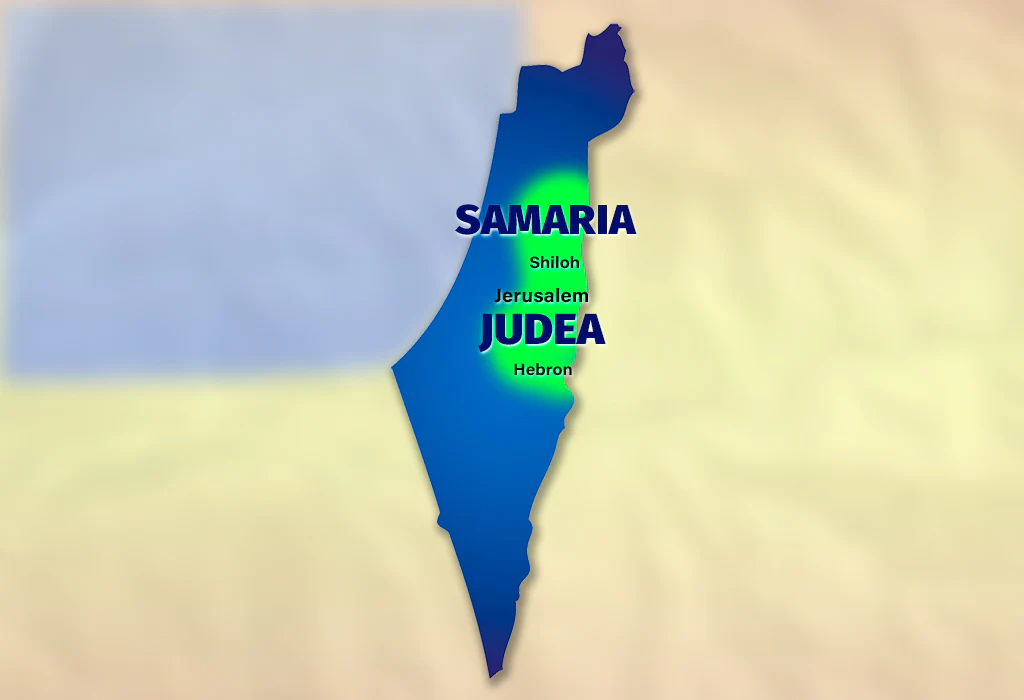
Israeli Cabinet Approves Far-Reaching Policy Shift Reshaping Judea and Samaria
By: Fern Sidman
In a decision of uncommon scope and consequence, Israel’s Security Cabinet on Sunday approved a suite of measures that amount to a profound reconfiguration of governance, land policy, and settlement development in Judea and Samaria. The resolutions, championed by Finance Minister Bezalel Smotrich and Defense Minister Israel Katz, mark what senior officials describe as a decisive shift from decades of provisionalism toward an architecture of permanence. As Israel National News reported on Sunday, the cabinet’s moves are designed to dismantle long-standing legal impediments inherited from prior regimes, normalize civilian life for Jewish residents, and embed settlement policy as a central pillar of the state’s administrative and strategic posture in the territories.
The language used by the architects of the policy leaves little doubt as to the ideological ambition animating the initiative. Smotrich framed the moment in starkly declarative terms, asserting that Israel is “deepening our roots across the Land of Israel and burying the idea of a Palestinian state.” Katz, for his part, cast the decisions as a consolidation of sovereignty in practice if not yet in formal declaration, declaring that settlement is being anchored “as an inseparable part of Israel’s government policy.” The Israel National News report underscored the historic register of such statements, situating them within a broader trend in which the government seeks to replace ad hoc arrangements with durable frameworks that integrate Judea and Samaria more closely into Israel’s civil and legal order.
At the heart of the cabinet’s decisions lies a recalibration of land governance. One of the most consequential measures is the opening of land registries in Judea and Samaria, which had long been classified and thus functionally opaque. The change is expected to inject a degree of transparency into a domain historically plagued by uncertainty, overlapping claims, and allegations of fraud. The registry’s opening could transform the local real estate landscape by clarifying ownership, enabling lawful transactions, and curtailing the shadow economy that has flourished amid legal ambiguity. For proponents, the registry is not merely a technical reform but a civilizational statement: land tenure, they argue, is a foundational element of modern governance, and its codification signals a transition from exceptionalism to normalcy.
Closely linked to this reform is the repeal of Jordanian-era laws that had prohibited land sales to Jews. These statutes, vestiges of a prior sovereign framework, had compelled Jewish purchasers to navigate labyrinthine channels of permits and intermediaries, often at considerable financial and legal risk. By annulling these provisions, the cabinet has removed what Smotrich described as “racist Jordanian laws” that relegated Jewish residents to a second-class status in the property market.
The Israel National News report framed this repeal as both a symbolic and practical watershed: symbolically, it repudiates a legal architecture rooted in discrimination; practically, it places Jewish purchasers on the same legal footing in Judea and Samaria as in Tel Aviv or Jerusalem. The government contends that this harmonization of property law will catalyze lawful development while diminishing the reliance on opaque brokerage practices.
The removal of additional bureaucratic barriers in the local real estate market complements these changes, signaling a broader campaign to streamline civil life for Jewish communities. Over the years, layers of regulation had accumulated, often justified by security considerations but criticized by residents as instruments of delay and deterrence. Israel National News has chronicled the frustration of settlers who found themselves navigating an administrative maze to obtain building permits or register transactions. The cabinet’s decisions aim to replace this patchwork with a more predictable and standardized system, thereby accelerating development while, in the government’s telling, preserving essential security oversight.
Beyond land transactions, the cabinet’s resolutions extend to the governance of sensitive and symbolically charged sites, notably Hebron and Rachel’s Tomb. In Hebron, planning and building authority within the Jewish community, including areas surrounding the Cave of the Patriarchs and other holy sites, is being transferred from the Palestinian municipality to Israel’s Civil Administration. A dedicated municipal authority will now oversee services, infrastructure, and hazard management. The Israel National News report highlighted the significance of this move, noting that Hebron’s unique mosaic of populations and sacred spaces has long rendered it a flashpoint of jurisdictional complexity.
By centralizing authority within an Israeli administrative framework, the government aims to ensure consistent service provision and security management for Jewish residents and pilgrims, even as critics warn of heightened tensions.
Rachel’s Tomb, long situated within the municipal boundaries of Bethlehem, is set to receive a newly established municipal body tasked with sanitation, maintenance, and infrastructure. For years, these services had languished amid jurisdictional disputes and security constraints. The Israel National News report documented the site’s neglect and the logistical challenges faced by worshippers and administrators alike. The creation of a dedicated authority is intended to rectify these deficiencies, embedding the site within a structured framework of governance that proponents say will safeguard access and preserve the dignity of one of Judaism’s most venerated locations.
The cabinet also approved an expansion of enforcement into Areas A and B, focusing on environmental violations, water offenses, and damage to archaeological heritage sites. While security responsibilities in these areas have historically been circumscribed, the new policy reflects an assertion that stewardship of land and heritage transcends the lines drawn by interim accords. Officials argue such enforcement is necessary to protect fragile ecosystems and irreplaceable antiquities from degradation and illicit activity. The move signals a willingness to exercise regulatory authority in spheres previously considered beyond Israel’s routine administrative reach, further blurring the distinction between civil governance within and beyond the Green Line.
Perhaps the most strategically resonant decision concerns the revival of the Land Purchase Committee, a state-led mechanism dormant for nearly two decades. The committee’s reactivation empowers the government to engage proactively in land acquisition, securing reserves for future settlement development. In the lexicon of policy planning, this represents a shift from reactive accommodation to anticipatory consolidation. The committee’s revival is intended to ensure continuity of development in the face of demographic growth and strategic imperatives. By institutionalizing land acquisition, the government seeks to preempt fragmentation and preserve contiguity among Jewish communities.
The rhetoric accompanying these decisions situates them within a broader narrative of national renewal and security doctrine. Katz characterized Judea and Samaria as “the heart of the land,” arguing that strengthening Israel’s hold there constitutes a security, national, and Zionist interest of the highest order. The Israel National News report contextualized this framing within a long-standing current of Israeli political thought that views territorial depth and demographic presence as integral to strategic resilience. Smotrich’s assertion that the policies will “bury the idea of a Palestinian state” crystallizes the ideological stakes, signaling an explicit departure from the paradigms that have guided diplomatic discourse for decades.
Supporters of the cabinet’s decisions contend that the measures rectify historical inequities and bring coherence to a governance regime long characterized by legal anomalies. They argue that the normalization of property law, the empowerment of municipal authorities at Jewish holy sites, and the revival of state-led land acquisition collectively amount to a long-overdue alignment of civil administration with lived reality. Israel National News has given voice to residents who view these reforms as the belated recognition of their permanence, after years of existing in a liminal legal space that, in their telling, undermined both personal security and communal development.
Critics, however, caution that the policies risk exacerbating tensions and foreclosing avenues of diplomatic compromise. They warn that the expansion of enforcement into Areas A and B, the reconfiguration of governance in Hebron, and the explicit rejection of a Palestinian state framework may inflame local resentments and attract international scrutiny. Such concerns are likely to reverberate in foreign capitals and multilateral forums, where the decisions may be interpreted as unilateral alterations to the status quo. Yet within the government, the prevailing sentiment appears to be that ambiguity has outlived its utility, and that clarity—however contentious—is preferable to perpetuating provisional arrangements.
The cabinet’s decisions thus represent not merely a policy shift but an epistemic transformation in how the state conceives its role in Judea and Samaria. By codifying land rights, streamlining bureaucratic processes, and asserting administrative authority over key sites, the government is recasting the territories from zones of exception into domains of normalized governance. The Israel National News report framed this moment as one in which law, land, and ideology converge, producing a reorientation whose ramifications will extend far beyond the immediate administrative reforms.
Whether these measures will yield the stability and coherence their proponents envision remains an open question. What is clear is that the cabinet has chosen a path of decisiveness over deferral, embedding settlement policy within the core of statecraft and articulating a vision of permanence that redefines the parameters of Israel’s engagement with Judea and Samaria. In doing so, the government has inscribed its priorities not only in political rhetoric but in the very legal and administrative structures that govern the land—an inscription likely to shape the region’s trajectory for years, if not decades, to come.

Very great!!
The God of Israel is the only true God, and He fulfills His Word!
Jeremiah 32:37-44.
Shalom!