



|
Getting your Trinity Audio player ready...
|
By: Fern Sidman
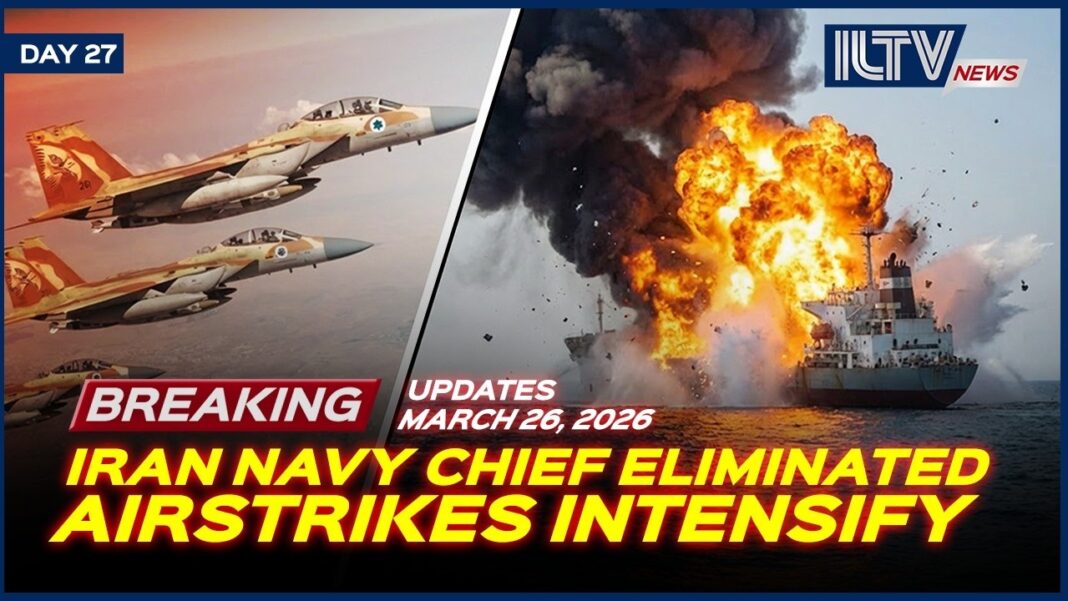
In a meticulously coordinated and far-reaching military operation that underscores the intensifying confrontation between Jerusalem and Tehran, the Israeli Air Force on Thursday launched a sweeping series of overnight strikes deep within Iranian territory, targeting critical components of the Islamic Republic’s military infrastructure. The operation, described by Israeli defense officials as both precise and preemptive, represents one of the most consequential escalations in the ongoing conflict, delivering a significant blow to Iran’s capacity to project force both regionally and beyond.
The strikes, carried out under the cover of darkness, were directed at a wide constellation of high-value targets, including ballistic missile launch sites, advanced weapons production facilities, and operational personnel reportedly preparing imminent attacks against Israel. According to the Israel Defense Forces, the campaign was driven by actionable intelligence indicating that Iranian military units were in the final stages of preparing missile fire toward Israeli territory.
Central to the operation was a doctrine of anticipatory defense. Israeli military officials emphasized that the strikes were not merely retaliatory but designed to neutralize an immediate and credible threat. Intelligence gathered by the Military Intelligence Directorate and the Naval Intelligence Division reportedly identified Iranian soldiers affiliated with the country’s ballistic missile array assembled within a structure in Tehran.
Within minutes of confirming their presence and intent, Israeli aircraft executed a targeted strike that eliminated the personnel before they could initiate their planned attack. This rapid sequence—from identification to neutralization—illustrates the operational tempo and technological sophistication that have come to define Israel’s modern military doctrine.
Such actions, Israeli officials argue, are necessitated by the evolving nature of warfare in the region, where the margin between preparation and execution can be measured in minutes. The ability to disrupt adversarial operations at this critical juncture is seen as essential to maintaining strategic deterrence.
Beyond the immediate tactical objective of thwarting an impending missile launch, the operation sought to degrade Iran’s broader military-industrial complex. In the Tehran metropolitan area, Israeli aircraft struck dozens of facilities associated with the production and assembly of advanced weaponry.
Among the targets were sites dedicated to the manufacture of key components for ballistic missiles, including propulsion systems and guidance technologies. Additional facilities involved in the production of batteries and other essential elements for a range of weapons systems were also destroyed. These components, though less visible than missile launchers themselves, are indispensable to the functioning of modern military hardware.
Particularly notable was the targeting of a production site linked to the Islamic Revolutionary Guard Corps, the elite military organization that serves as both a defender of the regime and a principal architect of Iran’s regional military strategy. By striking these facilities, Israel aims not only to disrupt current operations but to impede Iran’s ability to regenerate its capabilities over time.
A critical aspect of the operation involved the systematic dismantling of Iran’s air defense and surveillance infrastructure. Israeli aircraft targeted anti-aircraft systems stored at a military base in the Tehran area, effectively blinding and disarming key elements of Iran’s defensive network.
In parallel, strikes were conducted against surveillance posts operated by both the Islamic Revolutionary Guard Corps and the regular Iranian army. These installations play a vital role in early warning and target acquisition, enabling Iran to detect and respond to incoming threats.
By degrading these systems, Israel not only facilitated the success of its current operation but also created vulnerabilities that could be exploited in future engagements. The destruction of air defense assets is widely regarded as a prerequisite for sustained aerial operations, and its inclusion in this campaign underscores the comprehensive nature of the offensive.
Perhaps the most strategically significant component of the operation was the strike on a central facility in the city of Yazd, described by Israeli officials as the nucleus of Iran’s naval missile and mine production. This site, according to military assessments, was responsible for the planning, development, assembly, and storage of advanced munitions designed for deployment across a range of platforms, including cruise vessels, submarines, and helicopters.
The weapons produced at this facility are intended to target both mobile and stationary maritime assets, posing a direct threat to shipping lanes and naval forces in the region. Given the strategic importance of maritime routes—particularly those associated with energy transport—the neutralization of this facility carries implications that extend far beyond the immediate theater of conflict.
Israeli officials characterized the strike as a “significant blow” to Iran’s naval capabilities, noting that the facility represented a central hub in the country’s efforts to project power at sea. The destruction of such a site not only disrupts current production but also complicates Iran’s ability to develop and deploy advanced maritime weapons in the future.
A defining feature of the operation was its reliance on high-quality intelligence. The coordination between various branches of Israel’s intelligence apparatus enabled a level of precision that minimized collateral damage while maximizing operational impact.
The integration of real-time intelligence with advanced targeting systems allowed Israeli forces to strike multiple targets across a vast geographic area within a compressed timeframe. This capability reflects a broader trend in modern warfare, where the fusion of information and firepower has become a decisive factor.
Israeli officials have repeatedly emphasized that such operations are contingent upon the accuracy and timeliness of intelligence. In this instance, the ability to identify both fixed infrastructure and mobile personnel targets was instrumental in achieving the operation’s objectives.
The scale and scope of the strikes are likely to reverberate throughout the region and beyond. Iran’s military infrastructure, particularly its missile and naval capabilities, has long been viewed as a cornerstone of its strategic posture. The degradation of these assets represents a significant setback for Tehran and may alter the calculus of regional actors.
At the same time, the operation underscores the risks inherent in the current trajectory of the conflict. Each escalation carries the potential for further retaliation, raising the specter of a broader confrontation that could draw in additional actors and destabilize an already volatile region.
For Israel, the strikes serve as both a demonstration of capability and a reaffirmation of its willingness to act decisively in the face of perceived threats. For Iran, they represent a stark reminder of the vulnerabilities within its military infrastructure, even deep within its own territory.
Israeli military officials have made clear that the operation is part of a broader campaign aimed at systematically dismantling Iran’s capacity to threaten Israeli civilians and interests. The emphasis on targeting production facilities, launch sites, and operational personnel reflects a strategy of relentless pressure, designed to erode the adversary’s capabilities over time.
This approach, while effective in degrading military assets, also raises complex questions about sustainability and long-term outcomes. The destruction of infrastructure can be reversed, albeit at significant cost and effort, and the cycle of attack and reconstruction may continue indefinitely.
The overnight strikes on Iran represent a pivotal moment in an expanding and increasingly complex conflict. By targeting the very foundations of Iran’s military capabilities, Israel has delivered a powerful message about its strategic priorities and its willingness to act preemptively.
Yet the operation also highlights the precarious balance that defines the current situation. As both sides navigate the interplay of military action and diplomatic maneuvering, the risk of miscalculation remains ever present.
In this environment, each strike, each decision, carries consequences that extend far beyond the immediate battlefield. The events of this night will not only shape the trajectory of the conflict but also influence the broader dynamics of power and security in the Middle East for years to come.
