



|
Getting your Trinity Audio player ready...
|
By: Fern Sidman
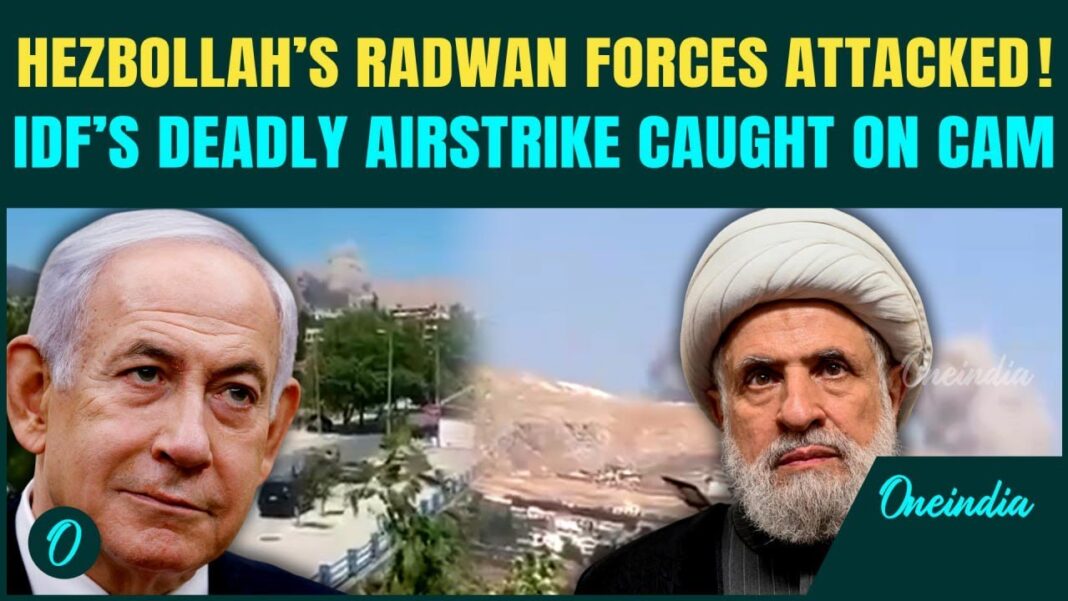
The Israel Defense Forces (IDF) announced Tuesday morning that the Israeli Air Force (IAF) launched a broad wave of precision airstrikes against Hezbollah targets in Southern Lebanon’s Beqaa region. According to the IDF, the operation specifically targeted infrastructure and personnel associated with Hezbollah’s Radwan Force, the elite unit tasked with infiltrating Israeli territory, executing cross-border attacks, and carrying out abductions as part of the terror group’s long-standing “Conquer the Galilee” strategy.
The Jewish News Syndicate (JNS) reported that IAF aircraft struck a series of training camps and weapons depots used by Hezbollah operatives. The IDF emphasized that these camps served as key hubs where Hezbollah militants gathered to conduct exercises, perform live-fire drills, and prepare for potential attacks against Israeli military forces and civilian areas in the northern sector.
“The camps are used by the Hezbollah terror group to train and prepare operatives for attacks against IDF forces and the State of Israel,” the IDF stated in its official announcement, as cited by JNS. “As part of this training, the terrorists conduct shooting drills and exercises with various types of weapons.”
According to the IDF, the arms depots and operational camps targeted in the strikes represent “a blatant violation of the understandings between Israel and Lebanon” and posed an imminent threat to Israeli security. The military further stressed its commitment to maintaining operational superiority along the northern border and preventing Hezbollah from reestablishing offensive capabilities in southern Lebanon.
“The IDF will continue to operate with force to eliminate any threat to the State of Israel and will prevent the rehabilitation of the Hezbollah terrorist organization,” the military underscored in a statement quoted by JNS.
Israeli Defense Minister Yoav Gallant reinforced this position, describing the airstrikes as a “clear message” to Hezbollah leadership and the Lebanese government. Gallant warned that Hezbollah’s attempts to rebuild its operational capacities through the Radwan Force would be met with decisive military action.
“Every terrorist will be targeted, and every threat to the residents of the State of Israel will be thwarted,” Gallant said, according to the JNS report. “We will respond with maximum force to any attempt at rebuilding Hezbollah’s terror infrastructure.”
The latest military operation comes in the context of heightened vigilance since the signing of a ceasefire agreement between Jerusalem and Beirut on November 26, 2024. That agreement aimed to end over a year of cross-border hostilities sparked by Hezbollah’s support for Hamas following the October 7, 2023, attacks on Israel. According to the information provided in the JNS report, the ceasefire deal included explicit provisions to halt Hezbollah’s military build-up in southern Lebanon and prevent further aggression against Israel.
However, despite the ceasefire, Hezbollah has repeatedly tested the agreement’s boundaries. The IDF has maintained a posture of proactive defense, conducting frequent raids and airstrikes designed to dismantle terror infrastructure before it could pose a renewed threat. As the JNS report noted, these operations are part of Israel’s broader strategy to enforce the terms of the ceasefire and maintain security along its northern frontier.
Just days before the latest strikes, on Friday, the IAF targeted and eliminated senior Hezbollah operative Muhammad Shoaib in an airstrike near Al-Numairiyah in Southern Lebanon. According to the IDF, Shoaib played a central role in a weapons smuggling network facilitating the transfer of arms from Iran into northern Israel and Judea and Samaria. JNS highlights that Israeli defense officials regarded Shoaib as a “significant” figure within Hezbollah’s logistics and smuggling apparatus.
The same weekend, Israeli airstrikes also reportedly neutralized a Hezbollah anti-tank unit operative in the Khiam region of southeastern Lebanon, further demonstrating the IDF’s ongoing campaign against Hezbollah’s military build-up in areas proximate to the Israeli border.
JNS reported that the threat posed by the Radwan Force remains a central focus of Israeli security policy in the north. The unit is specifically trained for infiltration missions aimed at capturing territory inside Israel and abducting soldiers or civilians — objectives the IDF has stated it will not allow Hezbollah to pursue.
Despite the ceasefire and repeated Israeli warnings, Hezbollah Secretary-General Naim Qassem has publicly rejected calls for the group to disarm in accordance with the truce terms. Qassem declared last week that Hezbollah was “rebuilding, recovering, and ready now” for future confrontations with the IDF, a statement viewed by Israeli officials as a direct challenge to the ceasefire agreement and regional stability.
Israeli defense leaders regard such declarations as evidence of Hezbollah’s continued reliance on Iranian backing and its determination to maintain an offensive posture against the Jewish state. Israeli military officials have repeatedly stated that any violation of the ceasefire—especially activities linked to the Radwan Force or weapons smuggling—would prompt swift and decisive military action.
As the situation along the northern border remains fluid, the JNS report noted that Israel’s government and military leadership continue to monitor developments closely, prepared to escalate operations if Hezbollah persists in rebuilding its military infrastructure or engaging in hostile actions.
The strikes carried out Tuesday call attention to Israel’s strategic approach of deterrence through precision strikes, aimed at degrading Hezbollah’s operational capabilities without allowing the situation to escalate into a broader conflict. The IDF’s message remains consistent: Israel will act unilaterally if necessary to protect its citizens and enforce its security red lines in the face of ongoing threats from Hezbollah and its Iranian sponsors.
With the ceasefire agreement still officially in place but repeatedly tested, the Israeli-Lebanese frontier remains a flashpoint in the broader Middle East conflict dynamic. The international community’s response—and Lebanon’s willingness to rein in Hezbollah’s terrorist activities—will be key factors in determining whether the fragile calm can hold or if further escalations are on the horizon.

yoave gallant is notthe israeli defense minister