



|
Getting your Trinity Audio player ready...
|
Israel Weighs Annexation of Judea & Samaria Amid Diplomatic Fallout From European Recognition of Palestinian Statehood
By: Fern Sidman
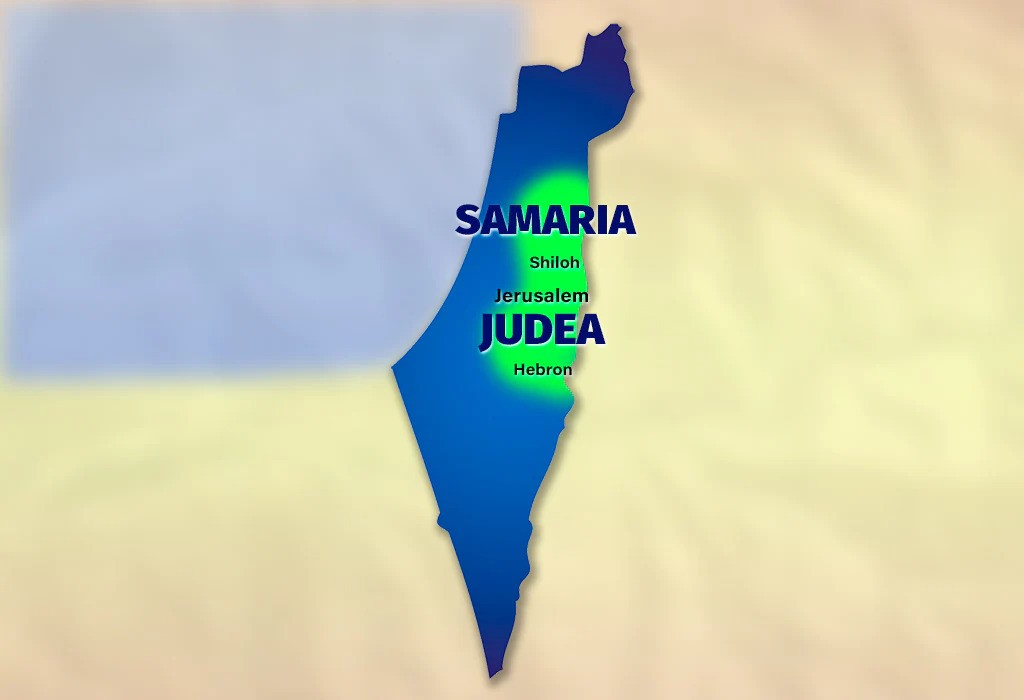
Israel is considering a dramatic policy shift that could see parts of Judea and S, amaria formally annexed in response to recent moves by France and other European states to recognize a Palestinian state, according to several senior Israeli officials. As reported by Reuters, the proposal is expected to be discussed at a meeting of Prime Minister Benjamin Netanyahu’s security cabinet late Sunday, where the ongoing war in Gaza will dominate the agenda but where annexation may surface as a potential long-term strategic countermeasure.
Officials told Reuters that while no final decision has been made, the extension of Israeli sovereignty to sections of Judea and Samaria — effectively annexation of land captured during the 1967 Middle East war — is now being actively debated within the government’s top decision-making circle. The contours of such a measure remain unclear: discussions may focus on Jewish settlements, specific geographic zones such as the Jordan Valley, or a combination of areas. Any legislative follow-through would be protracted and fraught with both domestic and international consequences.
As The Algemeiner report on Sunday reminded readers, this is not the first time Netanyahu has flirted with annexation. In 2020, he pledged to apply Israeli sovereignty over Jewish settlements and the Jordan Valley, only to abandon the plan as part of the Trump-brokered Abraham Accords that normalized Israel’s ties with the United Arab Emirates and Bahrain. That strategic pivot highlighted the delicate balance Israel must strike between pursuing territorial ambitions and securing broader regional alliances.
The renewed debate, fueled by the diplomatic recognition of Palestine in parts of Europe, highlights Israel’s enduring frustration with efforts to bypass direct negotiations with the Palestinians. According to the information provided in The Algemeiner report, Israeli officials view the recent European gestures as undermining Israel’s security and incentivizing Palestinian unilateralism.
Any annexation initiative would likely trigger sharp condemnation from the Palestinians, who regard Judea and Samaria, also known as the West Bank as the heartland of a future independent state. As Reuters reported, officials in Ramallah declined immediate comment, but Palestinian President Mahmoud Abbas has consistently denounced Israeli moves that seek to cement permanent control over what he perceives to be occupied land.
Beyond Palestinian reaction, the Arab world and key Western allies would almost certainly voice strong objections. European capitals that have recognized Palestine are already at odds with Jerusalem, and further annexation could prompt retaliatory diplomatic or economic measures.
Reuters noted that the U.S. stance on annexation remains ambiguous. President Donald Trump’s administration has yet to comment on the latest reports, and both the White House and State Department declined to respond to questions posed late Friday. In his first term, Trump adopted a far more sympathetic view of Israeli sovereignty claims in contested areas, most notably recognizing Jerusalem as Israel’s capital and Israeli sovereignty over the Golan Heights. Whether his administration would support, tolerate, or discourage an annexation of Judea and Samaria remains an open question.
For now, Netanyahu’s office has avoided clarifying the prime minister’s position, leaving speculation to swirl. According to the information provided in The Algemeiner report, Israeli Foreign Minister Gideon Saar also declined to confirm whether he had raised annexation with Secretary of State Marco Rubio during his visit to Washington last week. The absence of clear public statements suggests that Israel’s leadership is carefully calibrating its message, wary of triggering diplomatic blowback before any decision is formally taken.
Within the Israeli government, annexation remains both a political rallying cry and a potential wedge issue. Members of Netanyahu’s coalition, particularly from the nationalist and religious right, have long pressed for sovereignty over parts of Judea and Samaria. But such a step could exacerbate tensions with Israel’s Western allies, at a moment when Jerusalem is also striving to maintain unified backing for its war effort in Gaza.
The current deliberations unfold against the backdrop of the ongoing war in Gaza, now approaching its second year. The conflict, ignited by Hamas’s October 7 massacre in southern Israel, has dramatically reshaped Israeli political priorities. As Reuters reported, the security cabinet session on Sunday is primarily expected to review military plans for Gaza, but annexation of territory in Judea and Samaria has been floated as a potential long-term strategic answer to perceived erosion of Israel’s diplomatic standing.
According to the report in The Algemeiner, some ministers argue that European recognition of Palestinian statehood rewards terrorism and undermines Israel’s security. For them, annexation would not only send a defiant message to Europe but also create irreversible facts on the ground that safeguard Israel’s strategic depth.
For the Palestinians, annexation would represent the ultimate betrayal of their hopes for a negotiated two-state solution. The West Bank, along with Gaza and East Jerusalem, is central to Palestinian statehood aspirations. Moves to extend Israeli sovereignty there would be viewed not merely as provocative but as existentially threatening to the viability of any future Palestinian state.
As The Algemeiner report emphasized, Palestinian leaders argue that unilateral annexation would violate international law, as well as existing accords between Israel and the Palestinian Authority. It would also accelerate the deterioration of already frayed relations, potentially leading to new waves of unrest across Judea and Samaria and beyond.
The role of the United States looms large. In 2020, Trump’s administration appeared open to annexation as part of its broader “Peace to Prosperity” plan, though the idea was eventually sidelined. Now, as the Reuters report pointed out, the U.S. government’s silence on the current annexation talk is notable. Trump’s allies in Congress and among evangelical and conservative groups have historically cheered Israeli sovereignty moves, but broader American opinion, especially among Democrats and centrist Republicans, remains divided.
The immediate trigger for Israel’s annexation debate — France and other European states recognizing Palestine — calls attention to how symbolic gestures abroad can ricochet into tangible policy shifts in Jerusalem. The Algemeiner report noted that Israeli officials were incensed by a premature recognition that emboldens Hamas and undermines Israel’s deterrence. By considering annexation, Netanyahu’s government signals that it will not passively accept international moves it perceives as hostile.
However, as Reuters reported, the calculus is complex: annexation may rally nationalist support at home, but it risks deepening Israel’s diplomatic isolation abroad.
Israel now finds itself at a pivotal crossroads. The security cabinet’s deliberations, while perhaps not yielding immediate action, reflect a government wrestling with profound strategic choices. Annexation of parts of Judea and Samaria would mark an historic juncture and a watershed moment in Israel’s history.
As Reuters meticulously documented, the questions of scope, timing, and feasibility remain unresolved. As The Algemeiner report underscored, the very fact that annexation is once again under serious consideration reveals the intensity of Israel’s frustration with Europe and its determination to chart a defiant course in the face of international criticism.
Whether this remains political posturing or evolves into concrete policy will depend on the calculations of Netanyahu and his closest advisers, the reaction of Washington, and the broader trajectory of the Gaza war. What is certain is that the debate over annexation — long simmering on Israel’s political margins — has returned to center stage at one of the most volatile moments in the nation’s history.

Just do it already. The world will hate us either way. The wrong that was done in 2005 needs to be fixed, and this is how to fix it. Get that land back!!!