



|
Getting your Trinity Audio player ready...
|
Israel Targets Hezbollah Weapons Production in Beqaa Valley: A Strategic Battle Over Precision Missiles
By: Fern Sidman
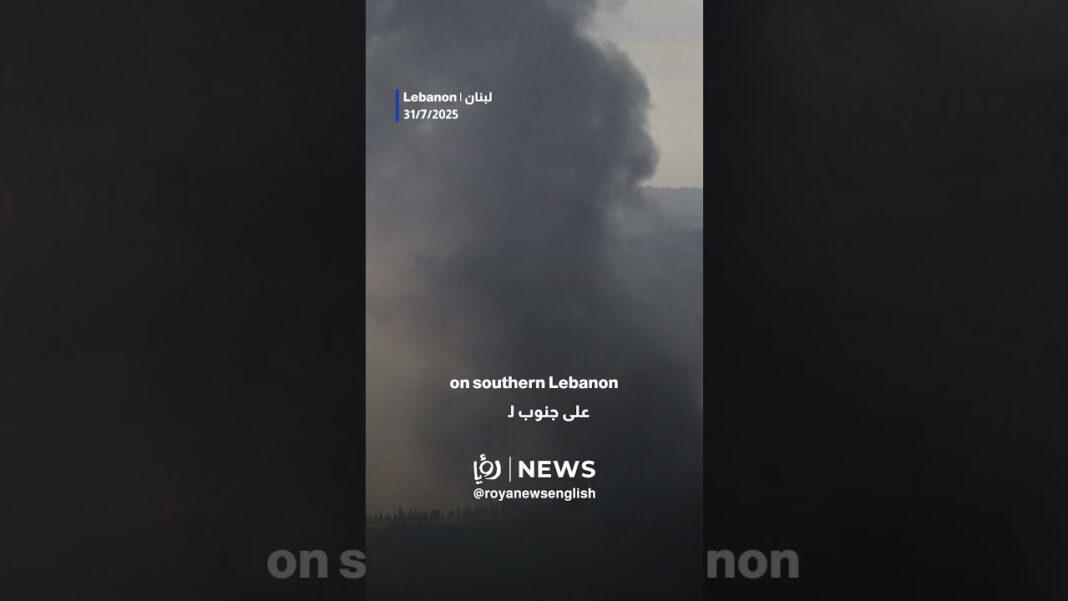
Israeli Defense Minister Israel Katz confirmed on Thursday that the Israel Defense Forces (IDF) carried out precision strikes on Hezbollah sites in Lebanon, targeting what officials described as the group’s most significant missile manufacturing facility. The operation, which included additional strikes on Hezbollah infrastructure across the country, underscores the deepening confrontation between Israel and the Iran-backed militia over the future balance of power along the northern frontier.
At the center of the latest strikes is a missile production plant in the eastern Beqaa Valley, identified by Israel as Hezbollah’s largest weapons manufacturing site. The facility, according to Israeli defense officials, has long been critical to Hezbollah’s efforts to develop an arsenal of precision-guided munitions (PGMs) capable of striking deep inside Israel with deadly accuracy.
The Beqaa Valley, a fertile region near Lebanon’s border with Syria, has historically been a logistical hub for Hezbollah’s operations. Its geographic depth, coupled with porous cross-border links to Syria, provides the group with both concealment and resupply routes. Israeli intelligence has frequently cited the Beqaa Valley as a staging ground for arms transfers facilitated by Iran, often routed through Damascus before making their way to Hezbollah-controlled facilities in Lebanon.
The targeted plant has reportedly been hit on multiple occasions, including after the November ceasefire, reflecting Israel’s insistence that Hezbollah’s manufacturing capability must remain disrupted. Military officials argue that preventing Hezbollah from acquiring precision missiles is essential to ensuring Israel’s long-term security.
For more than a decade, Israel has regarded Hezbollah’s pursuit of precision-guided weapons as a red line. Unlike conventional rockets, PGMs are equipped with advanced navigation systems that allow them to strike within meters of their intended targets.
Israeli officials fear that even a relatively small arsenal of such missiles could threaten critical infrastructure, including power plants, military bases, and urban centers. While Hezbollah already possesses an estimated arsenal of over 100,000 rockets and missiles, most are unguided. The development of an indigenous manufacturing capability, however, would allow the group to bypass Israeli interdiction efforts that have historically focused on preventing the transfer of weapons from Iran via Syria.
Defense Minister Katz’s statement on Thursday reflected this longstanding concern:
“Any attempt by the terrorist organization to restore, reestablish itself, or pose a threat, will be met with uncompromising force.”
This line echoes years of Israeli rhetoric stressing that the precision missile project represents not only a tactical threat but also a potential strategic game-changer in the balance of power.
The confirmed strike in the Beqaa Valley was part of a broader series of operations targeting Hezbollah infrastructure. According to Katz, additional sites where Hezbollah operatives were working to restore capabilities were also struck. These include smaller logistical hubs, warehouses, and suspected command centers.
The IDF has framed these operations as part of its ongoing “campaign between wars” (mabam) strategy, aimed at degrading the capabilities of adversaries without triggering all-out conflict. This approach has seen Israel conduct hundreds of covert and overt strikes in Syria and Lebanon over the past decade, targeting weapons shipments, training facilities, and command nodes.
In practice, Thursday’s strikes illustrate how Israel’s campaign has now extended into Lebanon itself, beyond the more frequent targeting of arms convoys in Syria. The Beqaa Valley’s proximity to the Syrian border and its role in Hezbollah’s domestic weapons production make it particularly vulnerable to Israeli action.
Hezbollah has long touted its arsenal as a deterrent against Israel, framing its growing capabilities as part of a broader “resistance axis” led by Iran. However, the group faces both practical and political constraints.
On the one hand, Hezbollah’s leadership is under pressure to demonstrate resilience in the face of repeated Israeli strikes. On the other, Lebanon’s dire economic crisis and political paralysis limit the group’s ability to escalate into full-scale war. Lebanese civilians, already struggling under collapsing infrastructure and financial turmoil, remain wary of renewed conflict that could devastate the country further.
Nonetheless, Hezbollah has invested heavily in the precision project, recognizing that even a modest capability could serve as a strategic deterrent against Israel. The group’s emphasis on domestic manufacturing reflects an effort to insulate its arsenal from Israeli interdiction campaigns.
Iran’s role looms large over the confrontation. Tehran has for years sought to enhance Hezbollah’s arsenal as part of its regional strategy to encircle Israel with heavily armed proxies. According to Israeli assessments, Iranian advisers have provided technical expertise and equipment to help Hezbollah establish local production lines in Lebanon.
This assistance has included the transfer of specialized components for missile guidance systems, which can be retrofitted onto existing stockpiles of unguided rockets. Israeli intelligence officials have frequently warned that the spread of such technology could fundamentally alter the military balance in the region.
By striking facilities such as the one in the Beqaa Valley, Israel aims not only to degrade Hezbollah’s capabilities but also to send a message to Tehran that its regional ambitions will face determined resistance.
The latest strikes also highlight the tenuous nature of the November ceasefire, which temporarily reduced hostilities but failed to resolve underlying tensions. Since the ceasefire, sporadic exchanges of fire have continued along the Israel-Lebanon border, with Hezbollah launching rockets and anti-tank missiles and the IDF responding with artillery and airstrikes.
Israeli officials have repeatedly accused Hezbollah of using lulls in fighting to rebuild damaged infrastructure and expand its missile capabilities. Thursday’s strikes appear to confirm these assessments, as the sites targeted were described as locations where Hezbollah was attempting to “restore” its operational capacity.
While Israel frames its actions as defensive and preemptive, the strikes risk triggering escalation with Hezbollah. The group has historically responded to high-profile attacks on its infrastructure with retaliatory fire, raising the possibility of renewed border clashes.
Analysts note that both sides are engaged in a careful balancing act: Israel seeks to limit Hezbollah’s capabilities without sparking a wider war, while Hezbollah seeks to maintain its deterrent image without dragging Lebanon into another devastating conflict.
Still, the continued focus on the Beqaa Valley — far from the immediate border zone — demonstrates Israel’s willingness to expand its operational envelope inside Lebanon, a move that Hezbollah may find increasingly difficult to ignore.
The confrontation between Israel and Hezbollah carries broader implications for regional security. With Iran continuing to project influence through its network of proxies, including Hezbollah in Lebanon, the Houthis in Yemen, and Shi’a militias in Iraq and Syria, Israel sees itself as facing a multi-front challenge.
The United States has generally supported Israel’s right to self-defense while urging restraint to prevent escalation. European governments, meanwhile, have expressed concern about the humanitarian consequences of renewed conflict in Lebanon, where over a million refugees already strain the country’s fragile social fabric.
For Israel, however, the stakes are clear. Allowing Hezbollah to establish a robust precision missile arsenal could, in the eyes of Israeli strategists, fundamentally alter the deterrence equation. As one senior defense official put it in an earlier briefing, “One accurate missile hitting Tel Aviv is worth more to Hezbollah than a hundred unguided rockets.”
The confirmed strikes on Hezbollah’s Beqaa Valley missile production facility and related sites represent more than tactical battlefield maneuvers. They reflect a strategic struggle over the future military balance between Israel and its most formidable non-state adversary.
By targeting the infrastructure behind Hezbollah’s precision missile project, Israel is seeking to prevent a shift that could undermine its security for years to come. Defense Minister Katz’s uncompromising message signals that Israel intends to act decisively, regardless of the risks of escalation.
As the volatile post-ceasefire environment persists, the Beqaa Valley strikes serve as a reminder that the northern front remains one of the most dangerous flashpoints in the Middle East — a theater where local clashes intertwine with regional rivalries, and where the balance of deterrence hangs precariously on the ability of both sides to manage their capabilities without crossing the threshold into full-scale war.
