



|
Getting your Trinity Audio player ready...
|
By: Fern Sidman
After nearly two months of diplomatic inertia, Israeli and Syrian officials are poised to reconvene in Paris on Monday for what may prove to be the most consequential round yet in their halting effort to construct a new security architecture along one of the Middle East’s most combustible fault lines. According to reporting first carried by Axios and followed by Israel National News in a report that appeared on Sunday, the talks — the fifth since negotiations began — are being quietly choreographed under the auspices of the Trump administration, which has made the stabilization of Israel’s northern border a signature objective of its renewed Middle East diplomacy.
For Jerusalem, Damascus and Washington alike, the stakes could hardly be higher. The collapse of the Assad regime, the reshaping of Syria’s southern territories, and Israel’s tactical advances beyond the border have together created a volatile vacuum. The Paris discussions are designed to determine whether that vacuum is filled with enforceable security guarantees — or devolves into another chapter of protracted instability.
The forthcoming session marks the first substantive engagement since talks stalled nearly eight weeks ago amid what Israeli officials described to Israel National News as “structural disagreements” over demilitarization parameters and withdrawal sequencing. Those disagreements were compounded by the resignation of Israel’s previous chief negotiator, former Minister Ron Dermer, whose departure left a vacuum not merely of leadership, but of strategic coherence.
According to sources briefed on the process and cited in the Israel National News report, the diplomatic freeze was also exacerbated by mounting skepticism within Jerusalem that Damascus was negotiating in good faith — particularly regarding the depth of Syrian commitment to enforcing a demilitarized buffer zone in the south.
The Trump administration, however, refused to allow the talks to quietly expire.
President Trump personally pressed Prime Minister Benjamin Netanyahu to resume negotiations during their recent meeting at Mar-a-Lago, framing the talks as a historic opportunity to “lock in a generation of quiet” along Israel’s northeastern frontier. Netanyahu agreed, but reiterated — as Israel National News has reported — that Israel would only proceed if its core security imperatives were non-negotiable.
The decision to reconvene in Paris is neither accidental nor symbolic. France has long functioned as an interlocutor between Middle Eastern adversaries, and the neutral setting allows both delegations to maneuver without domestic political theater.
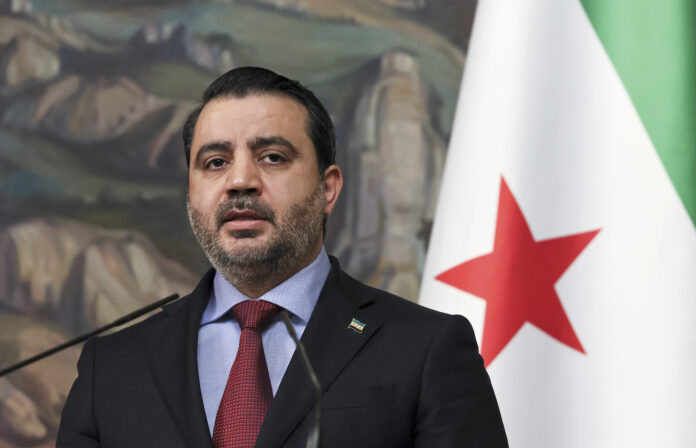
According to Axios and confirmed by Israel National News, the talks are scheduled to span two full days and will include Syrian Foreign Minister Asaad al-Shaibani and a newly constituted Israeli negotiating team led by Ambassador to the United States Yechiel Leiter.
Leiter’s appointment has been interpreted within Israeli diplomatic circles as a deliberate signal that Jerusalem is recalibrating its posture — moving away from ad-hoc crisis diplomacy toward a more institutionalized framework. Joining Leiter will be Netanyahu’s military adviser, Gen. Roman Gofman, and Acting National Security Adviser Gill Reich, a trio designed to integrate political authority with operational credibility.
The Israeli embassy in Washington declined to comment on the negotiations, but senior officials speaking to Israel National News described the new delegation as “leaner, harder-edged, and far less sentimental about Syrian assurances.”
At the center of the effort stands President Trump’s Syria envoy, Tom Barrack, whose mandate extends far beyond convening meetings. Barrack has been tasked with translating Trump’s broader Middle East doctrine — stability through leverage — into a binding bilateral security arrangement.
In contrast to prior administrations, which often viewed Israeli-Syrian relations through a humanitarian or multilateral lens, Trump’s team has adopted a realist paradigm: secure the border, demilitarize hostile zones, and extract compliance through calibrated pressure rather than aspirational rhetoric.
As the report at Israel National News has detailed, Barrack’s approach hinges on two interlocking objectives: A verifiable demilitarization regime across southern Syria, enforced through third-party monitoring and subject to snap inspections as well as a phased Israeli withdrawal from territories entered following the Assad regime’s collapse — but only after security benchmarks are met.
This sequencing is non-negotiable from Jerusalem’s perspective. “There will be no withdrawal absent irreversible demilitarization,” a senior Israeli official told Israel National News.
For Damascus, the talks represent an attempt to reenter the community of legitimate states after years of diplomatic exile. Yet skepticism abounds. Analysts cited by Israel National News caution that Syria’s internal fragmentation, coupled with residual militia networks operating beyond the regime’s effective control, raises profound questions about enforcement capacity.
Foreign Minister Asaad al-Shaibani enters the Paris talks under intense pressure — both from international stakeholders and from domestic factions wary of concessions to Israel. Syrian state media has framed the negotiations as a sovereign reclamation project, emphasizing Israeli withdrawal while downplaying demilitarization obligations.
This rhetorical asymmetry, Israeli officials warn, is precisely what derailed earlier rounds.
The Israel-Syria border has not merely been a line on a map; it has been a theater of shadow warfare, drone incursions, proxy skirmishes, and covert deterrence operations.
Israel National News has chronicled how, in the months following Assad’s collapse, Israeli forces expanded their footprint beyond the old disengagement lines — not as territorial ambition, but as preemptive insulation against militant spillover.
Those moves, while tactically effective, have left Israel in possession of zones it never intended to hold indefinitely — a strategic anomaly that the Paris talks seek to resolve.
The resignation of Ron Dermer in late autumn cast a long shadow over the negotiating process. Dermer had been uniquely positioned to blend political instinct with diplomatic muscle, and his departure was interpreted in some quarters as a signal that Israel was losing patience with what one official called “Syrian proceduralism.”
His absence exposed the fragile architecture underpinning the talks. Israel National News has reported that Dermer’s withdrawal was precipitated by his frustration with what he viewed as Damascus’ failure to move beyond rhetorical gestures.
The appointment of Yechiel Leiter is thus not merely bureaucratic succession — it is strategic rearmament.
Prime Minister Netanyahu enters this phase walking a diplomatic tightrope. On one side lies the Trump administration’s desire for visible progress; on the other, the Israeli electorate’s deeply ingrained mistrust of Syrian guarantees.
In private conversations disclosed to Israel National News, Netanyahu has insisted that any agreement must be “structurally immune to betrayal.” That means not only written commitments, but physical facts on the ground — sensor grids, patrol corridors, and response mechanisms that do not rely on Syrian discretion.
This is the fifth round of talks, but it is arguably the first that is proceeding without illusion. The euphoric optimism that accompanied early sessions has been replaced by a colder calculus.
Both sides now recognize that failure will not merely postpone peace — it will institutionalize insecurity.
And so Paris becomes the crucible in which a new order may be forged — or abandoned.
According to frameworks outlined by Israel National News, a successful outcome would entail a demilitarized belt extending several kilometers into Syrian territory, a multinational monitoring mechanism with Israeli liaison authority, a timeline for Israeli withdrawal contingent on compliance benchmarks and an enforcement protocol authorizing Israeli preemptive action in the event of breach.
None of these elements is symbolic. Each is existential.
Failure, by contrast, would all but guarantee a return to the kinetic logic that has governed the frontier for decades. Israel would retain its advanced positions. Syria would continue to posture. Proxy forces would reconstitute. And the border would remain a wound that refuses to heal.
As the Israel National News report observed, “Paris is not about reconciliation. It is about survival.”
On Monday, survival returns to the negotiating table.