



|
Getting your Trinity Audio player ready...
|
Israel Rejects Hamas’ “Terror Aces”: Inside the Shocking List of Killers Set Free Under the Gaza Ceasefire Deal
By: Fern Sidman
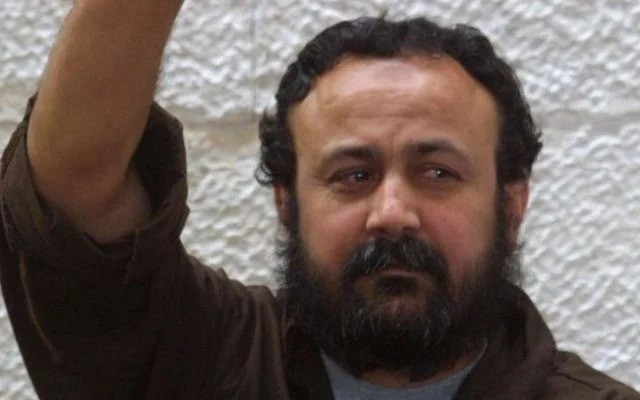
In a development that has ignited anguish across Israel, the government early Friday morning confirmed that the four top terror “aces” demanded by Hamas as part of the Gaza ceasefire and hostage-release agreement — Marwan Barghouti, Ahmad Saadat, Abbas al-Sayyid, and Hassan Salameh — were ultimately removed from the final list of prisoners to be freed. As Israel National News reported on Friday, the exclusion of these notorious figures was one of the few consolations in a deal that has otherwise forced the Jewish state to confront one of the most painful moral compromises in its modern history.
While these so-called “aces” — responsible for some of the most horrific atrocities in the annals of Palestinian terror — will remain behind bars, hundreds of other convicted terrorists, including multiple murderers and repeat offenders previously freed in the 2011 Gilad Shalit deal, are now slated for release.
The ceasefire agreement, which went into effect early Friday, was approved by the Israeli government after marathon cabinet deliberations that stretched late into the night. The plan, brokered through complex negotiations involving American envoys Jared Kushner and Steve Witkoff, promises the return of all hostages held in Gaza — both the living and the dead — but at a staggering price.
As the Israel National News report emphasized, the cost is not merely political or diplomatic, but profoundly moral: the liberation of hundreds of men directly responsible for massacres, rapes, kidnappings, and suicide bombings that claimed the lives of hundreds of Israelis.
The four men Hamas demanded — Barghouti, Saadat, al-Sayyid, and Salameh — represent the worst of Palestinian terrorism’s leadership echelon.
Marwan Barghouti, often dubbed the “Palestinian Mandela” by Western commentators, was in fact a senior commander of Fatah’s Tanzim militia. Convicted for orchestrating numerous terror attacks during the Second Intifada, he remains a symbol of “armed resistance” within Palestinian politics.
Ahmad Saadat, the head of the Popular Front for the Liberation of Palestine (PFLP), was convicted for ordering the 2001 assassination of Israeli Minister Rehavam Ze’evi, one of the most high-profile political killings in Israel’s history.
Abbas al-Sayyid masterminded the 2002 Netanya Passover massacre, in which 30 Israelis were murdered at the Park Hotel.
Hassan Salameh, the Hamas commander behind the 1996 Jerusalem bus bombings that killed 46 people, is serving multiple life sentences and remains one of Israel’s most reviled prisoners.
According to the information provided in the Israel National News report, the Netanyahu government flatly refused Hamas’s insistence on their inclusion, viewing such a concession as tantamount to national self-destruction.
Yet for all the resolve shown in keeping these four behind bars, the rest of the list — running hundreds of names deep — reads like a grim chronicle of Israel’s bloodiest decades.
Among those being released are Baher Dar, sentenced to 11 life terms for his role in the Tzrifin suicide bombing in 2004 and several other deadly attacks in Tel Aviv. Dar’s crimes left scenes of carnage that still haunt survivors.
Israel National News reported that another freed prisoner, Ibrahim Alikem, was convicted of murdering Ita Tzur and her 12-year-old son, Efrayim, in a roadside ambush near Ramallah in 1996. Alikem was first sentenced to life, released once before, re-arrested for renewed terror activity — and is now being released again.
Other notorious figures include Fares Ghanem, sentenced to nine life terms for the murders of eight Israelis, and Atiyah Abu Samhadga, who brutally raped and murdered a Jewish woman in one of the most horrific individual terror cases of the early 2000s.
Several of the prisoners, as the Israel National News report highlighted, participated in the infamous Ramallah lynching of 2000, when two IDF reservists, Vadav Shnuff and Yossi Avrahami, were beaten and mutilated by a Palestinian mob — an atrocity remembered for the image of one of the attackers displaying his bloodstained hands from a window to the cheering crowd below.
Also included is Hussein Jawadrah, who stabbed to death 19-year-old IDF soldier Eden Attias while the latter was asleep on a bus in Afula, and Iyem Kammamji, one of the six inmates who escaped Gilboa Prison in 2021 after previously being convicted of the kidnapping and murder of 18-year-old Eliyahu Asheri.
One name that stands out on the list is Hakim Awad, the killer of the Fogel family in Itamar in 2011 — a massacre that claimed the lives of Udi and Ruth Fogel and three of their young children, including a three-month-old infant. Awad was initially rumored to be among those to be released but was ultimately removed from the final roster, the Israel National News report confirmed.
A particularly disturbing element of the current exchange, according to the information contained in the Israel National News report, is the number of terrorists being freed for the second time — individuals who were released in the 2011 Shalit prisoner swap, only to rejoin Hamas and resume violent operations.
Among them is Nader Abu Turki, previously freed in the Shalit deal before becoming a crucial Hamas liaison between its Turkish leadership and its networks in Judea and Samaria. Despite his central role in orchestrating attacks post-release, Abu Turki is being freed again — and, remarkably, will not be deported, allowing him to remain within the West Bank.
Another repeat offender, Hamdallah Ali, a senior Hamas figure in Judea and Samaria who had been re-arrested at Gaza’s Shifa Hospital while operating as a terrorist coordinator, is also on the list.
“This pattern of revolving-door terror,” Israel National News writes, “demonstrates how Hamas continues to exploit Israel’s humanitarian values — knowing full well that released prisoners will be recycled into its military ranks.”
Public reaction to the deal has been deeply divided. Many Israelis are overjoyed at the imminent return of the remaining hostages, some of whom have been held for nearly two years. But for others — particularly families of terror victims — the sense of betrayal is overwhelming.
“It is inconceivable,” one bereaved father told Israel National News, “that my daughter’s murderer walks free so that Hamas can claim victory.”
National Security Minister Itamar Ben Gvir and Finance Minister Bezalel Smotrich both voted against the agreement, arguing that the release of so many convicted murderers “mortgages Israel’s security for fleeting diplomatic gains.” Ben Gvir specifically warned that many of these men “will kill again,” a claim tragically borne out by history.
The government, however, insisted that the humanitarian imperative — the safe return of Israeli citizens held in Gaza — compelled them to act. Prime Minister Benjamin Netanyahu, in his statement to the nation, quoted from the Book of Jeremiah: “Your children shall return to their own borders.” The operation to bring the hostages home has accordingly been named Shavim L’gvulam — Returning to Their Border.
As the Israel National News report noted, the release includes dozens of convicted murderers affiliated with Hamas, Fatah, Islamic Jihad, and the Popular Front for the Liberation of Palestine, many of whom were responsible for attacks during the Second Intifada and subsequent years of terror.
The decision to release such individuals evokes bitter memories of previous prisoner swaps, including the Shalit deal, which freed over 1,000 terrorists — several of whom went on to plan or commit new attacks. The parallels have not been lost on Israelis who remember the cost of those past concessions.
Israel’s security services have already begun monitoring known affiliates of those being released, anticipating that many will attempt to rejoin terrorist activity in the Judea and Samaria region, also known as the West Bank. According to the report at Israel National News, the Shin Bet has drawn up contingency plans to intercept any effort to reorganize terror cells under the guise of political rehabilitation.
Yet, the long-term implications may be less about security and more about the moral calculus of governance. Once again, Israel faces the unbearable choice between saving the few and protecting the many — a recurring national dilemma that has haunted every prisoner exchange since the state’s founding.
The government’s confirmation list, as reported by Israel National News, includes names that read like a grim roll call of Israel’s modern tragedies:
The murderer of policewoman Galit Arviv, killed in the 2002 Neve Yaakov attack.
The handlers of the suicide bomber responsible for the Carmel Market bombing in Tel Aviv.
The murderers of Shin Bet coordinator Haim Nachmani.
The head of Islamic Jihad’s Jenin military wing, Iyad Abu al-Rub.
Adnan Abi’at, the Tanzim commander in Bethlehem, responsible for dozens of shootings.
Musa Safen, who murdered his mother for marrying a Jew.
Taleb Mahamrah, a Fatah operative who killed both Israelis and fellow Arabs.
Each name tells a story — not only of loss, but of Israel’s impossible balancing act between justice, mercy, and survival.
As dawn broke over Israel on Friday, the ceasefire went into effect and the first preparations began for the transfer of prisoners. Across the country, families of hostages clutched their phones, waiting for word that their loved ones were among those freed from Hamas captivity.
At the same time, Israel National News reported scenes of mourning and outrage outside Ofer Prison, where relatives of terror victims gathered to protest the release. Many held signs bearing photographs of their slain family members, with one message repeated over and over: “Their blood cries out from the ground.”
The images — of jubilation and grief, redemption and rage — capture the impossible duality of this moment. For Israel, every hostage returned home is a victory. But every murderer freed is a wound reopened.
In the words of one commentator cited by Israel National News: “The question is not whether this was the right decision. The question is whether, as a people, we can bear the cost of what rightness demands.”
And as Israel begins the fragile process of rebuilding — from the tunnels of Gaza to the corridors of grief — that question, as ever, remains unanswered.

It is disgusting that this is brokered by two corrupt characters, Jared Kushner and Steve Witkoff, who have and are becoming fabulously wealthy doing business with the most evil Muslim terrorists on the face of the Earth with Qatar. They spoke at “hostage square” (getting a cool reception except for the planted boosters in the crowd). Disgustingly phony.
Israel would do it’s people a great favor if it instituted a death penalty, and stringently enforced it!
Israel does have the death penalty. It was never used except in two cases. It is hard for Israel to call itself a ‘democracy’ when the Israeli government can release so many murderers while ignoring the public – because it can. If Germany would do something like that, what would Israel and Jews from around the world say?
To stop this crazy prisoner exchange from ever happening again, Israel needs to implement the death penalty for terrorists and hold the bodies to deal with future issues