



|
Getting your Trinity Audio player ready...
|
By: Fern Sidman
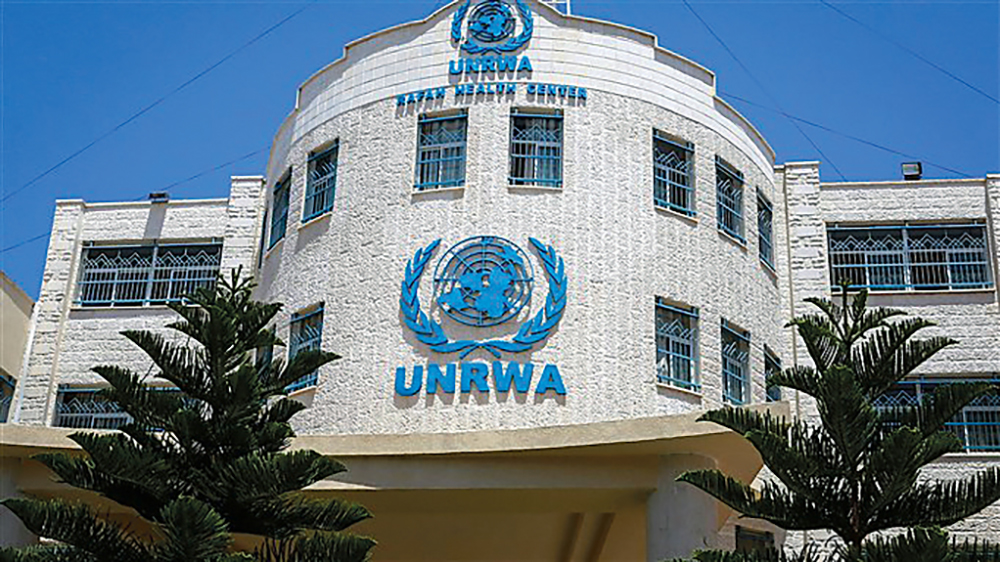
In one of the most consequential parliamentary decisions since the outbreak of the Gaza war, the Knesset this week approved legislation designed to dismantle the operational presence of the United Nations Relief and Works Agency for Palestine Refugees in the Near East — UNRWA — within the sovereign territory of the State of Israel. The measure, passed in its second and third readings late Monday, marks a radical departure from decades of Israeli accommodation of the agency and reflects a growing conviction among Israeli lawmakers that UNRWA has crossed the line from humanitarian actor to national-security liability.
As reported by Israel National News on Monday evening, the bill was introduced by Deputy Speaker of the Knesset, MK Limor Son Har-Melech, and garnered broad cross-party backing in the plenary. It is, in effect, a legislative guillotine: the law revokes the diplomatic immunities long enjoyed by UNRWA and erects a latticework of economic, infrastructural, and legal sanctions intended to choke off the agency’s activities in Israel entirely.
At stake is not merely the presence of a UN body in Israel, but a profound philosophical conflict over sovereignty, accountability, and the role of international institutions in a state that has just emerged from the bloodiest terror assault in its history.
According to the Israel National News report, the statute does not content itself with symbolic rebuke. Instead, it introduces a series of coercive mechanisms unprecedented in Israel’s dealings with UN bodies.
Under the new law all United Nations immunities previously granted to UNRWA, its employees, and its physical assets within Israel are rescinded.
Public utilities are mandated to disconnect electricity, water, and gas services to any property where UNRWA is registered as the consumer.
Israeli banks and financial institutions are prohibited from providing the agency with any banking, clearing, or payment services.
Telecommunications providers must terminate all communications services associated with UNRWA facilities.
The state and local authorities are empowered to seize real estate held by UNRWA within a 30-day period.
In bureaucratic prose lies a ferocious intent: to render UNRWA administratively unviable inside Israel, forcing a complete cessation of operations or a legal battle of international proportions.
Speaking after the vote, MK Son Har-Melech did not temper her language. In remarks carried by Israel National News, she described UNRWA as “a terrorist organization that was a full partner in the massacre, abduction, and murder on October 7th.”
“Today,” she declared, “the State of Israel has made it clear in no uncertain terms that it has no place within its borders. We didn’t come to make declarations, but to change the reality on the ground and restore national sovereignty and honor.”
Such rhetoric reflects a sentiment that has hardened within Israel since the October 7 atrocities — a belief that long-standing diplomatic taboos must yield to the imperatives of security and moral clarity.
Israel’s case against UNRWA is not, in its telling, a matter of ideology but of accumulated intelligence.
Israeli officials have disclosed that more than 10 percent of UNRWA’s Gaza-based staff maintain operational ties to Hamas or other terrorist organizations. These claims are not abstract: in February 2024, the IDF revealed a sprawling Hamas data center constructed directly beneath UNRWA’s Gaza headquarters. The discovery, widely reported at the time and revisited in the Israel National News coverage of the new law, crystallized for many Israelis what they had long suspected — that UNRWA facilities had been co-opted into the terror infrastructure of Gaza.
Over the past decade, Israeli forces have repeatedly uncovered weapons caches, tunnel entrances, and command posts in or adjacent to UNRWA schools and clinics. The IDF has documented a persistent pattern of Hamas gunmen seeking refuge in UNRWA compounds, confident that Israel would hesitate to strike sites nominally designated for humanitarian purposes.
Equally damning, Israeli education watchdogs have catalogued years of incitement in UNRWA curricula — textbooks glorifying martyrdom, maps erasing Israel, and classroom exercises framing terror as heroic resistance.
Predictably, the response from the United Nations was swift and furious.
Philippe Lazzarini, UNRWA’s Commissioner-General, condemned the law as “outrageous,” branding it on social media as part of “an ongoing, systematic campaign to discredit UNRWA and thereby obstruct the core role that the agency plays providing human-development assistance and services to Palestine refugees.” His remarks were relayed by AFP and echoed in a Times of Israel report.
Filippo Grandi, the outgoing head of the UN High Commissioner for Refugees and a former UNRWA chief, went further, warning in an interview with AFP that the move could devastate millions of Palestinian refugees across the Middle East.
“If you deprive those people of those services,” Grandi cautioned, “then you had better find a substitute. I think it would be very difficult.”
This refrain — that UNRWA is irreplaceable — has been a cornerstone of the agency’s defense for decades. But Israeli officials increasingly dispute the premise, arguing that dependency on UNRWA itself perpetuates the refugee crisis rather than resolving it.
Underlying the legislative earthquake is a dispute that predates the State of Israel itself: the definition of a Palestinian refugee.
Unlike every other refugee population on Earth, Palestinians are administered by a bespoke agency — UNRWA — which extends refugee status not only to those displaced in 1948, but to all of their descendants in perpetuity. As a result, the number of registered Palestinian refugees has ballooned from roughly 700,000 in 1949 to nearly six million today.
Israel has long argued that this exceptionalism entrenches grievance, freezes political reality in amber, and fuels the fantasy of a “right of return” that would demographically erase the Jewish state.
As lawmakers told Israel National News, dismantling UNRWA inside Israel is not merely a punitive act — it is an attempt to rupture what they see as a structural lie at the heart of the conflict.
The passage of Son Har-Melech’s bill signals a decisive shift in Israeli doctrine: the abandonment of the fiction that UNRWA is a neutral humanitarian body.
For years, Israel tolerated the agency’s presence as the price of international legitimacy. But the October 7 massacre shattered that equilibrium. In the public imagination, UNRWA ceased to be a flawed partner and became, in the words of one MK quoted by Israel National News, “a Trojan horse for jihadist infrastructure.”
The law also reflects a broader trend: the erosion of deference to multilateral institutions that Israelis increasingly perceive as hostile, politicized, or complicit.
Legally, the measure is certain to trigger fierce battles in Israeli courts and diplomatic forums. The UN will almost certainly invoke international conventions on the protection of humanitarian organizations, while European governments may threaten diplomatic reprisals.
But politically, the vote has already achieved something profound. It has articulated, in statute, a post-October-7 Israeli worldview: that sovereignty is not negotiable, that neutrality is not assumed, and that the era of blind trust in international agencies is over.
As the Israel National News report noted, this is not the end of UNRWA’s story — but it may well be the end of its chapter in Israel.
Whether history will judge the law as a courageous act of national self-defense or as a destabilizing rupture in humanitarian norms remains to be seen. What is beyond dispute is that Israel has crossed a Rubicon. In choosing confrontation over coexistence with UNRWA, the Jewish state has redrawn the contours of its relationship with the international system — and declared, with unmistakable finality, that October 7 changed everything.