



|
Getting your Trinity Audio player ready...
|
By: Russ Spencer – Jewish Voice News
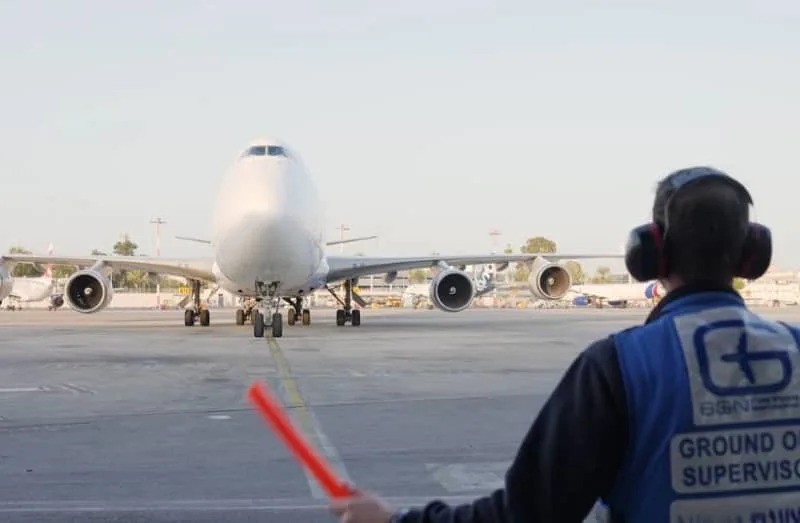
Israel’s Defense Ministry announced Wednesday that more than 120,000 tons of armaments, vehicles, and military equipment have arrived in the country since the outbreak of the war, the culmination of one of the largest and most sustained logistical operations in Israel’s history. According to a report that appeared on Wednesday in The Times of Israel, the milestone was marked early in the day when the 1,000th transport plane touched down at Ben Gurion Airport, where it was received by Defense Ministry Director General Amir Baram.
🟥 ISRAEL MARKS 1,000TH WARTIME AIRLIFT AS SENIOR LEADERS TOUR SYRIA FRONT, IDF ELIMINATES TERRORISTS IN GAZA, RESERVISTS STOP DEADLY ATTACK IN GUSH ETZION, AND REGIONAL PEACE DIPLOMACY INTENSIFIES
🕑 19 November 2025, 5:30 PM
🛬 The Ministry of Defense announced a major… pic.twitter.com/ArMO48oxW9
— Israel Realtime (@IsraelRealtime) November 19, 2025
The monumental airlift and maritime supply effort, carried out in coordination with the United States and multiple Israeli defense agencies, has become a critical backbone of Israel’s wartime operational capacity. As The Times of Israel reported, the shipments have included armored vehicles, munitions, ammunition, personal protective equipment, and specialized medical supplies, all of which have been essential in sustaining the Israel Defense Forces (IDF) throughout months of intensive combat.
Defense officials emphasized that the sheer volume of matériel delivered by the 1,000 planes and 150 ships reflects a strategic priority: ensuring that Israeli forces remain fully supplied in multiple active theaters of war, while simultaneously maintaining emergency stockpiles robust enough to respond to unforeseen escalations. The Times of Israel report noted that the Defense Ministry considers the ongoing effort a “critical component” in guaranteeing that operational tempo remains uninterrupted.
Since the first hours of the conflict, Israel’s Defense Ministry has operated what The Times of Israel report described as a “continual and urgent airlift” intended to keep IDF units fully equipped without any risk of supply shortages. The operation is being managed jointly by the Directorate of Production and Procurement, the ministry’s mission to the United States, the IDF’s Planning Directorate, and the Israeli Air Force.
The Times of Israel reported that this extensive pipeline of supplies has involved both heavy-lift cargo aircraft and large container ships, all dedicated to moving hundreds of thousands of tons of military hardware into Israel. Defense Ministry officials said the coordination between air and sea transport has allowed Israel to sustain round-the-clock deliveries even at peak operational demand.
The ongoing coordination with the United States has been especially significant. According to the information provided in The Times of Israel report, the majority of the equipment has originated from American stockpiles or U.S.-based manufacturers, with Washington accelerating procurement and approvals to meet Israel’s evolving battlefield requirements.
The Times of Israel report detailed the diverse inventory arriving in Israel over the course of the war. The shipments include armored vehicles essential for ground maneuvers, precision-guided munitions required for long-range strikes, artillery shells, small-arms ammunition, and protective gear such as helmets, ballistic vests, and combat-ready medical kits.
Officials noted that the flow of medical equipment has been especially vital for field units operating under continuous fire. Supplies such as tourniquets, trauma kits, and mobile field-care systems have been dispatched in large quantities, ensuring that IDF medics can sustain lifesaving operations on the front lines.
The Defense Ministry stated that these deliveries were not merely replenishment but a deliberate enhancement of Israel’s emergency readiness, ensuring “full stockpiles for emergencies” in case the conflict expands to additional fronts.
The symbolic arrival of the 1,000th transport plane became a moment of reflection on the scale and significance of the logistical effort. As reported by The Times of Israel, Defense Ministry Director General Amir Baram personally greeted the aircraft at Ben Gurion Airport, underscoring the importance Israel places on maintaining uninterrupted supply lines throughout the war.
The ministry highlighted that this plane, like many before it, was packed with critical war matériel destined for immediate distribution to IDF units. Israeli officials praised the coordinated work between U.S. partners and the Israeli logistical corps that enabled this sustained level of supply.
The Times of Israel report emphasized that one of the Defense Ministry’s primary goals has been preventing any break in fighting due to shortages of essential equipment. To that end, the ministry has overseen a rapid distribution system that moves equipment from ports and air bases directly to combat zones in record time.
According to the report, the IDF’s Planning Directorate and Air Force have played central roles in directing where shipments are needed most urgently. Planners have adjusted stockpile distribution dynamically as the battlefield shifts, ensuring that brigades operating in Gaza, the northern border area, and other critical fronts remain continuously supplied.
This level of operational preparedness is intended to support both short-term battlefield requirements and the broader strategic objective of maintaining long-term deterrence.
Throughout the war, U.S. support has been evident in the steady flow of military equipment. The Times of Israel reported that American cooperation has included expedited production schedules, emergency transfers from U.S. military stockpiles, and accelerated approval processes for complex systems.
Israeli officials described the collaboration as indispensable, noting that the operational tempo in Gaza and along the northern front demands a level of supply that Israel alone could not sustain in the short term. The Defense Ministry’s mission to the United States has worked closely with American defense contractors and government agencies to keep shipments moving rapidly.
The Times of Israel report observed that the logistical effort has been designed to meet Israel’s needs across multiple active theaters, reflecting the IDF’s assessment that the broader conflict could expand or intensify without warning. The arrival of armored vehicles and replenished missile and artillery supplies is helping prepare the IDF for sustained operations amid uncertainty about how the regional situation may develop.
The Defense Ministry stressed that maintaining momentum in the war requires meticulous supply-chain planning, and that the large volume of deliveries arriving by air and sea is part of a broader strategy to ensure the IDF never faces operational delays due to equipment shortages.
While the arrival of the 1,000th plane marks a significant milestone, Defense Ministry officials told The Times of Israel that the logistical campaign is far from over. Shipments continue to land multiple times per day, and the ministry is preparing to expand storage, distribution, and emergency logistics capacity as Israel continues to face security challenges on multiple fronts.
Officials plan to maintain the same level of intensity in the logistical effort for as long as the conflict persists, noting that the ministry views logistical dominance as a core element of Israel’s wartime strategy.
As The Times of Israel report emphasized, the Defense Ministry’s announcement underscores the unprecedented scale of Israel’s wartime logistics operation. With 1,000 planes and 150 ships already delivering more than 120,000 tons of military equipment, the ongoing airlift and maritime supply line have become essential to sustaining IDF operations during one of the most demanding conflicts in recent Israeli history.