



|
Getting your Trinity Audio player ready...
|
By: Fern Sidman – Jewish Voice News
Israel’s defense establishment secured a decisive budgetary victory this week, as Defense Minister Israel Katz and Finance Minister Bezalel Smotrich reached a carefully negotiated agreement that sets the nation’s 2026 defense budget at NIS 112 billion — roughly $34 billion. The accord ends weeks of friction between the ministries and signals a reluctant but firm recognition of the country’s entrenched security realities following two consecutive years of wartime turbulence.
The agreement, announced by Katz’s office, arrives after Smotrich initially pushed for a leaner defense allocation, arguing that the military apparatus had failed to reform spending practices despite spiraling operational costs. His public criticism — delivered as part of the unveiling of the 2026 state budget framework — ignited a rare public dispute between the finance and defense ministries, both of which are burdened by competing priorities in an era of surging national debt and ongoing emergency expenditures.
Defense officials countered swiftly. A reduced budget, they warned, would not simply slow procurement cycles; it would delay critical defense deals, hamper replenishment of depleted stocks, and erode Israel’s long-term readiness. After two years of intense operational tempo — from the expanded campaign in Gaza to regional escalations involving Hezbollah, Iran-backed militias and the Houthis — the IDF has insisted it cannot afford even a modest contraction in funding.
The final number — NIS 112 billion — lands closer to the defense establishment’s demand than to the finance minister’s opening bid. The agreed figures underscore a reality no policymaker can avoid: Israel’s defense posture, after October 7 and the subsequent multi-front developments, has permanently changed.
A central pillar of the new budget is the assumption that an average of 40,000 reservists will be called up for duty in 2026. This figure reflects a deliberate recalibration after the unprecedented mobilization of 300,000 reservists at the war’s peak. The IDF’s reserve system was pushed to its limits during that period — socially, economically, and structurally — forcing planners to rethink manpower requirements in an era where the distinction between active and reserve forces is increasingly blurred.
By projecting a dramatically lower call-up rate, the government signals a cautious anticipation of a lower-intensity operational environment while also freeing fiscal space for other defense priorities such as procurement, cyber readiness, and munitions stockpiling.
Yet, analysts note that this assumption is not without political and strategic risk. Israel’s threat matrix remains volatile — from northern border tensions with Hezbollah to Iranian entrenchment across Syria, Iraq, and Yemen. A miscalculation in reserve needs could force emergency mid-year budget reallocations, something Israel has experienced repeatedly in recent years.
Beyond the headline budget figure, Katz’s office revealed an additional NIS 725 million package, spread across three years, dedicated specifically to bolstering security in the Judea and Samaria region and along the Jordanian border. The targeted investment is intended to reinforce perimeter defenses, enhance surveillance systems, and expand rapid-response capabilities in sensitive corridors that continue to absorb security shocks.
Judea and Samaria has witnessed a sharp uptick in security incidents since the onset of the Gaza war, with armed cells expanding operational sophistication and external actors attempting to weaponize the unrest. Meanwhile, the Jordan Valley’s strategic importance has surged in military assessments due to increased smuggling attempts, weapons trafficking, and the growing regional influence of Iran-backed militias.
The new package reflects a broader strategy: stabilizing Israel’s geographic seams while simultaneously preparing for longer-term regional threats. Defense planners have argued that investment in border infrastructure and intelligence technology is an economical means of reducing future mobilization needs and minimizing friction between civilian populations and security forces.
Finance Minister Smotrich enters the new budget cycle under growing pressure to clamp down on national spending after two war years that forced enormous outlays across every government ministry, skyrocketing the deficit. His push for a smaller defense budget was never purely ideological; it was also a fiscal imperative.
But the political reality is more complicated. Any Israeli government confronting the post-October 7 landscape must contend with a public acutely sensitive to security vulnerabilities. Polling consistently shows that voters prefer increased defense spending — even at the cost of social service constraints — so long as the existential threats persist. Smotrich’s critique of defense inefficiencies played well among fiscal conservatives, but it had limited resonance beyond that sphere.
The final agreement suggests that Smotrich recognized the limits of pressing too hard. While government ministries across the board are being instructed to trim expenditures, defense remains the red line that no coalition can afford to breach.
For Defense Minister Katz, the budget is both a practical necessity and a political milestone. With the military stretched across multiple operational theaters and recovering from the most traumatic intelligence and security failure in generations, Katz has insisted that rebuilding capacity cannot be a multi-year project — it must be immediate.
The IDF’s replenishment needs are vast: precision munitions, armored vehicle repairs, upgraded air defense components, expanded drone fleets, and enhanced cyber infrastructure. Israel’s defense industries, integral to both national security and the economy, rely heavily on predictable multi-year financing infused through procurement contracts. A disrupted or reduced 2026 budget would reverberate across both the security and industrial landscapes.
By securing the NIS 112 billion figure, Katz effectively ensures continuity in rebuilding initiatives already underway and avoids delays that could impose strategic vulnerabilities.
The 2026 defense budget is more than a ledger entry; it is an unmistakable reflection of Israel’s transition into a prolonged period of heightened security demands.
The long-held assumption that Israel could maintain a technological edge while containing regional threats with minimal sustained mobilization has eroded. The events of the past two years revealed the fragility of deterrence, the limits of intelligence, and the escalating capabilities of non-state actors.
Budget architects describe the 2026 framework as a post-October 7 doctrine in fiscal form — one that integrates lessons learned while acknowledging the need for agility in an environment where conflicts can engulf multiple fronts with little warning.
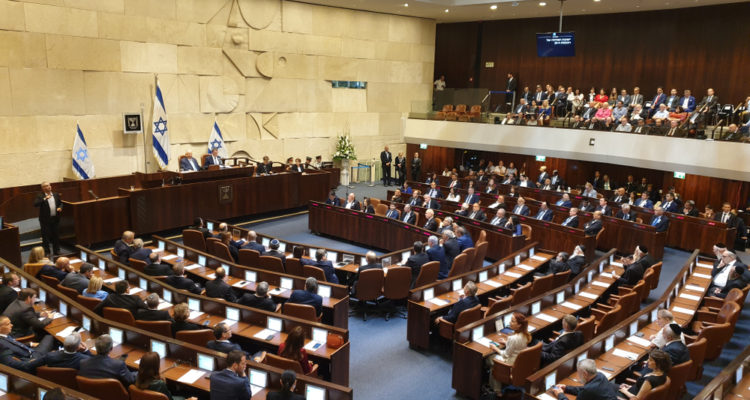
The budget still requires cabinet and full Knesset approval, but political resistance is expected to be minimal. Despite ideological divisions within the coalition, security remains a unifying priority. The 2026 plan, while not resolving debates about efficiency or fiscal prudence, establishes a functional baseline for Israel to operate amid continued regional uncertainty.
As Israel navigates the regional challenges of the coming years — Iranian ambitions, Hezbollah’s growing arsenal, instability in the West Bank, and Hamas’s persistent attempts at resurgence — the NIS 112 billion budget stands as an acknowledgment that security demands remain the nation’s most immovable burden.
It is a pragmatic, if imperfect, blueprint for a country whose strategic horizon has fundamentally shifted.