



|
Getting your Trinity Audio player ready...
|
By: Tzirel Rosenblatt
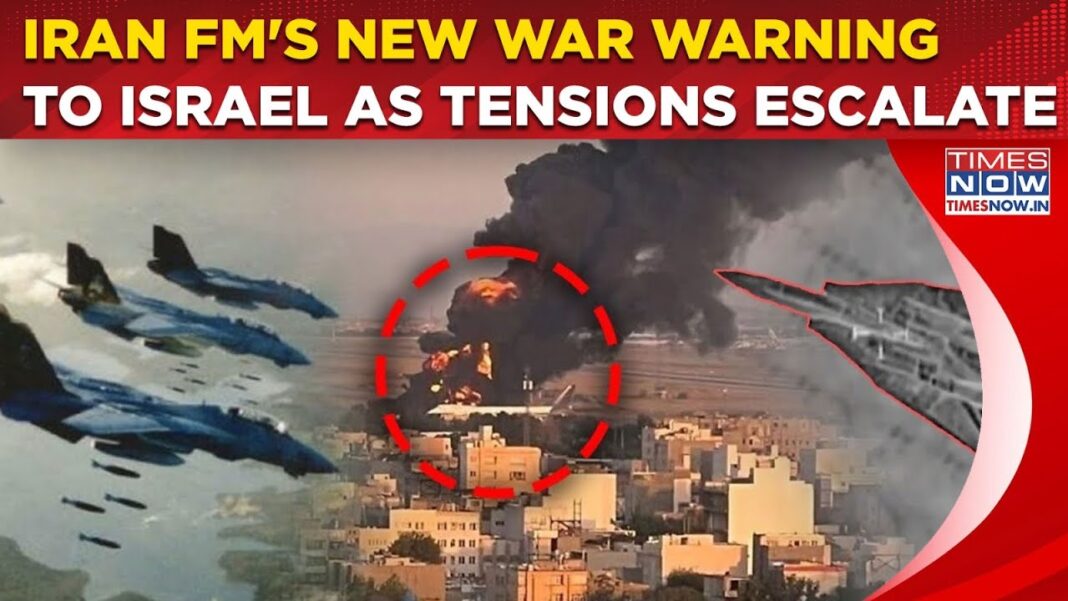
Iran has signaled that it is prepared for a new round of conflict with Israel, only weeks after June’s devastating 12-day “Rising Lion War”, raising alarm across the Middle East and among Western policymakers. Speaking to Asharq al-Awsat on Tuesday, Iranian Foreign Minister Abbas Araghchi declared that “anything is possible, and Tehran is prepared for all circumstances,” in reference to the possibility of renewed hostilities with the Jewish State.
According to a report that appeared on Wednesday at World Israel News (WIN), the inflammatory remarks illustrate Tehran’s continued posture of belligerence even as the Islamic Republic faces mounting international pressure over its nuclear program. The comments also highlight the widening gulf between Iran’s triumphalist narrative of the June war and the reality of the conflict’s outcome, which saw extensive civilian casualties in Israel and further international condemnation of Tehran.
Araghchi boasted that Iran “emerged victorious” from the June clashes, insisting that Israel “did not achieve any of their goals” and that Tehran’s missile barrages continued until the last day of the fighting. “They thought they could stop us within 48 hours,” he said, “but after 12 days, it was Israel that requested an unconditional ceasefire.”
However, as World Israel News has reported, this claim is demonstrably false. The ceasefire was in fact brokered by President Trump, with both Jerusalem and Tehran agreeing to Washington’s terms. By presenting Israel as the supplicant in this context, Araghchi is repeating a well-worn Iranian tactic: reshaping battlefield realities into propaganda designed for domestic audiences and sympathetic regional media outlets.
The WIN report emphasized that the Iranian regime frequently casts its military engagements in the language of “resistance victories,” regardless of heavy losses or international rebuke. Analysts suggest that such rhetoric serves dual purposes—bolstering national morale amid economic hardship while attempting to project power across the Arab world.
The June war exacted a horrific civilian toll in Israel. As World Israel News documented extensively, Iranian missiles deliberately targeted population centers, including the cities of Tel Aviv, Haifa, and Beersheba. Particularly egregious were the use of cluster munitions, banned under international law, which Tehran deployed indiscriminately against residential neighborhoods.
Among the 31 Israeli fatalities were some of the nation’s most vulnerable citizens. Two Holocaust survivors in their 90s were killed in a direct hit on their retirement home, while a young child battling leukemia, who had arrived in Israel from Ukraine for medical treatment, perished when a missile struck the hospital compound where he was receiving care.
Notably, the only non-civilian Israeli casualty was an off-duty soldier who died alongside his mother and girlfriend when their apartment building collapsed following a direct hit. WIN underscored this point to reveal Iran’s pattern of indiscriminate violence: the overwhelming majority of those killed were civilians, exposing Tehran’s rhetoric of “resistance” for what it is — state-sponsored terrorism directed at innocents.
Araghchi’s renewed threats against Israel come at a critical juncture, with the deadline for a new nuclear agreement between Tehran and European powers fast approaching. If Iran fails to commit to significant limits on its nuclear enrichment by the end of August, numerous European capitals are expected to impose harsh new sanctions, adding to the severe economic strain already crippling the Islamic Republic.
The World Israel News report noted that Iran is attempting to leverage its military posturing in Gaza and southern Lebanon as a bargaining chip in these negotiations. By threatening Israel with “an even harsher response” in any future war, Tehran hopes to demonstrate to European leaders that pressure on its nuclear program could trigger a regional conflagration.
However, this strategy may backfire. WIN analysts argue that Iran’s repeated use of civilian-targeting weaponry and open threats of aggression may only strengthen European resolve to impose punitive measures.
For Israel, the Rising Lion War reaffirmed both the resilience of its population and the severity of the Iranian threat. The IDF’s Iron Dome system intercepted hundreds of rockets and missiles, saving countless lives. Yet the fact that Iran’s arsenal was able to bypass these defenses and cause civilian deaths highlighted the urgency of continued investment in missile defense and precision strike capabilities, according to WIN’s reporting.
Israeli Prime Minister Benjamin Netanyahu has made clear that Jerusalem views Tehran’s aggression not as isolated incidents, but as part of a broader Iranian strategy to encircle Israel through its proxies—Hezbollah in Lebanon, Hamas and Islamic Jihad in Gaza, and Shiite militias in Syria and Iraq. In that light, Araghchi’s boasts serve as confirmation of Israel’s assessment: that Iran is not merely a sponsor of terrorism, but an active belligerent seeking to directly threaten the Jewish state.
The Iranian regime’s cavalier attitude toward civilian suffering stands in stark contrast to the stories of resilience emerging from Israel’s embattled communities. World Israel News reported on families in southern towns who returned to rebuild their shattered homes even as funerals were being held for loved ones. In Tel Aviv, thousands gathered to mourn the Holocaust survivors killed in the attacks, vowing that “never again” would not become an empty phrase.
These human stories expose the stark moral asymmetry of the conflict. While Tehran celebrates the deaths of innocents as “victories,” Israel is forced to absorb the trauma of burying its most vulnerable while continuing to defend itself under the scrutiny of international opinion.
From an editorial standpoint, Araghchi’s comments represent more than mere rhetoric; they are part of a deliberate strategy of brinkmanship. By inflating its successes and threatening future escalation, Iran seeks to project an image of dominance it cannot sustain militarily, while distracting from its mounting internal crises and nuclear defiance.
As World Israel News has highlighted, this behavior is both reckless and deeply destabilizing. By openly glorifying war crimes—such as the use of cluster munitions against civilian neighborhoods—Iran signals that it has no intention of adhering to international norms. This makes the prospect of renewed conflict not just possible, but likely, unless significant deterrent measures are put in place.
Iran’s renewed threats against Israel, voiced through Foreign Minister Abbas Araghchi, are emblematic of a regime that thrives on confrontation even as it faces profound internal and external challenges. The Rising Lion War revealed Tehran’s willingness to commit war crimes against civilians, its capacity to inflict suffering, and its simultaneous vulnerability to diplomatic and military pushback.
As the nuclear deadline looms, Iran appears intent on escalating rather than de-escalating its posture, gambling that threats will forestall Western sanctions and intimidate Israel. But as World Israel News consistently points out, Israel’s resolve remains unshaken, and its capacity to defend itself — with or without international backing — is unquestionable.
The question now is not whether Iran will make good on its threats, but whether the international community will finally recognize that appeasement has failed, and that Tehran’s pursuit of both nuclear weapons and regional hegemony must be met with decisive resistance.

Ignore what the Iranians say. They act like Nazis and should be treated as such. No more mister nice guy. Burn the country to the ground if need be – something Israel could do in a flash. That is the only language that Iranian regime understands.